

Hondurans are on edge. Three days after the elections, they still don’t know who will govern them for the next four years due to problems in the scrutiny, which shows a technical tie. The right-wing television presenter Salvador Nasralla (Liberal Party) is in the lead with 40.3% of the votes, compared to 39.6% for the conservative businessman Nasry Asfura (National Party), who is supported by U.S. President Donald Trump.
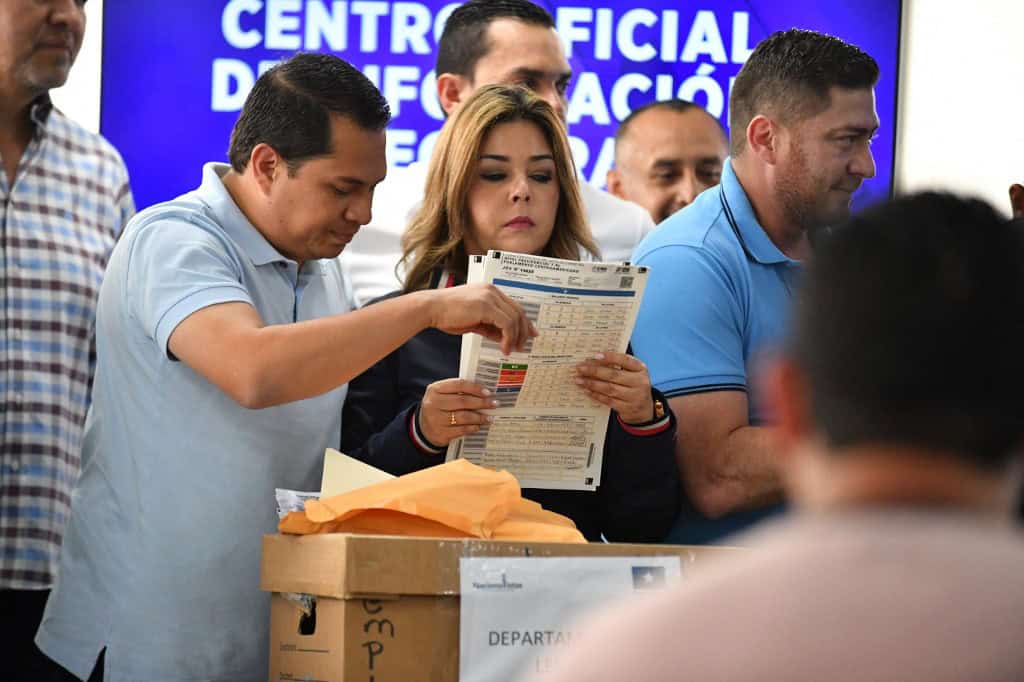
Below are three factors that explain the chaotic count, which reached 79% of the just over 19,000 electoral records this Wednesday.
Technical Failures
The National Electoral Council (CNE) hired a private company—the Colombian ASD—for the transmission of preliminary data, the general scrutiny, and the dissemination of results from Sunday’s general elections. When awarding the contract, the CNE assured that the company had passed a “highly competent technical test,” but its systems recorded “technical problems” that forced the suspension of the preliminary count during the early hours of Monday.
The dissemination resumed at noon on Tuesday, after Trump demanded that the count continue and threatened “serious consequences” if the result changed, which at that time gave a slight advantage to his candidate. ASD assured that the failure occurred due to the “high volume” of records, referring to the voting records from these elections, whose participation rate is unknown. About 6.5 million citizens were eligible to vote.
Upon resuming the dissemination, Nasralla took the lead in the count, though always in a technical tie. This Wednesday, the platform went into “maintenance” without prior notice, prompting complaints from the CNE. It is “inefficiency. The process was too big for the contractor. It seems the winner won’t be announced until next week,” said Fernando Cerimedo, an assistant to Asfura.
After the preliminary count, a “special scrutiny” began that includes records with possible inconsistencies. In Honduras, where presidential elections are single-round, the winner can be proclaimed with just a one-vote difference.
Logistical Difficulties
Without automated voting, elections in Honduras often face logistical challenges, especially in remote regions. The CNE takes up to ten days to distribute electoral materials in vehicles that leave from the capital Tegucigalpa to the 18 departments. The return takes just as long.
In places like the Mosquitia, which can only be accessed by air and sea, it is necessary to transport the documents on muleback or by canoe. The former president of the CNE, Augusto Aguilar, reminded us that, for this reason, it has been “normal” for the counting of records to be slow. The difference is that now the digital dissemination system for results has been interrupted.
In his opinion, the declaration could be delayed due to the narrow margin of difference, which allows the CNE to conduct a special scrutiny in which the records in the possession of all parties are “minutely reviewed.”
Politicized Arbiter
The independence of the CNE is constantly in question. Its board consists of five officials—three titular and two alternates—appointed by the major parties. In fact, a dispute between two of its members delayed the electoral calendar, amid mutual accusations of fraud plans.
A counselor from the left-wing ruling party reported a opposition colleague in the CNE to the prosecutor’s office for an alleged plot to favor the right in the preliminary results. The accused claimed that the audios supporting the complaint were made with artificial intelligence.





