
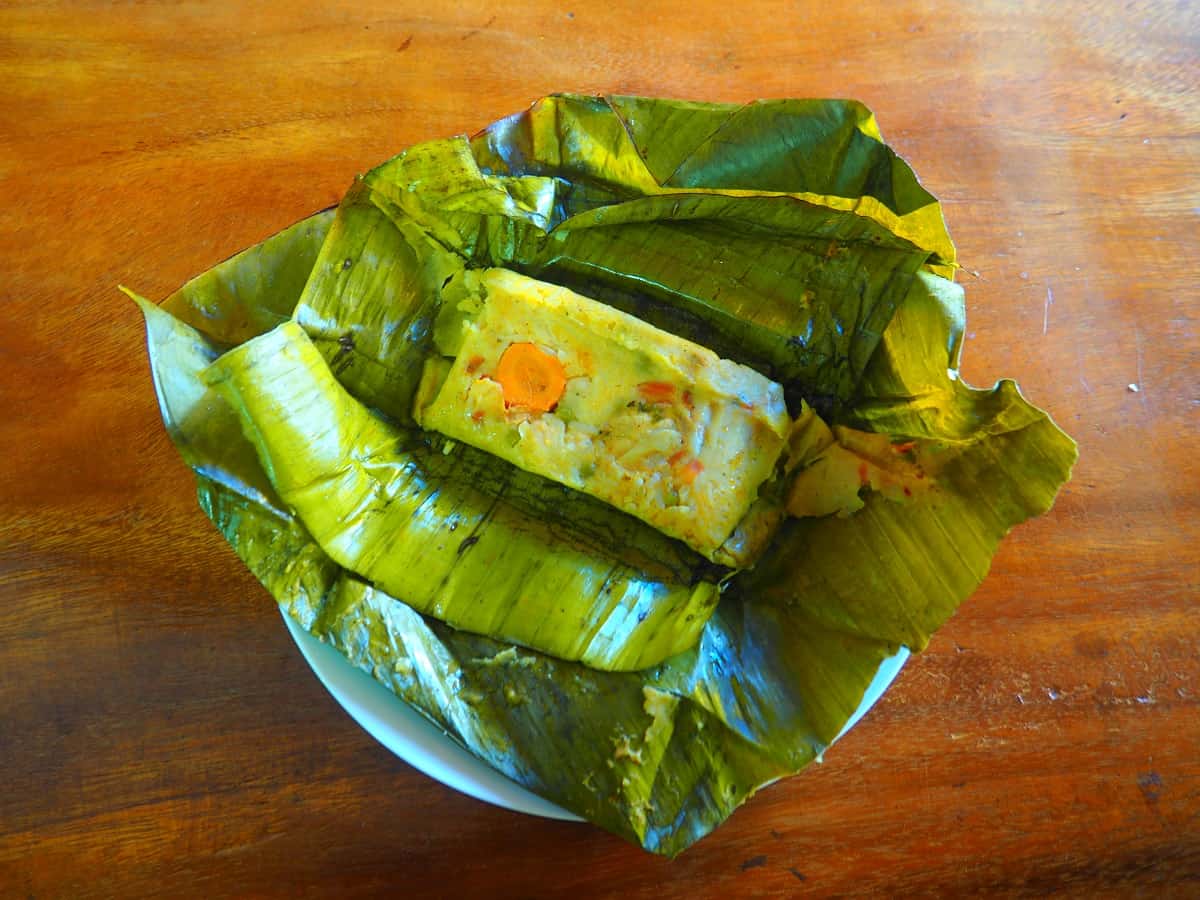
As the year winds down and the air fills with the scent of banana leaves and seasoned masa, tamales season has officially arrived in Costa Rica. For those of us here, it’s a cherished signal that the holidays have arrived. But for tourists and fresh expats, diving into this tradition often means navigating a set of unwritten rules – from assembly-line family gatherings to the subtle art of complimenting your host’s recipe.
As one covering Costa Rican culture and lifestyle, I’ve seen countless newcomers charmed (and occasionally confused) by our tamal obsession. This year, with costs down and consumption as high as ever, it’s the perfect time to unwrap the story. For many Costa Ricans, Christmas does not really start until the first tamal is unwrapped. For tourists and newly arrived expats, that first bite often comes with questions: Why is it tied up like a gift? Why does everyone talk about making them as a group? And why does the conversation quickly turn into family politics about whose tamales are the best?
Tamales in Costa Rica are not a restaurant trend. They are a December routine, a social obligation, and for plenty of households, a point of pride that does not need outside approval.
What a Costa Rican Tamal Actually Is
A typical Costa Rican tamal is a packet of seasoned corn dough (masa) filled with a mix that often includes pork, rice, vegetables, and small extras like chickpeas, raisins, or a strip of red pepper. It is wrapped in banana leaves, tied with string, then boiled or steamed. That banana leaf matters. It perfumes the masa and gives tamales their signature look and smell. It also explains why the tamal arrives as a tidy bundle instead of a plated dish.
For newcomers expecting Mexican-style tamales, the Costa Rican version can feel different in two big ways: the masa is usually smoother and softer, and the filling tends to be less spicy. Heat is not the point. Comfort is.
The Tamaleada: The Headline Event
You will hear Costa Ricans talk about la tamaleada, which is not a single recipe. It is the group production day when families and friends gather to assemble dozens or hundreds of tamales at once.
The work is organized like a small factory. Someone preps the masa. Someone cooks the meat. Someone washes and softens the banana leaves. Assembly becomes an assembly line. Kids often help with tying or stacking. Older relatives typically supervise the details and settle disputes about what belongs inside.
This is why tamales are a Christmas story even when nothing “new” is happening. For many families, the tradition is the event. And it’s no small affair – a University of Costa Rica (UCR) study estimates that Ticos consume around 196 million piñas of tamales in December alone, averaging about three tamales per person per day. That’s a testament to how deeply embedded this custom is in our national identity.
This Year’s Tamale Trends: Cheaper and More Accessible
Good news: Making them at home is 22% cheaper this year, according to the Ministry of Economy, Industry, and Commerce (MEIC). The cost for a batch of 25 piñas (50 tamales) has dropped to about ¢20,159, saving families around ¢5,630 compared to last year. This is largely due to lower prices on key ingredients like sweet peppers (down 110%), potatoes (down 34%), and other veggies. Pork loin remains the priciest item at ¢9,276 for three kilos, but overall, it’s easier on the wallet.
To break it down, here’s a simple table of participation stats from the UCR survey, showing just how widespread the tradition is:
| Aspect | Percentage/Figure |
|---|---|
| Households participating in tamal tradition | 91.3% |
| Families making tamales at home | 62% |
| Those buying ready-made | 38% (about 19 million piñas) |
| Total piñas consumed in December | 196 million |
These numbers highlight why tamales aren’t just food – they’re a cultural phenomenon that unites nearly all of us during the holidays.
How People Actually Eat Them
Tamales are commonly eaten with coffee traditionally brewed using a Chorreador, especially at breakfast. They also show up as late-night food after Christmas gatherings, or as an easy meal when everything is closed around the holidays.
If you’re invited to someone’s house in December, tamales are one of the most likely foods to appear, often served simply, without fanfare. The host may still be watching your face closely.
Where Visitors Can Try Tamales Without Crashing a Family Kitchen
If you want a good tamal and you do not have a Costa Rican family adopting you this month, you still have options:
- Supermarkets and local groceries: Many sell tamales in December, sometimes refrigerated, sometimes hot during peak hours.
- Sodas and small restaurants: A lot of everyday eateries add tamales as a seasonal item, usually in the morning.
- Mercados and ferias: Market stalls often sell tamales or connect you with someone who does.
- Home-based sellers: This is common. You’ll hear “mi vecina vende” (my neighbor sells) more than you’ll see formal advertising.
- Delivery apps: In some areas, tamales appear as seasonal offerings, especially from small businesses.
If you’re ordering or asking at a counter, the basics you’ll hear are tamal de cerdo (pork), and sometimes tamal de pollo (chicken). Some places offer tamal mudo, which usually means a simpler tamal with fewer or no “extras.”
What’s Inside, and Why People Argue About It
Costa Rican tamales can include ingredients that surprise first-timers: a prune-like raisin, a chickpea, a bit of rice tucked into the masa, or a strip of bell pepper. Some families swear these belong. Others treat them like an offense. Variations might also include green beans, olives, or even a cultural fusion of indigenous and European elements, like prunes symbolizing colonial influences.
This matters because tamales are a memory food. People are not comparing tamales the way they compare restaurant meals. They are comparing them to a version tied to a specific person, often someone who is no longer alive or no longer cooking. If you want to stay out of trouble as a guest, the safest line is simple: “Está buenísimo.” It’s really good.
How to Unwrap One Without Making It Weird
- Set the bundle on a plate.
- Cut or loosen the string.
- Open the banana leaves like you’re unwrapping a gift.
- Eat the tamal off the leaf or slide it onto the plate.
Do not try to eat the leaf. People will laugh, but they will also remember.
Food Safety, in Plain Terms
Tamales are cooked, but they are also often made in large batches and stored for days. If you buy them from a home seller or pick them up from a market, treat them like any other prepared food in the tropics:
- Keep them refrigerated if you’re not eating them soon.
- Reheat thoroughly if they’ve been sitting.
- Use common sense with anything that has been out at room temperature for hours.
A Small Cultural Note That Helps – And a Historical Tie-In
In Costa Rica, Christmas is often centered on Dec. 24, not Dec. 25. Many families gather Christmas Eve, and that’s when you’ll see tamales on tables, packed for relatives to take home, or stacked in the fridge for the next few days when shops close and schedules slow down.
This tradition dates back to pre-Columbian times, when tamales played a festive role in indigenous celebrations, with the corn filling even symbolizing the sun god. Spanish colonization blended it into Christian holidays like Christmas, creating the fusion we enjoy today.
Whether you’re a newcomer or a seasoned Tico, tamales remind us that the holidays are about connection, comfort, and a little friendly debate. If you’re in Costa Rica this December, don’t miss out – grab a piña and join the tradition. Buen provecho!