

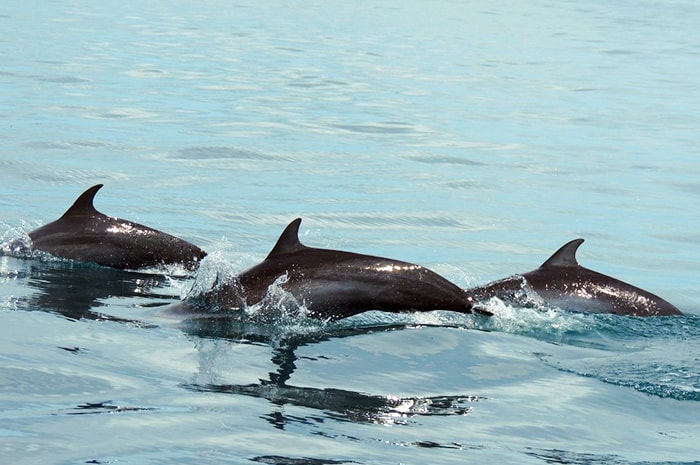
A drone video showing a massive pod of dolphins moving just offshore of Bahía Drake on Costa Rica’s Osa Peninsula has gone viral on social media, drawing attention to a spectacle that marine experts say is common in the country’s South Pacific waters.
The footage was posted last week by the Instagram account Deep Blue Drake Bay. In the comments, the account indicated the recording was captured off the beach in the Drake Bay area, a stretch of coastline known for frequent dolphin activity and wildlife tours linked to nearby Corcovado National Park and Caño Island.
What the video appears to show is a large “traveling” aggregation of oceanic dolphins moving quickly in the same direction, surfacing in waves that make the sea look almost textured. In Costa Rica, these moving pods can include multiple species traveling together, including pantropical spotted dolphins, spinner dolphins and common dolphins.
In the South Pacific, it is normal to see dolphins form large groups as they relocate to feed, often tracking baitfish and following ocean currents along productive offshore corridors. Spinner dolphins in particular are known for forming very large pods and, at times, “megapods” that can reach into the thousands during coordinated movement and feeding events in the Pacific.
A report that increased the exposure of the clip described the animals as oceanic dolphins moving at high speed, roughly 50 to 65 kilometers per hour, a pace consistent with purposeful travel rather than slow milling or resting behavior.
From the surface, very large dolphin groups can also create a distinctive sound and visual effect: constant surfacing and splashing across a broad area, with the impression of an “endless” stream of animals that is difficult to count. In South Pacific Costa Rica, this kind of passing pod is regularly observed offshore between the mainland and the direction of Isla del Coco, where pelagic conditions support frequent dolphin activity.
Drake Bay sits on the northern edge of the Osa Peninsula in Puntarenas province, an area marketed as one of Costa Rica’s top wildlife destinations because rainforest meets open ocean, creating easy access to both terrestrial biodiversity and marine life.
Along Costa Rica’s Pacific coast, bottlenose dolphins and pantropical spotted dolphins are widely documented as common sightings year-round, with other species, including rough-toothed dolphins, appearing more opportunistically depending on conditions.
The viral video arrives as drone footage increasingly becomes part of Costa Rica’s wildlife-tourism storytelling, especially in remote destinations where short clips can reach large audiences quickly. In Drake Bay, tours and local operators frequently highlight encounters with dolphins as a year-round draw, alongside seasonal whale activity.
Even when the phenomenon is common locally, the scale can surprise viewers who are used to seeing only small groups near shore. Offshore, dolphins often concentrate in bigger numbers because feeding conditions are better and because multiple pods can converge where prey is abundant, then split again as they move on.
For visitors hoping to see similar scenes, Drake Bay and the wider Osa region are among the most consistent areas in Costa Rica for dolphin sightings, with operators routinely reporting encounters in coastal and near-offshore waters





