

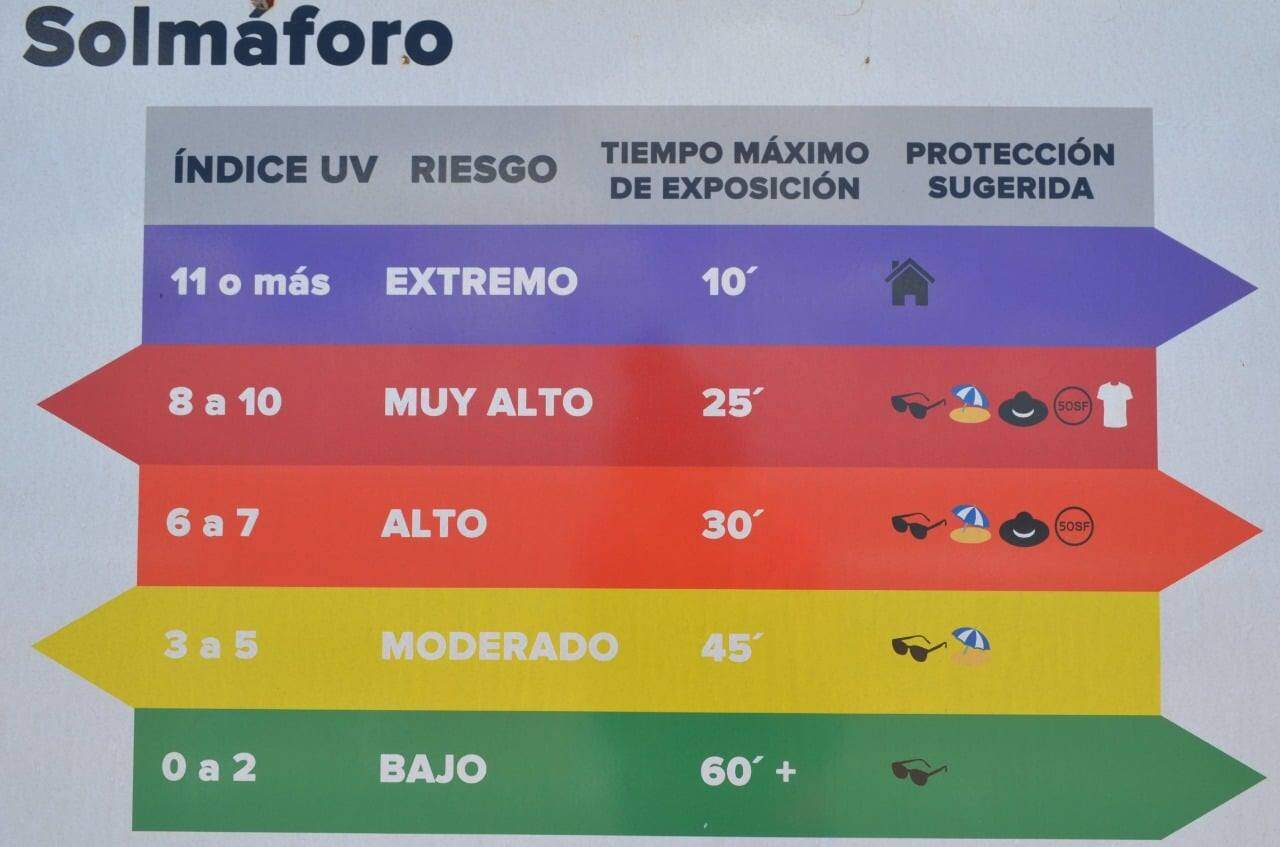
The College of Physicians and Surgeons installed the country’s first solmáforo at its Sabana Sur headquarters as a pilot project to promote daily protection against ultraviolet radiation. The device measures the UV index in real time and displays it through a five-color code set by the World Health Organization.
Green signals low risk. Yellow, orange, red and purple show increasing danger levels. Staff at the college now see the reading at a glance and can adjust their routines right away. The project runs with Dermaclinic and the Costa Rican Association of Dermatology (ASODERMA) under the Costa Rica Takes Care of Its Skin campaign. Officials plan to gather data from this trial before expanding the tool to schools, parks and beaches.
“Doctors have a responsibility to lead by example. This pilot plan begins with our professionals because we firmly believe in caring for those who care for the population. The intention is to generate evidence and experience that will allow us to replicate this tool in more public spaces throughout the country in the future,” said Elliott Garita Jiménez, president of the College of Physicians and Surgeons.
Data from the National Meteorological Institute confirms the need. On clear days in Costa Rica, the UV index reaches at least 10 — the very high-risk category. “The solmáforo translates the UV index into a visible and easy-to-understand signal, allowing people to make immediate decisions to protect their skin.
In a country with radiation levels as high as Costa Rica’s, this tool strengthens prevention and promotes a culture of photoprotection in public spaces. Its implementation in schools, parks, and beaches could have a very positive impact on public health,” said Alejandro Esquivel Gerli, vice president of Dermaclinic.
Skin cancer remains the most diagnosed cancer in Costa Rica. The Ministry of Health’s National Tumor Registry records at least seven new cases every day. The solmáforo highlights the constant exposure Costa Ricans face due to the country’s location and altitude. Health authorities recommend SPF 50+ sunscreen daily, regardless of the color shown.
“In Costa Rica, we receive direct solar radiation almost all year round, and skin cancer is the most common type of cancer. Therefore, sun protection is not a luxury; it is a basic health protection and prevention measure, and its use should be a daily habit,” said Nelson Aguilar of ASODERMA.
College officials say the pilot will help build habits that reach the wider public. Anyone who notices a mole changing shape, color, bleeding or failing to heal should see a doctor promptly.





