

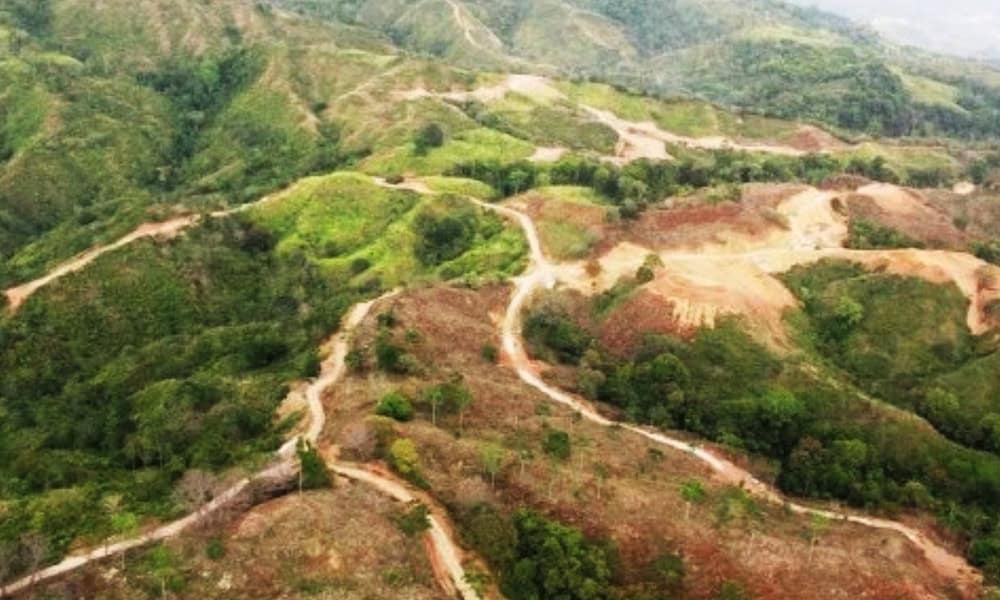
Costa Rica’s Comptroller General of the Republic (CGR) has accepted a complaint and sent it to its oversight unit for review. The focus is on construction permits issued by the Osa Municipality in the Fila Costeña, a mountainous area in the southern Pacific region. The move follows claims of unchecked real estate growth in fragile zones.
The complaint came from the Community Alliance Commission (CAC), linked to the Paso de la Danta Biological Corridor’s local committee, with support from the Frente Amplio party’s legislative group. They argue that the municipality approved building projects without solid scientific backing to protect the environment. In a December 17 letter, referenced as DFOE-DEC-9527, the CGR confirmed it would include the issue in its audit planning.
Fila Costeña, also called the Brunqueña Range, stretches along the Pacific coast from the Savegre River to the Térraba River. It covers about 82,000 hectares in the Paso de la Danta Biological Corridor, linking coastal habitats to inland rainforests. The area features steep slopes, heavy rains, and diverse wildlife, making it a key spot for conservation.
Real estate development has picked up since the early 2000s, leading to forest loss, habitat breakup, and more sediment flowing into marine areas. This has harmed water sources and weakened the corridor. The CAC points out that residential projects over the last 20 years have cut forest cover, strained natural springs that supply drinking water to local towns, and boosted runoff to coastal zones.
Biologist Jorge Lobo, a retired professor from the University of Costa Rica (UCR), has tracked the region for years. He links the damage mainly to tourism-driven real estate, with homes built for foreign buyers on land sold by locals. Lobo notes the trend sped up after 2005, spreading to higher elevations and the Maritime Terrestrial Zone (ZMT).
Through aerial photos and small plane surveys, Lobo has mapped expanding access roads from the coastal highway, creating a web across the hills. These show earthworks, terraces, and supports on steep land for new homes. He lists three main effects: biodiversity loss on land and sea from broken forests; higher erosion risks in clay soils during strong rains, raising landslide chances; and reduced water flow. Changes to the land disrupt how water soaks into aquifers, cutting supplies for nature and people.
The CGR’s review will check if permits followed environmental rules and land use plans. This includes assessments by the National Environmental Technical Secretariat (SETENA). A recent CGR report on SETENA found that 90% of projects get approved without field checks, highlighting risks of oversight gaps and conflicts.
The complaint also notes missing data: details on water capacity in Fila Costeña springs, current forest health, and protection zones. Dozens of springs start here, feeding places like Dominical, Palmar Norte and Sur, Uvita, Ojochal, and Bahía Ballena. At least 60 water uses are handled by 18 community water and sewer groups (ASADAS). These sources support local life and tourism growth in the canton.
Environmental groups call for quick steps, such as a freeze on new permits, an updated local zoning plan, a special protection category for the range, and public talks. Support grew at the 2025 Ocean Festival, where attendees pushed for accountability from the Osa Municipality.
Communities and experts stress the need to safeguard this area for water security and ecology in the southern Pacific. The CGR will share findings with those who filed the complaint after the review ends. For now, the push continues to balance growth with protection in this vital region.





