

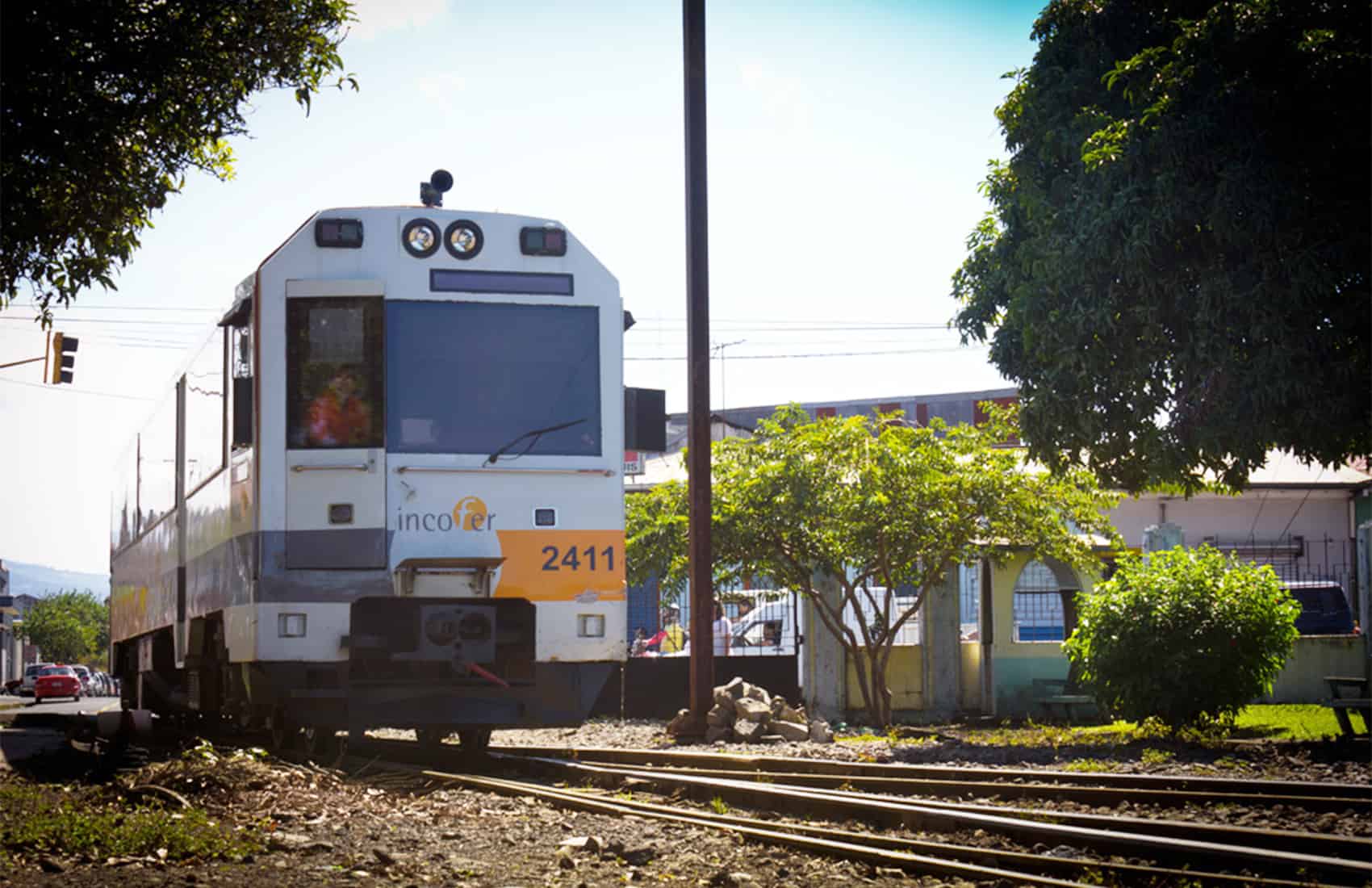
Officials from the Instituto Costarricense de Ferrocarriles (INCOFER) are carrying out a feasibility study on how to link the Juan Santamaría International Airport directly to the future electric train system. The short distance – less than one kilometer – has prompted authorities to examine several alternatives. These include an elevated monorail similar to systems used at airports in the United States and Europe, a subterranean tunnel, or a tram connection.
INCOFER Executive President Álvaro Bermúdez explained the approach during a recent appearance before the Legislative Assembly’s Commission on Fiscal Affairs. “We are doing a feasibility study focused on passenger demand at Juan Santamaría Airport,” he said. “Everyone wants to get off the plane and board a train that takes them to San José, Heredia, Cartago or Alajuela. That is the idea.”
The study, conducted in coordination with the Ministry of Public Works and Transport (MOPT) and AERIS, the company that operates the airport, aims to identify the most suitable option before construction begins on the electric train project. Planners want to align the connection with ongoing work to expand Route 1.
Bermúdez noted that the resources for the study are already in place, allowing officials to move quickly toward a concrete proposal. The effort forms part of broader plans to improve intermodality across the rail network. Passengers arriving at the airport could transfer seamlessly to trains serving the Greater Metropolitan Area once the link is built. The electric train, known as TIBI, is projected to start operations around 2030, connecting key cities including Alajuela, Heredia, San José and Cartago.
INCOFER is also advancing separate studies on intermodality at major stations in San José and other provinces. These include assessments for bus-rail transfers and parking facilities at stations in Alajuela, Heredia and Cartago. The airport connection study draws on passenger volume data to determine the scale and type of infrastructure needed. No final decision has been made, and results from the analysis will guide next steps as the larger electric train project advances.
This initiative reflects ongoing efforts to integrate the country’s main international gateway with its public transport network.





