
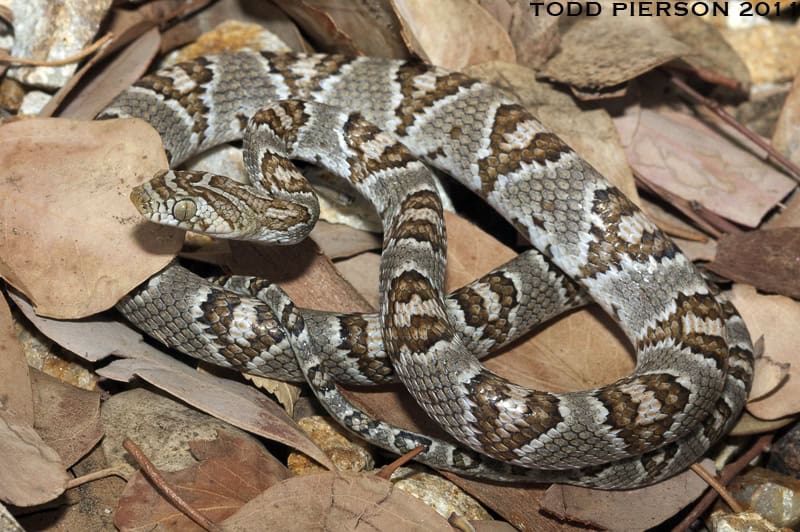
Wanting to be close to nature is probably among the top five reasons that many folks from other countries cite when they decide to move to Costa Rica. If you drilled down on that topic a bit more, what the majority of people probably mean is ‘comfortably close’ to nature. They’re imagining watching a toucan pluck fruit from a tree in their garden or listening to the distant echo of howler monkey calls as they sip coffee on their porch. They aren’t thinking about a snake coiled up in the corner of their living room. That’s a little too close.
Whether you love or fear them, snakes are an integral part of the world-famous biodiversity of Costa Rica. This tiny country manages to pack 141 different species of snakes within its varied habitats. If you’re here for a visit, and you’re not specifically looking for snakes, you’re unlikely to see one, but if you spend enough time in the country, you’re bound to run into one eventually.
Here’s my blanket advice to interacting with snakes in Costa Rica. Do not get near them. Do not touch them. Do not attempt to move them. I’m going to go out on a limb and guess that you aren’t a snake expert. Therefore, you shouldn’t assume whatever snake you’re looking at isn’t one of the 23 or so venomous species in the country. If you find you have an invited snake in your home, you should call your local bomberos, firefighters. They’re trained to handle/remove snakes and they’re called to do so several thousand times per year in Costa Rica.
This article isn’t about handling the snakes that you find in your home (which again you should NOT do), it’s about the easy things you can do to make it less likely that you find yourself in that situation in the first place. There are two main things you can do to lower the chances of a snake entering your home. The first is don’t give them a good place to hide. The second is don’t provide them with food.
There’s a reason why it’s not particularly easy to see snakes in Costa Rica even though there are so many different kinds slithering about. It’s because they don’t like to be out in the open. Snakes are on the menu for many other species, so they spend most of their time hidden. For that reason, you should not provide them with places to hide around your home. Remove any piles of rocks, stacks of wood, or sheets of metal that may be laying around. Those are fantastic places for snakes to hide.
You also don’t want to attract your neighboring snakes with the promise of a good meal. Many species of snakes feed on small rodents, reptiles, and amphibians so make sure you aren’t attracting those species to your house. Keep your trash sealed and away from your home so snakes aren’t attracted to the rodents that are eating your garbage. If you like to compost, make sure your compost bin is a good distance from your home. That’s more rodent food. Also, try to keep water from pooling around your house. Pools of water attract frogs which, in turn, attract snakes.
I can give two first-hand examples of accidentally attracting snakes by unwittingly providing snake food. First, I was called to remove a snake that was intertwined in a pick-up truck’s engine. The reason the snake was there? The bed of the pick-up was being used as a storage space for garbage bags before they were taken to the curb and the local mice knew all about it. Second, I had a leaky water tank at my house, and I was slow to fix it. The pool of water under the tank became a hangout spot for frogs which meant my house became a popular spot for frog-eating lyre snakes.
If you live in Costa Rica, you probably can’t completely eliminate the possibility of finding a snake in or around your home, but if you follow these simple steps, you’re doing what you can to avoid unpleasant interactions with your serpent neighbors.
About the Author
Vincent Losasso, founder of Guanacaste Wildlife Monitoring, is a biologist who works with camera traps throughout Costa Rica.