
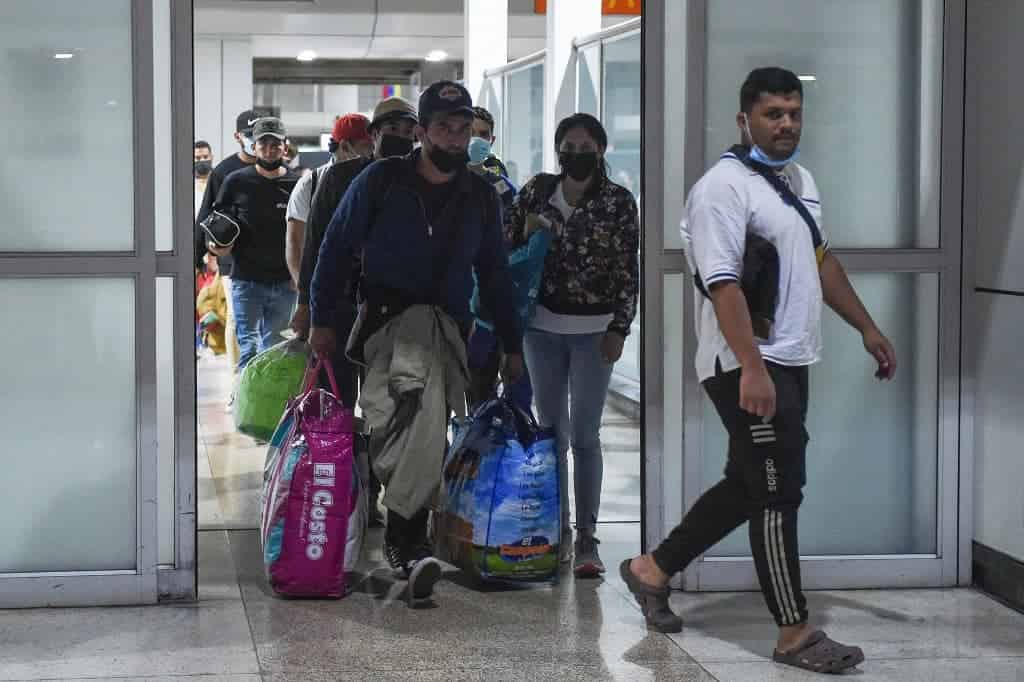
Venezuelan migrants make a “key” economic contribution to the countries where they live, undermining claims that they are merely a burden, according to a study by the International Organization for Migration (IOM) released Wednesday. More than seven million Venezuelans live outside their country due to the crisis endured by the oil-rich nation under the government of Nicolás Maduro, whose administration is not recognized by part of the international community.
Most live in Latin America and the Caribbean, where they have been part of one of the largest diasporas in the region’s history. “The Venezuelan migrant population has emerged as a key economic engine in host countries, boosting commerce and strengthening the productive fabric through its spending patterns,” the report says.
The document analyzes Venezuelan migration between 2021 and 2025 in Aruba, Chile, Colombia, Costa Rica, Ecuador, Panama, Peru, and the Dominican Republic. In consumption alone, Venezuelan migrants contributed $10.6 billion during that period, said Julio Croci of the IOM office for Latin America and the Caribbean during the presentation of the report.
Spending goes mainly to food, housing, and services. In addition, their contribution to health and education systems debunks the argument that the migrant population “overburdens” the public sector, Croci added. They also contribute another $2 billion in fees and taxes, representing nearly 10% of the total.
However, the document warns that more than 80% work informally, which hinders their integration and the payment of higher taxes. Venezuelan migrants represent “considerable potential for the economic growth of receiving countries,” the document stresses, so it is “crucial” to facilitate their regularization in order to enable their entry into the formal labor market.