

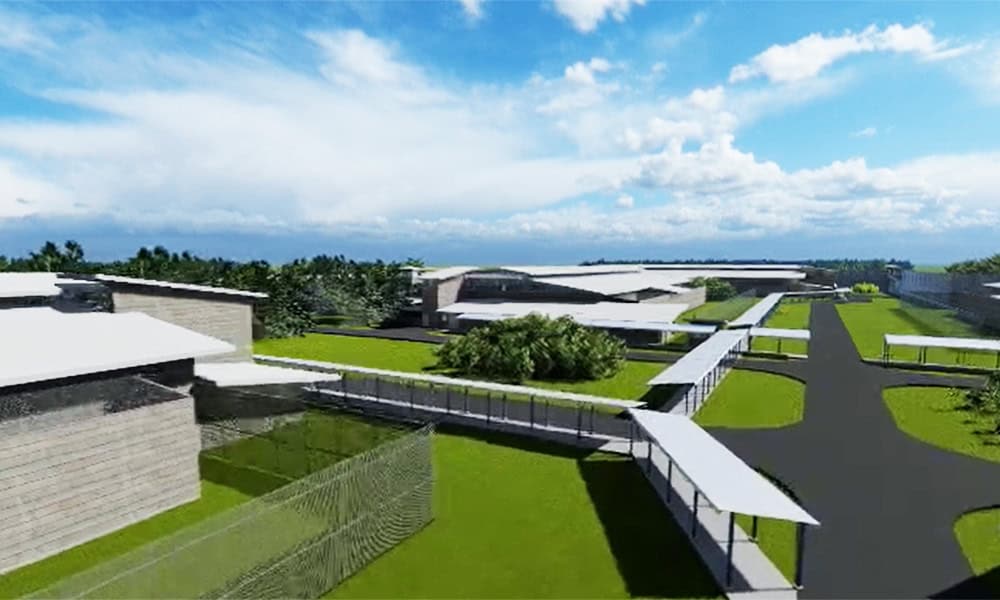
President Nayib Bukele of El Salvador plans to arrive in Costa Rica next week for an official visit focused on the country’s new high-security prison project. The trip centers on the Centro de Alta Contención y Crimen Organizado (CACCO), a facility under construction at La Reforma prison complex in Alajuela.
Costa Rican President Rodrigo Chaves confirmed the visit during a press conference on Wednesday, stating that Bukele will participate in laying the first stone for the CACCO. “He comes to inspect the project and put the first stone,” Chaves said, highlighting the collaboration between the two nations on security matters.
The CACCO draws direct inspiration from El Salvador’s Centro de Confinamiento del Terrorismo (CECOT), a maximum-security prison that Bukele’s administration built to house gang members. Costa Rica aims to use the facility to address rising organized crime and homicide rates, which have spiked in recent years due to drug trafficking influences.
Construction on the $32 million project began after Costa Rica awarded the contract to local firm Edificar in late 2025. Officials target a June 2026 opening, with the prison designed to hold high-risk inmates in isolated conditions. The design includes advanced surveillance and containment features modeled after CECOT, which Chaves toured during his December 2025 visit to El Salvador.
During that trip, Chaves and Bukele signed a security cooperation agreement, paving the way for technical exchanges. Bukele’s upcoming visit reciprocates that gesture, allowing him to review progress on the CACCO firsthand. The event comes amid Costa Rica’s municipal elections, set for February 2, where security remains a top voter concern.
Government sources indicate Bukele’s agenda includes meetings with Chaves and a site inspection at La Reforma. The visit underscores growing ties between the two countries, as Costa Rica seeks to adopt stricter measures against crime while maintaining its democratic framework.
Critics, including human rights groups, have raised concerns about the prison’s potential impact on inmate rights, drawing parallels to controversies surrounding CECOT. Supporters argue the facility will help curb violence without compromising Costa Rica’s no-army tradition.
Chaves emphasized the project’s role in national safety. “This is about protecting our people from organized crime,” he noted. Bukele, known for his tough stance on gangs, has seen El Salvador’s homicide rate drop sharply since implementing similar policies. The visit marks Bukele’s second trip to Costa Rica in recent months, following his attendance at an earlier event. Details on exact timing and public access remain limited, with security protocols in place.
As construction advances, the CACCO represents a shift in Costa Rica’s approach to incarceration, blending local needs with regional strategies. Officials expect the facility to house up to 1,000 inmates upon completion, focusing on those linked to drug cartels and violent offenses.
The collaboration highlights how Central American nations address shared challenges like narco-trafficking. Bukele’s involvement brings attention to the project, potentially influencing public opinion ahead of elections. Costa Rican authorities continue to monitor crime trends, with 2025 marking a record year for homicides. The CACCO aims to isolate key figures in criminal networks, reducing their influence from behind bars.
Bukele’s administration has exported its security model to other countries, including Honduras and Ecuador. Costa Rica’s adoption reflects a pragmatic response to escalating threats, balanced against its commitment to human rights. The visit next Wednesday signals ongoing partnership, with both leaders set to discuss further cooperation.





