
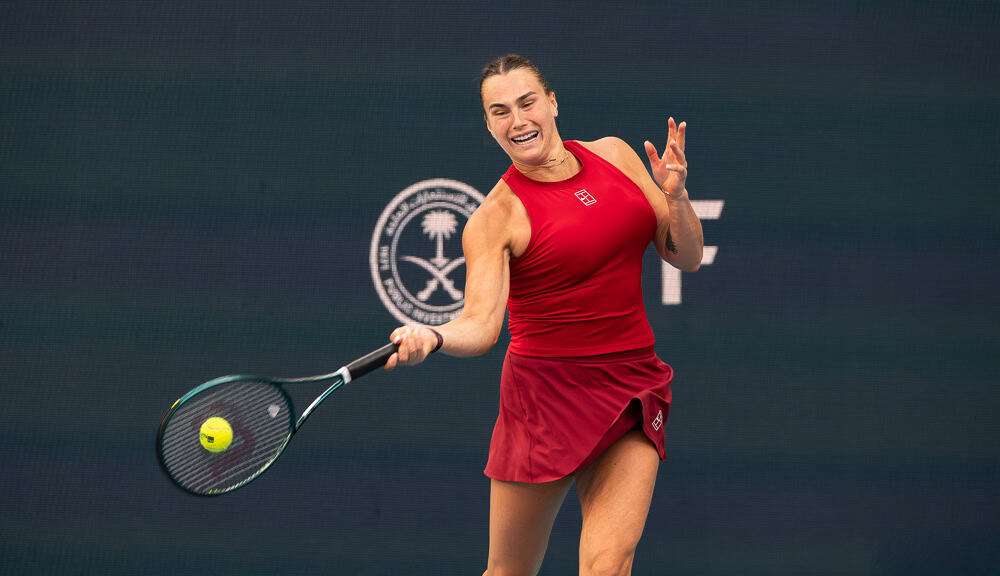
As the 2026 tennis season kicks off, world number one Aryna Sabalenka has spoken out against the packed schedule, labeling it as too demanding and announcing her intent to pull out of select tournaments to safeguard her physical condition. This comes just days before the Australian Open, where players face mounting pressure to perform at peak levels after a short off-season.
Sabalenka, the defending champion in Brisbane and a two-time Australian Open winner, shared her frustrations during a press conference following her quarterfinal match at the Brisbane International on January 8. She described the calendar as “insane,” pointing to the relentless string of events that leave little room for recovery. “The season is definitely insane, and that’s a fact,” Sabalenka said. “The rules are quite tricky with mandatory events, but I’m still skipping a couple events in order to protect my body because I struggled a lot last season.”
Her decision underscores a growing concern among elite players about the toll of the tour. Sabalenka, 27, from Belarus, explained that she would rather face potential fines or loss of ranking points than risk injury or exhaustion. Last year, she dealt with shoulder issues that forced her to withdraw from Wimbledon, and she aims to avoid similar setbacks in 2026. “Even though the rules are mandatory, if I feel like my body needs rest, I’m going to take that rest,” she added. “They’re not focusing on protecting all of us; they’re focusing on something else.”
Sabalenka’s stance echoes complaints from other top competitors. Iga Swiatek, the world number two from Poland, also skipped mandatory tournaments in 2025, resulting in docked ranking points. Swiatek has previously highlighted the mental and physical strain of the schedule, noting how it contributes to burnout.
“We play so many tournaments, and it’s hard to stay fresh,” Swiatek said in a recent interview. Coco Gauff, the young American star, has joined the chorus, arguing that the early-season demands make it tough to build momentum without overexerting. “It’s a lot right out of the gate,” Gauff commented after her opening match in Adelaide this week.
The issue has gained traction as the sport expands with more high-stakes events, including lucrative exhibitions and team competitions like the United Cup, which wrapped up on January 5. The WTA and ATP tours require players to compete in a set number of tournaments based on their rankings, with penalties for non-compliance. For top-10 players like Sabalenka, this means committing to at least 18 events annually, plus the four Grand Slams. Critics argue this setup prioritizes revenue over athlete well-being, especially with the season starting immediately after the holidays.
Tennis officials have defended the structure, emphasizing that it provides opportunities for global exposure and prize money growth. A WTA spokesperson stated that the tour continually reviews feedback from players and aims to balance competition with rest periods. However, player representatives on the Professional Tennis Players Association (PTPA), co-founded by Novak Djokovic, have pushed for reforms, including fewer mandatory events and longer off-seasons.
This debate arrives at a pivotal moment as the Australian Open looms from January 12 to February 2 in Melbourne. The first Grand Slam of the year traditionally sets the tone for the season, but the compressed lead-up—featuring tournaments in Brisbane, Adelaide, Hobart, and Auckland—leaves players with scant time to adjust to the heat and hard courts.
Sabalenka, seeded first, enters as a favorite after her strong 2025 campaign, where she captured titles in Cincinnati, Miami and the US Open. Yet her choice to skip events could alter her preparation. She plans to focus on quality over quantity, potentially withdrawing from one or two warm-up tournaments to ensure she’s sharp for Melbourne.
Other players have adopted similar strategies. Jannik Sinner, the men’s world number one from Italy, has selective scheduling in mind after a grueling 2025 that included hip troubles. “You have to pick your battles,” Sinner said in Sydney. On the women’s side, Elena Rybakina from Kazakhstan has already pulled out of Adelaide citing fatigue, while Jessica Pegula of the United States mentioned scaling back to manage ongoing health concerns.
The Australian Open organizers have responded by extending the tournament to 15 days in recent years, starting on a Sunday to ease the early-round crunch. This year, the event features a record $96.5 million in prize money, drawing a full field of 128 players per draw. Still, the early-season grind remains a hot topic in locker rooms. “It’s not just about one player; it’s the whole system,” said Ons Jabeur, the Tunisian veteran. “We need changes to keep everyone healthy.”
For Sabalenka, the priority is clear: arriving in Melbourne fit and focused. Her powerful baseline game and mental resilience have made her a dominant force on hard courts, but she knows sustainability matters. “I want to play for a long time, not just burn out early,” she noted. As she advances in Brisbane, facing a semifinal against a qualifier, her words serve as a reminder that even the best must navigate the sport’s rigors carefully.
The broader implications could reshape the tour. If more stars follow suit, tournaments might see diluted fields, affecting fan interest and sponsorships. Conversely, it could spur meaningful dialogue at the upcoming player council meetings in Melbourne. Djokovic, a PTPA advocate, plans to address the schedule during the Australian Open, calling for a “player-first” approach.
As the sun sets on another Brisbane day, Sabalenka’s candid remarks highlight the human side of professional tennis. Players push their limits for glory, but the cost is real. With the Australian Open just around the corner, the focus shifts to who can endure—and who might pay the price for speaking up.