

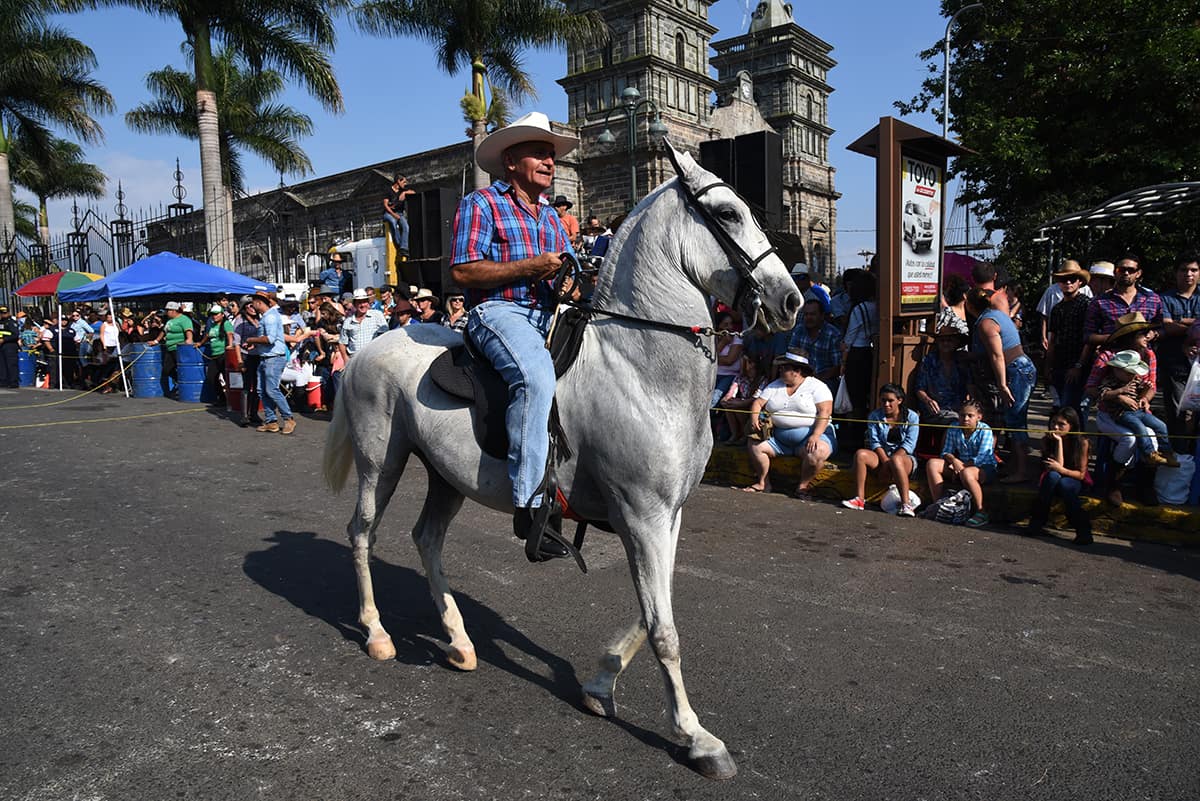
For first time visitors, the Fiestas de Palmares can feel like several Costa Rican traditions stacked into one place. It is part town fair, part concert series, part horse parade, part bullring show, and it runs long enough to become a fixture of our country’s January events.
The 2026 edition is scheduled for Jan. 15–26, filling Palmares with daytime parades and family activities and late nights that lean more party than small town. Most of it is centered on the campo ferial, a purpose-built fairground that functions like a temporary city of food stalls, bars, stages, rides, and the redondel, the bullring arena.
How Palmares became Palmares
What people call Palmares today, the 12-day mega-version, is the result of a steady build over decades. A La Nación archive story from 1998 describes the early fiestas as a three-day civic celebration dating back about 40 years at that point, when the bull component was already central and organizers brought bulls from Puntarenas by road. That same piece describes the later shift: Palmares grew, roads improved, and a civic association took on the job of building a more permanent complex to host the event.
Local coverage of the Asociación Cívica Palmareña marks its formation in the mid-1980s, including the formal constitutive act in 1986, and ties its early work to buying land and setting up the infrastructure that allowed the festival to scale. For visitors, that explains why Palmares now feels less like a casual weekend fair and more like a managed venue with a published schedule, large security presence, and ticketing for headline events.
What you are actually walking into
A useful way to understand Palmares is to think of it as a Costa Rican turno on a national scale. A turno is the neighborhood or town fair tradition: food, music, games, and fundraising, usually tied to civic groups or community needs. Palmares has kept that civic DNA while adding modern entertainment and sponsorship.
Some of the vocabulary helps tourists quickly decode the schedule. Pasacalles are street parades, usually built around bands and characters moving through town. Juegos de pólvora are fireworks. The redondel is the bullring arena where the taurine nights, rodeos, and riding competitions are staged.
The tope remains the most recognizable tradition on the calendar. In Costa Rica, topes are horse parades tied to rural culture and the Central Valley’s long relationship with horses and cattle. In Palmares, it is a downtown street event that pulls crowds who may not even step into the fairgrounds until later. The published 2026 schedule places the tope on Saturday, Jan. 17 at noon.
Concerts and the modern festival layer
Palmares is also a concert draw, and the 2026 lineup leans on three international anchors spread across the run. The published schedule and Costa Rican media reports list an opening-night boleros show with Trío Los Panchos and Trío Los Dandys on Jan. 15, a midday show by Óscar D’León on Jan. 18, and a midday show by Piso 21 on Jan. 25. Around those, the fairgrounds run daily with smaller stages, bars, and the constant churn of food and people.
PalmarINK and the push toward more culture programming
One of the more evident changes in recent editions is the effort to add programming that is not just concerts and the redondel. For 2026, the schedule includes PalmarINK, a creative track based around the festival’s gallery space with workshops, contests, and live activities tied to visual art and tattoo culture. That matters for tourists because it gives you a daytime reason to visit even if you are not planning to stay late.
The bullring, and what toros a la tica means
Bullring events remain a core draw, and they can be confusing for visitors who hear the word corrida and assume Spanish-style bullfighting. Costa Rica’s tradition is commonly described as toros a la tica: the bull is not killed, and the show is built around dodging, bravado, and timed events. That said, it is still contested here. Some Costa Ricans see it as a living tradition and a major part of Palmares. Others oppose it on animal welfare grounds.
Practical context for visitors
Palmares sits in Alajuela province, within day-trip range of San José, which is why it attracts people who come in for a single headline day like the tope or a concert. Expect traffic, street closures, and crowded buses on peak dates. If you go, plan around heat and sun in the daytime, and plan for long lines at night.
Below is a schedule chart with the main dates and activities for the 2026 run.
Schedule highlights
| Date | Activities |
|---|---|
| Throughout (Jan 15-26) | PalmarINK: Workshops on painting, tattoo talks, cosplay contest, graffiti sessions, live music, tattoo contest, and other cultural activities; Carrera de botargas (costume race), Juegos de pólvora (fireworks), Festival infantil (kids’ festival), Tope de caballitos de palo (kids’ stick horse parade) |
| Thursday, January 15 | Pasacalles parade, Inauguration of the gallery, Presentation by an international artist (TBD), Night of boleros with Trío Los Panchos and Trío Los Dandys |
| Friday, January 16 | Pasacalles parade, Corrida de toros (8 p.m.) |
| Saturday, January 17 | Tope tradicional (noon), Verano toreado (8 p.m.) |
| Sunday, January 18 | Clásica Palmarín MTS MTB, Concierto internacional with Óscar D’León (noon), Rodeo (3 p.m.), Campeonato de monta (8 p.m.) |
| Tuesday, January 20 | Corrida infantil (6 p.m.) |
| Thursday, January 22 | Estrellas equinas (8 p.m.) |
| Sunday, January 25 | Motor show, Concierto with Piso 21 (noon), Gran rodeo (3 p.m.), Campeonato de monta (8 p.m.), Corrida de toros (8 p.m.) |
| Monday, January 26 | Pasacalles parade, Corrida de toros (8 p.m.), Juegos de pólvora |
For the uninitiated, Palmares is easiest to enjoy if you treat it like a choose-your-own festival: pick one signature tradition such as the Saturday tope, one cultural block such as PalmarINK, and one night in the redondel or a headline concert, then plan your transport around the crowds. Go early for parades and daytime events, expect long lines and traffic on peak dates, and keep an eye on same-day updates if weather or logistics force schedule tweaks.





