

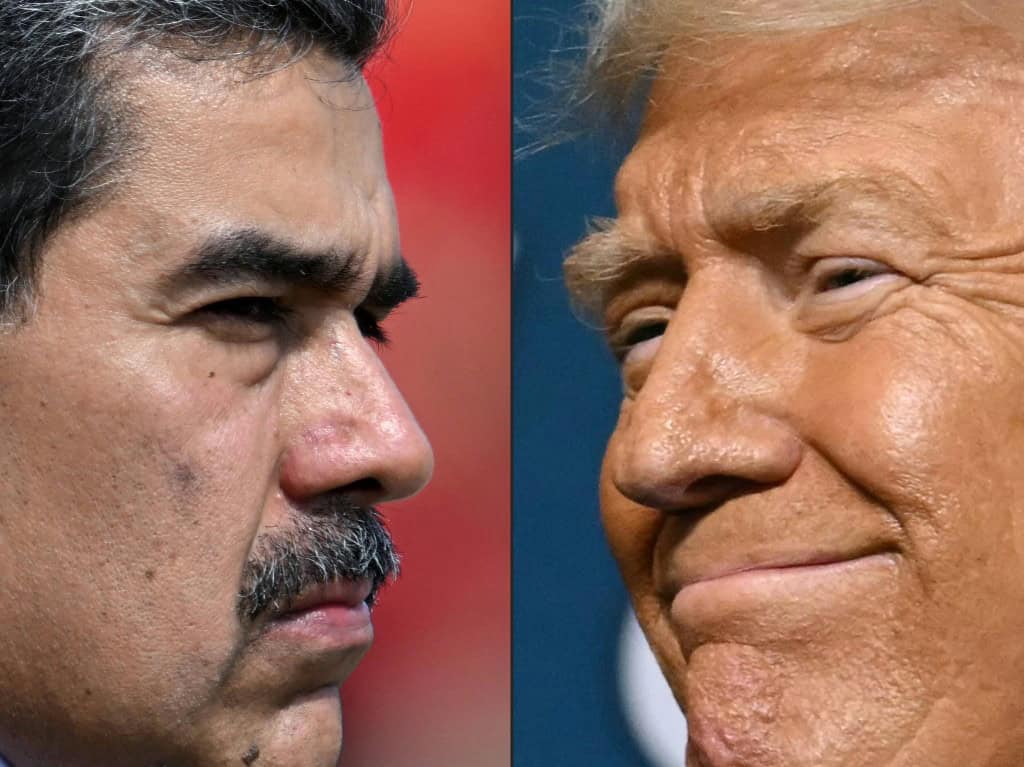
United States forces bombed several sites in Caracas early this morning, leading to the capture of Venezuelan President Nicolás Maduro, according to an announcement from U.S. President Donald Trump. The attacks started around 2 a.m. local time, with residents reporting multiple explosions and low-flying aircraft over the capital. Smoke rose from key locations, including military complexes like Fuerte Tiuna. Venezuelan officials quickly labeled the strikes as an act of aggression by the United States.
Trump posted on Truth Social that U.S. forces executed a large-scale operation in Venezuela. He stated that Maduro and his wife, Cilia Flores, were taken into custody and removed from the country. The post described the action as coordinated with U.S. law enforcement and military units, including the Army’s Delta Force.
Venezuelan state media broadcast images of damage in Caracas and nearby areas. Government spokespeople condemned the strikes, calling them an imperialist assault aimed at destabilizing the nation. Reports indicate that the bombings targeted northern regions, with at least seven detonation sites confirmed in the capital.
The strikes come amid heightened tensions between the two countries. Venezuela has faced U.S. sanctions for years over issues like human rights and governance. Recent disputes over oil resources and border security with neighboring nations escalated the situation. International observers noted the rapid sequence of events. Explosions woke residents, followed by Trump’s confirmation within hours. Venezuelan authorities urged citizens to remain calm while mobilizing defenses.
Details on Maduro’s exact location at the time of capture remain unclear. Trump indicated the operation involved airstrikes and ground teams. Venezuelan reports suggest helicopters played a role in the extraction. The U.S. government has not released further statements on casualties or the full scope of the strikes. Venezuelan sources claim civilian areas were affected, though independent verification is pending.
This development shifts dynamics in Latin America. Venezuela’s alliances with countries like Russia and China may prompt responses from those governments. Regional leaders, including those in Colombia and Brazil, have called for dialogue to prevent wider conflict. Maduro, in power since 2013, has led Venezuela through economic challenges and political unrest. His capture marks a significant turn in U.S.-Venezuela relations under Trump’s administration.
Officials in Washington described the action as necessary to address threats from the Maduro regime. Venezuelan exiles in the U.S. and elsewhere expressed mixed reactions, with some viewing it as a step toward change. The strikes disrupted power and communications in parts of Caracas. Emergency services responded to fires and structural damage. No official death toll has emerged yet.
Trump’s announcement emphasized the operation’s success in removing Maduro without broader invasion. He credited U.S. intelligence and military precision. Venezuelan Vice President Delcy Rodríguez addressed the nation, vowing to resist foreign intervention. She accused the U.S. of violating international law.
Analysts point to long-standing U.S. policy goals in the region. The capture could lead to trials for Maduro on charges related to narcotics and corruption, as previously indicted by U.S. authorities. Costa Rican officials have not commented officially, but the event raises concerns about stability in the hemisphere. Trade and migration flows from Venezuela affect neighboring countries, including Costa Rica.
As the day unfolds, more information on the strikes and Maduro’s status is expected. The U.S. Department of Defense may provide briefings later today.





