
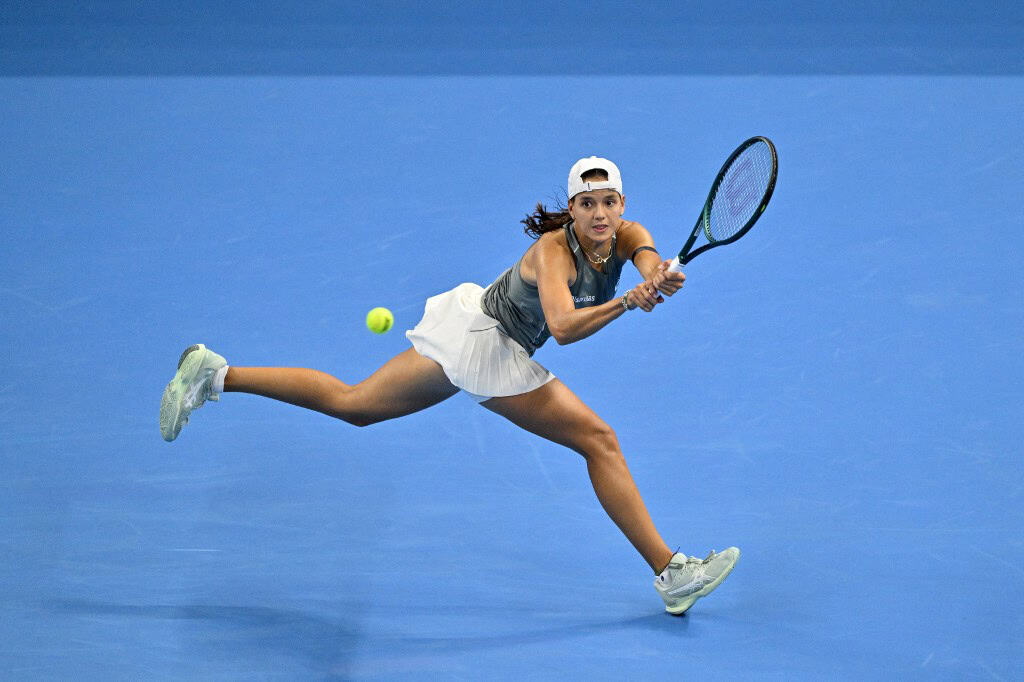
For years, Latin American tennis followers have turned to a handful of familiar names when scanning Grand Slam draws for women’s singles contenders. Brazil’s Beatriz Haddad Maia often tops that list, followed by Colombia’s Camila Osorio or the rare strong showing from an Argentine or Mexican player. As the 2026 Australian Open approaches, however, a shift is underway.
Emiliana Arango, the 25-year-old from Colombia, enters Melbourne ranked No. 48 in the world, securing her spot in the main draw without the grind of qualifiers. This marks a steady ascent over the past two seasons, positioning her as the highest-ranked Latin American woman heading into the tournament. For those in Costa Rica and Central America who track the sport amid busy lives, Arango represents a fresh narrative—one rooted in persistence and regional relevance rather than distant glory.
Arango hails from Medellín, where she first picked up a racket. She plays right-handed with a two-handed backhand, favoring smart placement and court coverage over raw power. After years navigating lower-tier ITF and WTA events, 2025 proved transformative for her career.
The year started strong in February when she claimed her first WTA 125 title at the Cancún Tennis Open, dominating the final with a 6-1, 6-4 win. Soon after, in Mérida, she powered through qualifiers to reach the WTA 500 final, notching an 11-match streak before falling 6-0, 6-0 to Emma Navarro, then ranked No. 10. That effort propelled her into the top 100 for the first time, a milestone that reshaped her season.
September brought another highlight: a run to the WTA 500 final in Guadalajara, where she faced 17-year-old American Iva Jovic. Though Jovic prevailed 6-4, 6-1, Arango’s performance solidified her as Colombia’s top player and pushed her ranking firmly into the top 50. By season’s end, her WTA record showed 29 wins against 28 losses, reflecting the volume of competitive matches she logged, many starting from qualifying rounds.
This progress stands out in Latin American tennis, where breakthroughs often come slowly, away from the sport’s traditional hubs. Arango’s results draw from consistent play rather than flashy upsets, offering a blueprint for sustained growth in a region that contends with limited funding and infrastructure.
Her Grand Slam history remains developing. She has appeared in the main draws at Roland Garros, Wimbledon, and the US Open, advancing past the first round only once in singles. At the Australian Open, qualifiers have been her limit until now. Entry lists for 2026 confirm her at No. 48 among direct acceptances, sparing her the early-round battles in Melbourne’s challenging conditions.
Colombian supporters see this as a turning point—a player entering a major with stability, able to focus on the full calendar ahead. In broader Latin American terms, it underscores emerging disparities. The 2026 Australian Open features 17 Latin American singles players across men’s and women’s draws, including standouts like Brazil’s Haddad Maia and Chile’s Alejandro Tabilo. Yet Central America sends none, with Mexico’s Renata Zarazua as the closest representative from the north.
This absence highlights ongoing challenges in the isthmus. Colombia benefits from a solid foundation: high-altitude training, a clay-court heritage, and domestic events that build experience without constant travel. The country hosts ITF and Challenger tournaments, maintains active Davis Cup and Billie Jean King Cup teams, and has nurtured talents like Santiago Giraldo and Osorio before Arango.
In contrast, Costa Rica and its neighbors work with thinner resources. Events like the Copa del Café in San José provide junior exposure, and scattered ITF stops offer glimpses of pro-level play. But high-stakes professional opportunities remain scarce nearby. Recent analyses of the Australian Open entries frame Central America’s missing presence as part of a persistent “Grand Slam gap,” where talent exists but pathways to the top ranks lag.
Arango’s story transcends national lines in this light. She demonstrates what targeted support—coaching, events, and commitment—can achieve in a Latin American context, even without the deep pockets of European or North American programs. At 25, she embodies earned success over early hype, having built her game through patience and adaptation.
Her imperfections add to the appeal. The lopsided Mérida final drew attention, but Arango spoke openly about exhaustion and the mental demands of her schedule. Her breakthroughs came at accessible venues: a 125-level win in Cancún, finals in Mérida and Guadalajara amid supportive crowds. For aspiring players on courts in San José, Heredia, or Guatemala City, this feels grounded, closer to home than the paths of those who relocate young to foreign academies.
As the Australian Open begins January 18, many in Central America will tune in from afar—via streams on phones or late-night TV sessions, sharing thoughts in group chats. The time zone and travel barriers keep most at a distance, though some expats and dedicated fans eye Melbourne trips. Coverage in the region increasingly ties the event to local aspirations, turning it into a shared ritual.
Arango provides a focal point in the draw. Likely starting on secondary courts, her ranking equips her to challenge higher seeds and aim for deeper runs. For Costa Rica and Central America, she signals possibility amid the region’s hurdles. Colombia proves top-50 status is reachable with strategic investment. As Melbourne’s courts light up, the region watches, pondering if similar steps could lift a local name into that elite group.
For the moment, Emiliana Arango steps into the 2026 Australian Open as Latin America’s leading woman—a symbol of gradual change reshaping the sport’s regional landscape.