

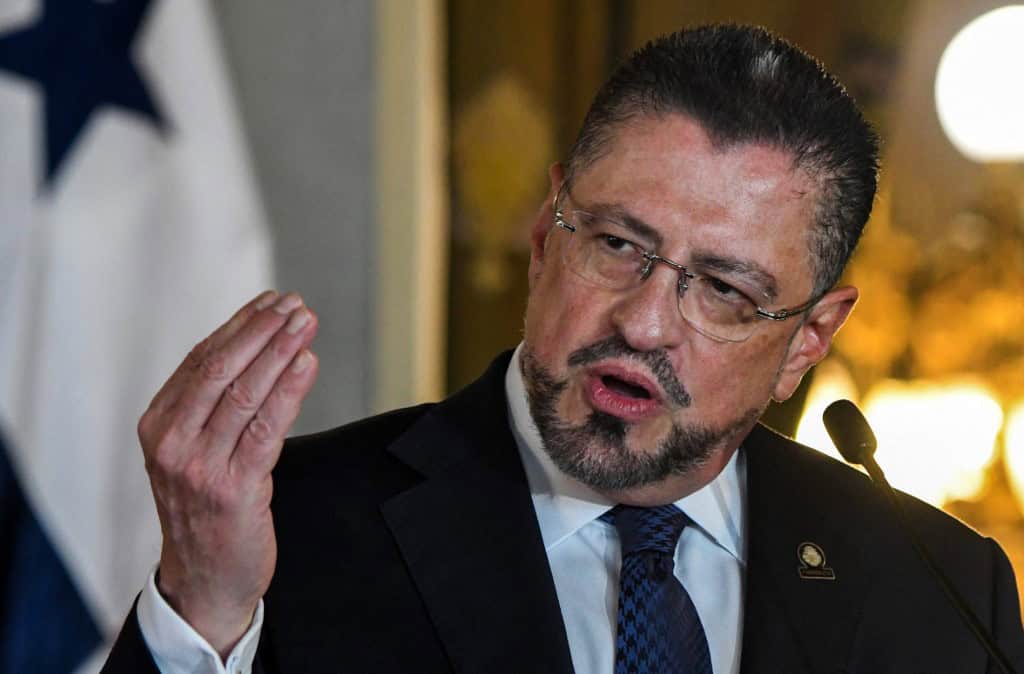
President Rodrigo Chaves stands before a critical test today as lawmakers convene to decide on lifting his immunity, opening the door to an investigation into claims that he misused his position to sway the upcoming 2026 elections. The 64-year-old leader, known for his firm stance against crime that keeps his approval ratings high, calls the proceedings a political attack orchestrated by rivals.
The Supreme Electoral Tribunal (TSE) requested the move, charging that Chaves acted outside legal bounds to promote a political agenda. Costa Rican law bars the president from engaging in campaign efforts or leveraging the office for party gains. This marks the second such challenge for Chaves; in September, Congress turned down a similar bid tied to corruption claims involving a $32,000 payment to a friend for image consulting services.
Chaves maintains his innocence, stating no laws or constitutional rules were broken. He labels the effort a “circus” and a “clear attempt at political lynching.” Earlier today, he announced he would skip the session, pointing to unclear guidelines on participation and doubts about whether a vote would even occur. “The president will not lend himself to petty political interests,” his administration said in a statement, highlighting fears of opposition tactics to disrupt the quorum and delay proceedings.
The assembly needs 38 votes out of 57 to approve the lift. Analysts and lawmakers predict the opposition falls short, much like before. “The numbers do not favor them,” said Francisco Barahona, former rector of the University for Peace. He noted that even potential swing votes from an evangelical faction hesitate, wary of making Chaves appear as a victim.
The debate unfolds against a backdrop of tension between government branches. Chaves has openly criticized the judiciary, prosecutors, and the TSE, claiming they block his reform agenda. In turn, officials from those bodies accuse him of overstepping toward authoritarianism. Constitutional expert Marvin Carvajal from the University of Costa Rica described the situation as unique, not for the repeated immunity requests, but for the president’s disregard for electoral norms. “What stands out is how he has conducted himself with such contempt for the rules,” Carvajal said.
If immunity lifts and the TSE convicts, Chaves could face removal or a ban from public office for years. With his term ending in May and elections set for February 1, time constraints make a full process unlikely. The right-wing camp aims to hold power, with former minister Laura Fernández among leading candidates.
External voices weigh in too. U.S. Congressman Mario Díaz-Balart, a Trump supporter, warned that ousting a president close to elections threatens democratic stability. Costa Rica has long held its place as one of Latin America’s steady democracies, where presidents serve single terms without reelection. Yet this clash tests that foundation as the nation heads into a pivotal vote.
Even if Chaves prevails, past controversies linger. The World Bank once penalized him for harassing subordinates, prompting post-election apologies from him. As the plenary session begins at 1 p.m. local time, eyes turn to whether lawmakers deliver a decisive outcome or let divisions persist.





