
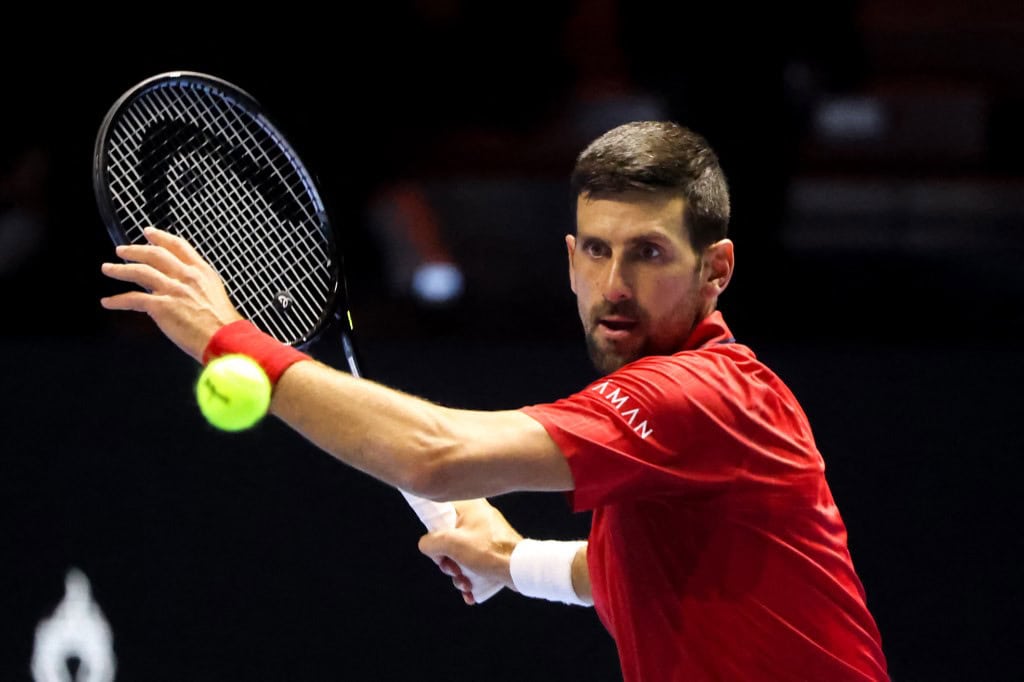
Novak Djokovic, the 24-time Grand Slam champion, has ended his association with the Professional Tennis Players Association (PTPA), the players’ group he helped establish in 2020. The Serbian star made the announcement on social media Sunday, pointing to ongoing issues with transparency and governance as key factors in his choice.
“After careful consideration, I have decided to step away completely from the Professional Tennis Players Association,” Djokovic wrote. “This decision comes after ongoing concerns regarding transparency, governance, and the way my voice and image have been represented. I am proud of the vision that Vasek and I shared when founding the PTPA, giving players a stronger, independent voice – but it has become clear that my values and approach are no longer aligned with the current direction of the organization.”
The move arrives at a pivotal moment for Djokovic, who turns 39 in May and remains focused on extending his record haul of major titles. He plans to compete in the Adelaide International from January 12-17 as a warmup for the Australian Open, where he seeks a landmark 25th Grand Slam crown. The Melbourne event, starting January 25, has long been a stronghold for Djokovic, with 10 of his majors claimed there.
Djokovic co-founded the PTPA alongside Canadian player Vasek Pospisil during a turbulent period in tennis. The idea took shape in the summer of 2020, as the sport grappled with the fallout from the global pandemic. Players faced canceled tournaments, reduced prize money, and uncertainty about health protocols. Djokovic, then president of the ATP Player Council, resigned from that role to launch the PTPA, arguing that the existing structures failed to represent athletes adequately.
The PTPA positioned itself as an independent advocate for professional players, separate from the ATP and WTA tours. It aimed to address longstanding grievances, including revenue sharing, scheduling demands, and decision-making power. Early support came from a mix of top names and lower-ranked pros, though the group faced pushback from established bodies. Critics questioned its timing and potential to divide the sport, while supporters saw it as a necessary push for reform.
In the years since, the PTPA has grown its membership and taken bolder steps. Last March, it filed a lawsuit against the ATP, WTA, and the four Grand Slam tournaments, accusing them of anti-competitive behavior and exploitative practices. The suit highlighted an “unsustainable schedule” that runs 11 months a year, leaving players little time for rest or recovery. It also claimed governing bodies stifled competition by restricting alternative events and limiting player autonomy.
Notably, Djokovic did not appear as a plaintiff in that legal action, a detail that hinted at possible rifts within the organization. Reports suggest internal debates over strategy and leadership may have contributed to his departure, though Djokovic’s statement emphasized personal misalignment rather than specific disputes. Pospisil, who remains involved, has not publicly commented on the split.
The announcement has sparked discussion across the tennis community. Some observers view it as a setback for the PTPA, which relied heavily on Djokovic’s star power and influence to gain traction. Without him, the group may struggle to maintain momentum in its push for change. Others see it as Djokovic streamlining his priorities amid a demanding phase of his career. At 38, he continues to compete at the elite level, holding the world No. 4 ranking and showing no signs of slowing down.
Fellow players have weighed in with mixed reactions. Daniil Medvedev, the Russian world No. 3, called the timing a “bad look” ahead of the Australian Open, suggesting it could distract from the on-court action. “Novak’s done a lot for players, but quitting something he started right before a major – it’s unexpected,” Medvedev told reporters in Brisbane, where he’s preparing for his own season start. On the other hand, American player Reilly Opelka, a vocal PTPA supporter, expressed understanding. “Nole’s always put players first, but everyone has their limits,” Opelka posted online.
The broader implications for tennis governance remain unclear. The sport has seen increasing calls for unity in recent times, with talks of merging the ATP and WTA tours and expanding premium events. The PTPA’s lawsuit, filed in a U.S. court, seeks damages and structural reforms, but progress has been slow. Djokovic’s exit could signal a shift toward individual advocacy rather than collective action, or it might prompt the PTPA to refine its approach.
For Djokovic, the focus now shifts firmly to the court. His 2025 season ended on a high note with a Wimbledon final appearance, though he fell short of adding to his major tally. Injuries and off-court commitments tested him, but he enters 2026 with renewed determination. The Adelaide tournament offers a chance to build form on hard courts, similar to his successful prep runs in past years.
Australian Open organizers anticipate Djokovic’s presence as a major draw. Tournament director Craig Tiley noted the Serb’s enduring popularity Down Under, despite past controversies like his 2022 deportation over vaccination status. “Novak’s story with the Australian Open is legendary,” Tiley said in a recent interview. “Fans are eager to see if he can make history again.”
Djokovic’s statement closed on a forward-looking note: “I will continue to focus on my tennis, my family, and contributing to the sport in ways that reflect my principles and integrity.” This echoes his longstanding commitment to philanthropy through the Novak Djokovic Foundation, which supports early childhood education in Serbia and beyond.
As the tennis world processes this development, one thing is certain: Djokovic’s influence extends far beyond his racquet. Whether through titles or advocacy, he has shaped the game for nearly two decades. His departure from the PTPA marks the end of one chapter, but his pursuit of excellence on the court shows no sign of fading.