

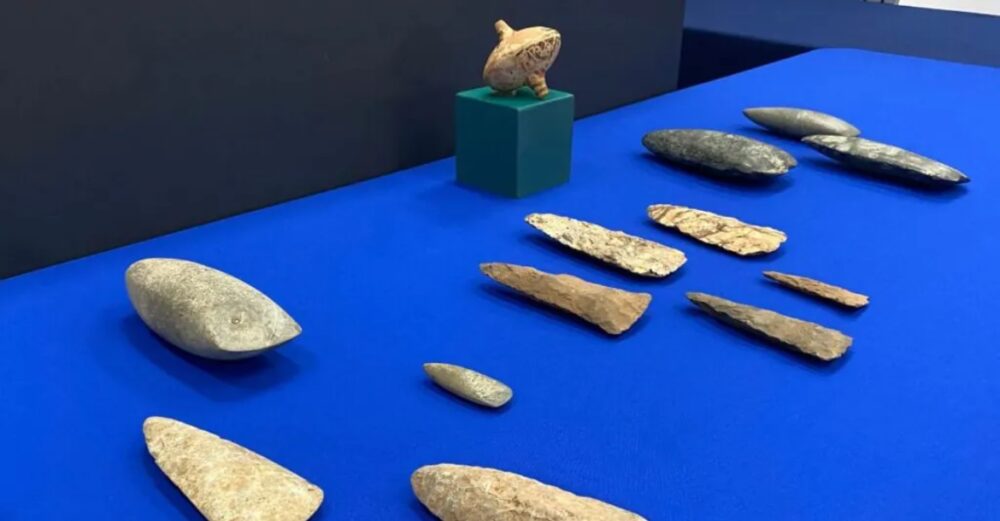
The United States government returned 13 pre-Columbian artifacts to Costa Rica this week, marking another step in the repatriation of items seized during a massive FBI operation in 2014. The pieces, including 12 stone axes and one ceramic ocarina, now rest with the National Museum of Costa Rica after years of identification and diplomatic coordination.
Authorities confiscated the artifacts from the rural Indiana home of Don C. Miller, a collector who amassed thousands of cultural objects over decades. The FBI raid uncovered more than 7,000 documented items, with estimates suggesting the full collection surpassed 42,000 pieces. Among them were over 500 sets of human remains from various regions in the Americas and Asia. This operation stands as the largest single recovery of cultural property in FBI history.
The repatriation process began in 2019, but progress has moved slowly due to incomplete provenance records for most items. So far, only about 15 percent of the seized artifacts have made their way back to their countries, tribes, or institutions of origin. Costa Rican officials first learned of potential matches in 2022 when the U.S. Embassy consulted the National Museum’s Department of Anthropology and History. Specialists there reviewed provided data and confirmed the artifacts’ ties to Costa Rica.
Officials held the formal handover on Tuesday at the National Museum’s offices in Pavas, a district of San José. Jorge Rodríguez, Costa Rica’s Minister of Culture, attended the ceremony and spoke on the significance of the return. “Each recovered object forms part of our identity and reminds us of our duty to protect it,” Rodríguez said. “We appreciate the collaboration from the U.S. government and the FBI, and we stand firm in our efforts to combat the illegal trade in cultural property.”
The artifacts date back to pre-Columbian eras, with the stone axes likely used for agricultural purposes and the ocarina serving as a musical instrument. Their return highlights ongoing challenges in addressing illicit trafficking, which often connects to broader criminal networks. Jennifer Savage, Chargé d’Affaires at the U.S. Embassy in San José, emphasized the shared benefits of such partnerships.
“Working together to safeguard cultural property breaks up international networks that link to other crimes,” Savage stated. “This makes the United States, Costa Rica, and the wider region more secure.” Grettel Monge, director of the National Museum, also addressed the event, pointing to its broader implications.
“This restitution acts as historical justice and affirms the value of Costa Rica’s heritage,” Monge said. “It bolsters our role in preserving historical memory, keeping these items available for study, education, and public access.”
Costa Rica has actively pursued repatriations in recent years. Since 1986, the country has recovered 3,650 archaeological items from the U.S. and Europe. In 2024 alone, 395 pre-Columbian artifacts returned home, including pieces from private collections and museum holdings. Earlier efforts include the Brooklyn Museum’s voluntary return of 1,305 objects in 2021 and U.S. Customs and Border Protection’s handover of three historic items in 2023.
The Miller case underscores the scale of private collecting and its impact on cultural heritage. Miller, who died in 2015 at age 91, gathered artifacts through missionary work, amateur archaeology, and purchases. Many items lacked documentation, complicating ownership claims. The FBI continues to work with experts worldwide to identify and return remaining pieces.
For Costa Rica, these returns reinforce national laws protecting archaeological sites. The country prohibits private ownership of pre-Columbian artifacts and requires state oversight for excavations. Officials hope this latest repatriation encourages greater international cooperation against smuggling.
The National Museum plans to study the returned items further before displaying them. Researchers will analyze materials and styles to better understand pre-Columbian societies in the region. Public exhibitions could follow, allowing Costa Ricans and visitors to connect with their ancient past.
This event comes amid global discussions on cultural restitution. Countries like Mexico and Peru have also benefited from the Miller seizure, receiving hundreds of artifacts. As repatriations continue, they signal a shift toward respecting indigenous and national claims over historical objects.
Costa Rican authorities remain committed to tracking down more pieces abroad. With ongoing FBI support, future returns may follow, helping rebuild the nation’s cultural record one artifact at a time.





