

The dollar exchange rate in Costa Rica has sunk to its lowest point since 2005, raising concerns across the tourism industry as the high season begins. Data from the Central Bank of Costa Rica shows the dollar sold for ¢488 this morning, a sharp decline that has cut into profits for businesses relying on foreign visitors.
Over the past four days, the rate fell by ¢5.61, continuing a trend that has alarmed exporters and tourism operators. The colon has strengthened by nearly 27 percent against the dollar since mid-2022, when rates topped ¢640. This shift has made Costa Rica less affordable for tourists from the United States and Europe, who now get fewer colones for their dollars.
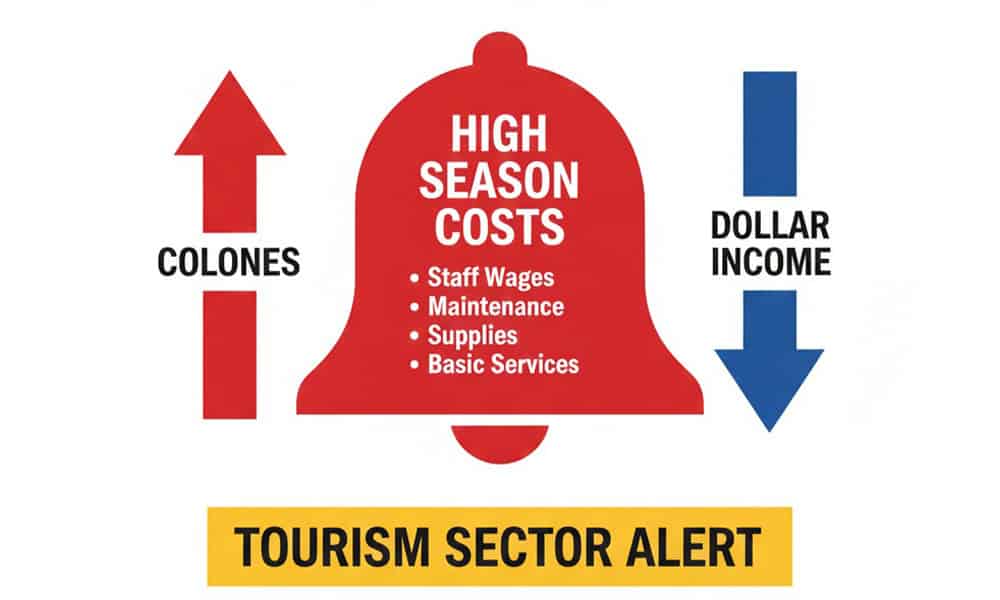
Tourism leaders say the low rate worsens existing challenges. The National Chamber of Tourism, known as CANATUR, highlights how it disrupts operations, competitiveness, and financial health. Shirley Calvo, the group’s executive director, said companies see higher costs during peak months for staff, utilities, maintenance, and supplies—all paid in colones—while much of their revenue comes in dollars.
“This creates a financial gap that threatens stability,” Calvo noted. She added that many overlook the sector’s makeup, with 85 percent of businesses being micro, small, or medium-sized enterprises. These firms support jobs in communities nationwide, from beaches in Guanacaste to cloud forests in Monteverde.
CANATUR argues the exchange rate makes Costa Rica pricier than rivals like Mexico, the Dominican Republic, Colombia, and Panama. Tourists seeking value often choose those spots instead, leading to fewer bookings. Recent figures show a 2.1 percent drop in air arrivals from January to August this year compared to 2024. February alone saw a 7 percent decline.
The Costa Rican Chamber of Hotels echoes these worries. Flora Ayub, its executive director, pointed to added strains from rising operational costs, public safety issues, poor road conditions, and delays in infrastructure projects. “The current rate reduces our margins at a critical time,” Ayub said. Security alerts from countries like the United States and Canada have also deterred visitors, compounding the economic hit.
Tourism remains a key driver for us here in Costa Rica, employing thousands and fueling local growth. Last year, the industry rebounded with an increased number of arrivals, but 75 percent of businesses reported lower earnings due to similar currency pressures. Operators fear job losses if the trend persists, especially in rural areas where alternatives are scarce.
Exporters face parallel troubles, with the rate nearly 20 percent below the decade’s average of ¢598. Víctor Pérez from the Chamber of Exporters called for the Central Bank to adjust its policy rate downward at the next meeting to ease the burden. As high season ramps up, industry groups continue pressing authorities for relief.
They stress that tourism’s role in the economy demands attention to these threats. For now, businesses adapt by tightening budgets and seeking ways to attract cost-conscious travelers. The situation marks another chapter in the ongoing exchange rate debate, with calls growing for measures to balance stability and competitiveness.





