

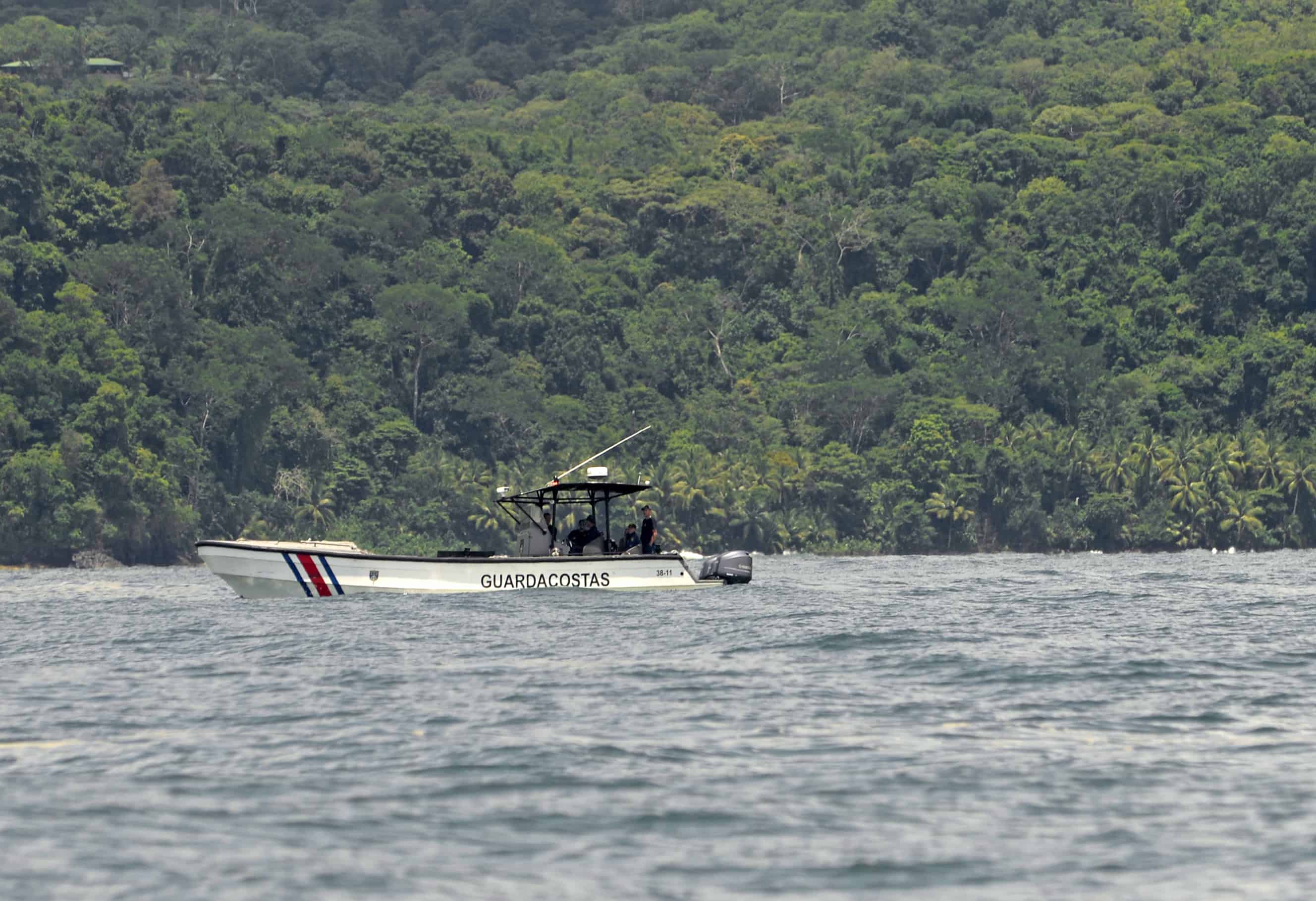
Claudia Dobles, the presidential candidate for Alianza Agenda Ciudadana, has put forward a plan to reopen two key National Coast Guard Service stations in Sixaola and Bahía Drake. These outposts shut down during President Rodrigo Chaves’ administration, a move that critics say has left coastal areas more exposed to drug trafficking.
Dobles’ government proposal focuses on bolstering security along the coasts, where drug shipments often enter the country. The stations in Sixaola, on the Caribbean side, and Bahía Drake, in the southern Pacific, closed under orders from Security Minister Mario Zamora and Vice minister Manuel Jiménez Steller. Dobles argues that these decisions have slowed response times to criminal activities, allowing narcotics to flow in more easily.
Her plan calls for immediate action to restore the stations and improve operations. It includes shifting the Coast Guard Academy back to a location near the ocean. The academy moved from Quepos to Pococí under the current government, where trainees now practice in a pool instead of open water. Dobles’ team states this change has weakened training for officers who patrol the seas.
“Costa Rica cannot continue with a government that fails to confront crime,” Dobles said in a recent social media post. “We need firm decisions and leadership that returns security to the people.” She has repeatedly called for Zamora and Jiménez Steller to step down, pointing to the closures as evidence of poor management.
The proposal outlines several steps to fight organized crime. It promises to reactivate the Presidential National Security Council for better coordination. Police would conduct large-scale operations in urban and border zones. The plan also commits to releasing withheld funds to the Judicial Investigation Agency and submitting an extra budget for new patrol vehicles, motorcycles, and gear.
Further reforms target the Directorate of Intelligence and National Security to aid in dismantling drug networks. Dobles aims to redeploy the Drug Control Police to ports, borders, and airports, reversing their removal from these spots.
The closures have sparked debate in the Legislative Assembly’s Security and Narcotráfico Commission. Former Coast Guard Director Martín Arias testified that he relocated boats from Drake to Golfito for safety reasons due to high tides, but the full shutdown came later. He claimed Jiménez Steller gave verbal orders to close Sixaola, which had no boats or direct sea access and saw few seizures.
Jiménez Steller countered that Sixaola served little purpose and accused Arias of using it as a punishment post for officers. Zamora defended the moves, noting the lack of a dock in Drake and plans to rebuild one before returning operations there.
Another ex-director, Carlos Alvarado Valverde, explained the Drake closure stemmed from operational flaws. Without a proper dock, crews relied on kayaks to reach anchored boats, delaying responses by up to an hour. A 2017 University of Costa Rica study found no feasible floating dock option due to strong waves, recommending a fixed structure that still posed risks.
Alvarado described the old Quepos academy as rundown, with termite-infested wooden buildings under historical protection that prevented repairs. He supported pool-based initial training but favored a coastal site for realism. Arias also raised concerns about virtual courses for future commanders at the National Police Academy, insisting sea-based practice remains essential. He noted the shutdown of a central operations room that handled sensitive anti-drug data.
These changes coincide with reports from the Judicial Investigation Agency that up to 500 tons of drugs enter annually through areas like Sierpe, near Drake. Moving the elite team from Drake has reportedly increased interception delays. Dobles’ push comes amid rising worries over security. Her alliance positions the reopenings as part of a broader effort to equip the Coast Guard with better tools and international support against trafficking.
The candidate’s background as an architect and former first lady under President Carlos Alvarado adds weight to her focus on infrastructure and public safety. As elections approach, her plan seeks to address what she calls a deliberate weakening of defenses.





