

Cuban prosecutors have formally charged six survivors from a U.S.-registered boat intercepted in territorial waters with terrorism offenses, the Attorney General’s Office announced. The defendants, all Cuban nationals residing in the United States, were part of a group of 10 armed men aboard the vessel stopped by border guards February 25 off the northern coast of Villa Clara province. Four people died in the ensuing gunfight, and the six detainees sustained injuries.
“Charges have been brought against six defendants for terrorism offenses provided in the Penal Code,” the Attorney General’s Office stated, confirming pretrial detention for the accused. Fiscal Edward Robert stated on state television that the detainees would face terrorism-related crimes. The penalties could include up to 30 years imprisonment, life sentences, or death, depending on aggravating factors.
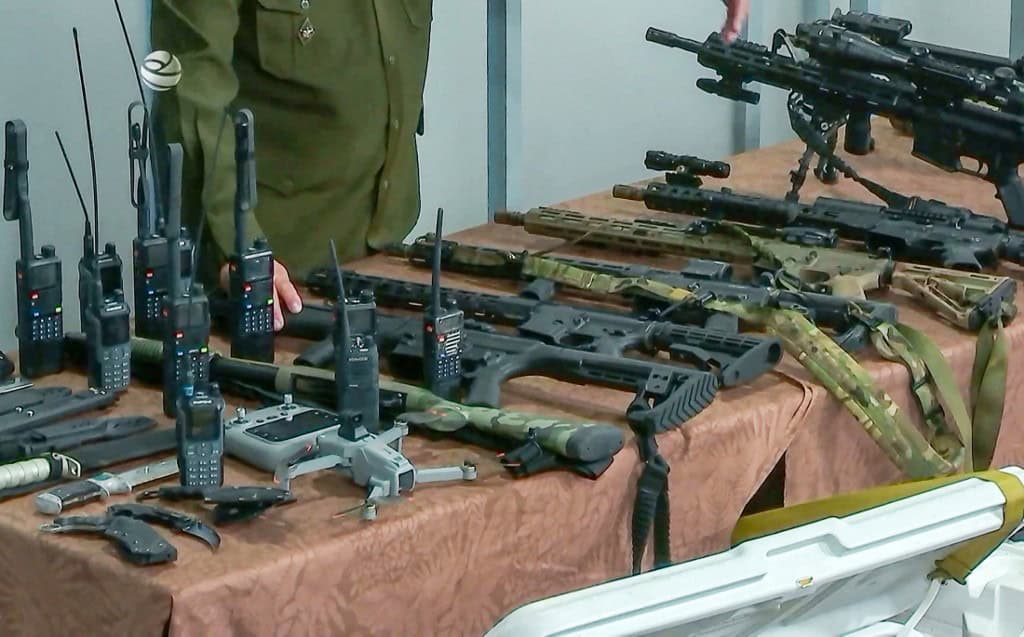
Authorities seized 14 rifles, 11 pistols, nearly 13,000 rounds of ammunition, Molotov cocktails, bulletproof vests, night-vision equipment, and camouflage gear from the boat. The Interior Ministry described the incident as an attempted infiltration for terrorist purposes. The clash unfolded when a coast guard patrol approached the Florida-registered speedboat, FL7726SH, to request identification. The occupants opened fire first, wounding the Cuban commander, according to the Interior Ministry. Border troops returned fire in self-defense.
Two detainees, Amijail Sánchez González and Leordan Enrique Cruz Gómez, appeared on Cuba’s national list of individuals linked to terrorism. Sánchez organized the operation, tied to the Autodefensa del Pueblo group, which authorities say trains in the U.S. for attacks on the island. Cruz faced prior charges for sabotage in Villa Clara.
The Interior Ministry also arrested Duniel Hernández Santos onshore, accusing him of coordinating reception for the group. He confessed to his role, officials said.
Investigators revealed the group departed from Marathon in the Florida Keys aboard two boats, but one failed midway, consolidating aboard the intercepted vessel. The mission aimed to incite disorder, rally public unrest, and assault military units to undermine the government, per Interior Ministry officials.
This incident revives echoes of post-1959 Revolution infiltrations from southern Florida, where armed groups launched attacks on Cuba. Such operations peaked in the early 1960s but persisted sporadically. The event heightens strains between Havana and Washington under President Donald Trump’s second term. The U.S. maintains Cuba poses a national security threat due to alliances with Russia, China, and Iran, justifying tightened sanctions and a petroleum embargo.
Deputy Foreign Minister Carlos Fernández de Cossío noted that Cuba informed U.S. counterparts immediately, including the State Department and Coast Guard. Washington expressed willingness to cooperate in the probe. Secretary of State Marco Rubio confirmed February 25 that the U.S. investigates the matter independently, denying government involvement. At least one deceased and one injured were U.S. citizens, U.S. officials said. Others held permanent residency or K-1 visas.
The boat was reported stolen in Florida, per U.S. authorities. Rubio stressed gathering facts on the individuals’ statuses without endorsing Cuba’s terrorism claims. Cuban President Miguel Díaz-Canel affirmed February 26 that the nation would defend itself firmly against any aggression threatening sovereignty.
Separately, the Interior Ministry reported March 1 detaining 10 Panamanians in Havana for propaganda against the constitutional order. The group allegedly produced subversive signs for payment, receiving $1,000 to $1,500 each. They confessed and face charges under the Penal Code.
Officials anticipate court proceedings in coming months, with potential additional charges against overseas financiers for supporting terrorism. The boat clash underscores ongoing security challenges in the Caribbean, where migration, smuggling, and ideological conflicts intersect amid economic pressures on Cuba.





