

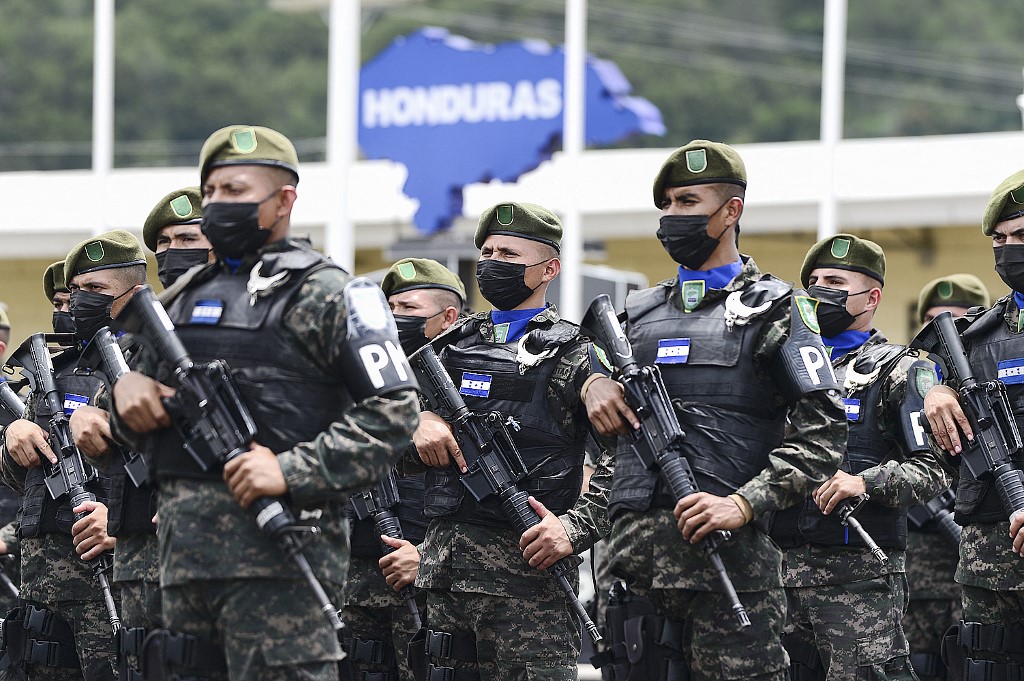
Honduras security forces committed serious human rights abuses in 2025 while the country operated under a state of exception, the United Nations human rights office reported Wednesday. The violations included killings, forced disappearances and torture, according to the annual report presented by Juan Carlos Monge, the representative of the UN High Commissioner for Human Rights in Honduras.
The emergency powers, first declared in December 2022 to combat gang violence and extortion, allowed arrests and raids without judicial warrants. Monge said this flexibility led to rights violations in a tense political climate. The office documented at least 24 cases linked to security operations. They break down as eight instances of enforced disappearance, five of torture or cruel treatment, three extrajudicial executions, two deaths in custody and six arbitrary detentions. The abuses are attributed to military and police forces.
Monge said the state of exception lost its temporary character after 24 extensions and became the main strategy against crime. It covered large parts of the country before ending on January 26. The new conservative president, Nasry Asfura, who took office the following day, chose not to renew the measure.
The report also highlights the risks faced by human rights defenders. Monitors recorded 17 violent deaths of activists and journalists in 2025 — an increase from seven the previous year. Defenders continued to face threats, harassment, smear campaigns and criminalization by both state and non-state actors.
Impunity remains widespread in these cases. Monge pointed to deficiencies in criminal investigations and called for stronger institutional coordination. The protection system for defenders and journalists faces ongoing challenges. At least 12 beneficiaries of the state program have been killed in the past decade.
Monge stressed that defending human rights is legitimate and essential. He urged authorities to improve investigations and recognize the role of civil society. The findings arrive as Honduras transitions to the Asfura administration following general elections in November 2025. The prolonged state of exception had operated amid political polarization.
Former President Xiomara Castro introduced the measure in late 2022. It was repeatedly extended despite repeated concerns from UN experts and local organizations about its effects on constitutional guarantees. With the emergency powers now lifted, attention shifts to whether the new government will pursue accountability for the documented violations and adopt security policies that fully respect human rights.
Monge emphasized the need for political will to address long-standing issues of impunity and weak judicial processes.





