

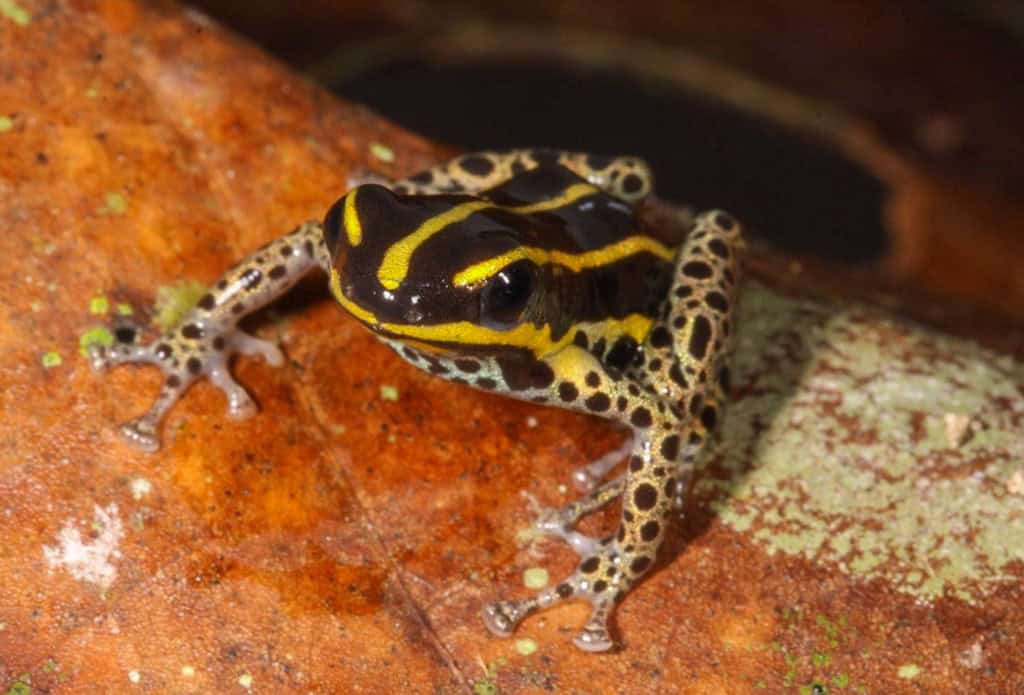
Peruvian researchers have identified a new poison dart frog in the Amazon rainforest, adding to the region’s rich array of wildlife. The tiny creature, called Ranitomeya hwata, stands out with its bright yellow stripes on the back, a spotted belly, and a black band across its throat that sets it apart from similar frogs. At just 15 millimeters long, it ranks as the smallest in its genus.
A team of scientists from Peru, Germany, Brazil, the United States, and Spain made the find during fieldwork in Alto Purus National Park, near the border with Brazil. Local experts included Giussepe Gagliardi-Urrutia from the Instituto de Investigaciones de la Amazonía Peruana, Juan C. Chaparro from the Museo de Biodiversidad del Perú, and Roberto Gutiérrez Poblete from the Museo de Historia Natural at the Universidad Nacional de San Agustín de Arequipa. They detailed their work in the journal Zootaxa, and Peru’s National Service of Protected Natural Areas announced it this week.
These frogs stick to bamboo groves in the Guadua plant family. They lay eggs inside the plant’s hollow stems, which collect rainwater and form small pools perfect for tadpoles. Males show unusual habits by calling several females to one spot for breeding, a setup that sets them apart from other dart frogs in the area.
The park’s remote location in eastern Peru, spanning Ucayali and Madre de Dios regions, helped keep this species hidden until now. Its bold colors signal toxicity to predators, a common trait among dart frogs that helps them survive in the dense forest.
This addition to science points to the Amazon’s ongoing surprises, even in well-studied spots. Protected zones like Alto Purus play a key role in shielding such animals from threats like logging and climate shifts. As researchers learn more about Ranitomeya hwata, it could offer clues on how these ecosystems function and adapt.





