

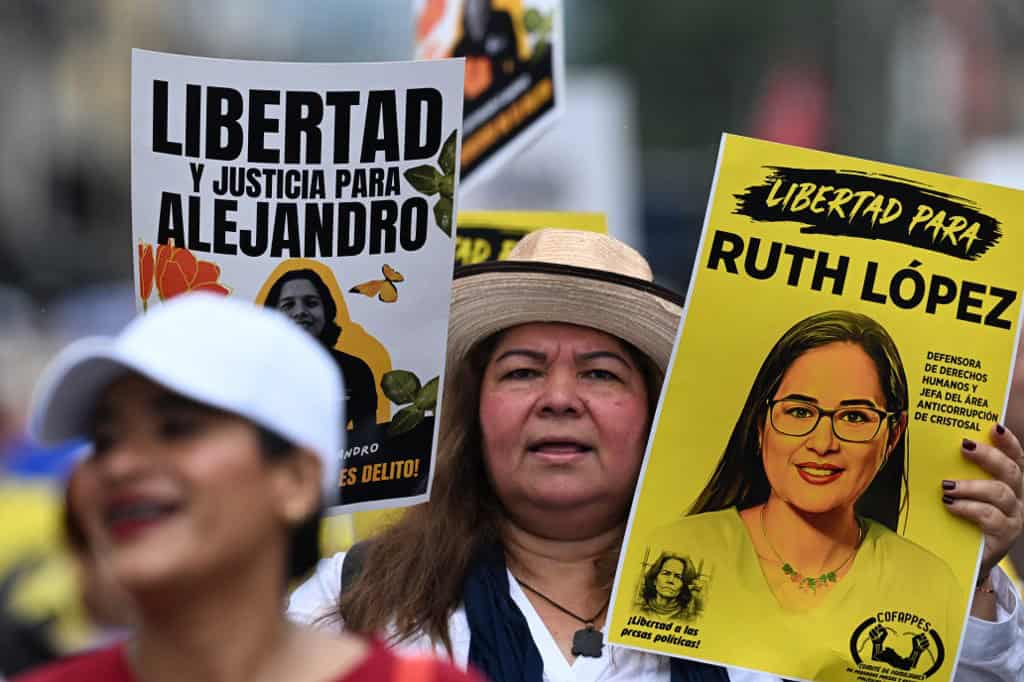
As El Salvador celebrated 204 years of Central American independence with military parades, about 1,500 activists filled the downtown streets of San Salvador. They marched to demand the release of political prisoners and people they describe as innocent detainees caught in President Nayib Bukele’s ongoing gang crackdown. The event highlighted tensions between the government’s tough security policies and human rights concerns that affect daily life for locals and visitors alike.
Protesters chanted “Alive you took them, alive we want them back” while holding signs and photos of jailed figures, including lawyer Ruth López. Some carried Palestinian flags, linking their cause to global solidarity efforts.
The march headed toward the National Library (BINAES), where groups called for an end to what they see as arbitrary arrests and pushed back against proposed constitutional changes that could extend Bukele’s influence. Police kept watch but did not intervene, allowing the demonstration to proceed peacefully amid the holiday crowds.
Ruth López, 47, led Cristosal’s anti-corruption unit before her arrest on May 18, 2025. Prosecutors charged her with illicit enrichment, but supporters say the case stems from her work exposing government abuses.
On July 1, Amnesty International labeled López, environmental lawyer Alejandro Henríquez, and peasant leader José Ángel Pérez as prisoners of conscience, pointing to a pattern of targeting critics. Families and rights groups say these cases fit into a broader wave of detentions under the state of emergency declared in March 2022.
That crackdown has led to about 89,000 arrests of suspected gang members over three and a half years, with official numbers showing around 8,000 releases after reviews. Bukele’s administration credits the policy with slashing homicide rates—down to historic lows—and boosting public safety, which draws tourists to beaches and volcanoes without the fear that plagued the country a decade ago.
Yet human rights watchdogs report widespread issues: forced confessions, lack of due process, and innocents swept up in raids. Organizations estimate thousands remain jailed without evidence, straining families and communities.
The march drew a mix of opposition parties, NGOs like Cristosal, and victims’ relatives. The Broad Front for Rescue and Development (BRP) joined, protesting the capture of political prisoners and reforms that could alter term limits.
One organizer told reporters the holiday timing amplified their message: “Independence means freedom for all, not just some.” Protesters stopped at key spots to read names of detainees, underscoring personal stories amid the festive atmosphere of flag-waving and school parades.
For expats living in San Salvador or San Miguel, these events touch close to home. Neighborhoods once hit hard by gangs now feel safer, but reports of overreach— like dawn raids or family separations—raise questions about long-term stability. Tourists planning volcano hikes or surf trips might notice the contrast: bustling markets by day, quiet evenings thanks to curfews lifted but vigilance ongoing. Rights groups urge visitors to stay informed, as protests like this one can shift traffic or security checks.
Bukele’s popularity remains high, with approval ratings above 80% in recent polls, tied to the security gains. His government dismisses prisoner claims as gang sympathizers’ tactics. A committee tracking persecuted Salvadorans listed 28 political prisoners as of March, including journalists and activists. The march echoed similar actions on past Independence Days, where crowds have grown from hundreds to thousands, pressing for accountability.
Amnesty and local NGOs continue to document cases. Henríquez, arrested in April 2025, defended communities against mining projects. Pérez, a rural leader, faced charges after organizing against land grabs. Families say trials drag on without fair hearings, leaving loved ones in overcrowded prisons like the Cecot mega-jail.





