

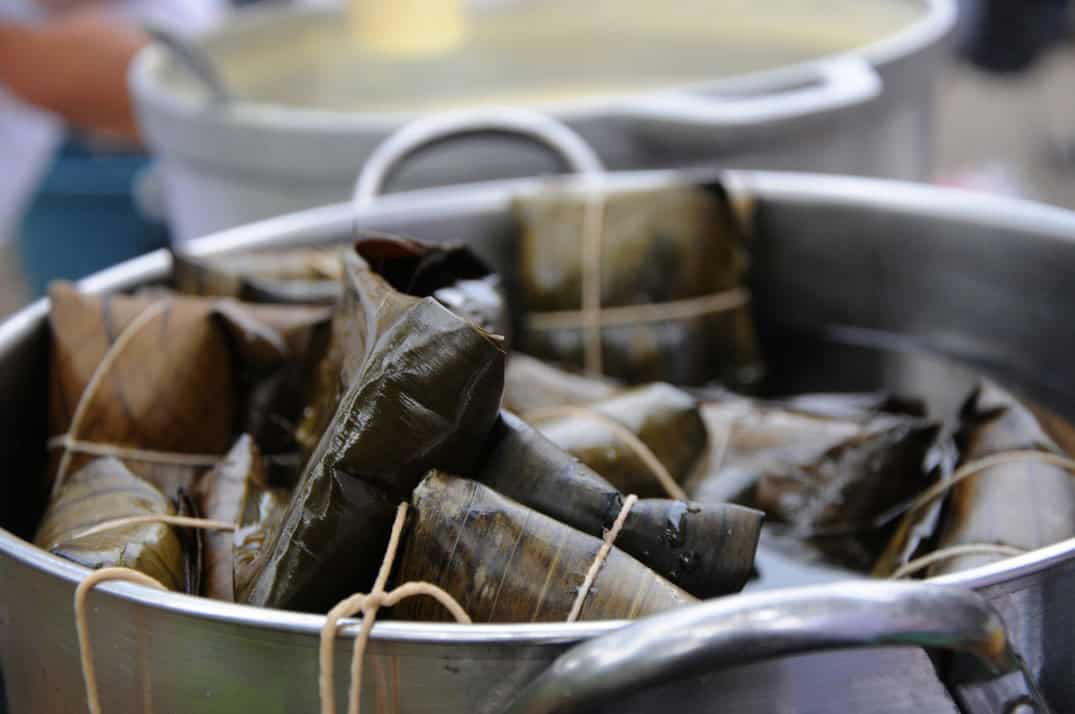
In Costa Rica, the Christmas season is closely linked to traditional dishes, among which tamales hold a special place. They’re an essential element on Costa Rican tables and are typically enjoyed with coffee or aguadulce and shared with family on warm December afternoons.
Their preparation reflects the country’s long-standing agricultural connection to corn, which was historically grown for personal consumption on small plots and family farms. The tamaleada, or collective preparation of tamales, is a deeply rooted family tradition passed down from generation to generation. Making tamales is a complex process that requires planning, coordination, and many hands working together.
Families begin by organizing the purchase of ingredients, defining the workspace, often the backyard or an open area, and assigning responsibilities such as preparing ingredients and selecting the necessary utensils.
The tamaleada is a moment of reunion that brings together relatives of all ages. For Costa Ricans, this gathering carries great emotional significance; it strengthens family bonds, brings back memories of those who are no longer here, teaches children the importance of tradition and shared heritage, and it’s a moment to leave the every day hustle behind and focus on what’s truly important.
Participating in the process allows for the transmission of culinary knowledge and reinforces the family’s role in preserving cultural expressions, including cherished recipes that distinguish each household.
The dough is usually prepared by someone with considerable experience, often an older family member who has inherited the recipe through observation and practice. As the saying goes, the secret to a good tamale lies in the flavor of the dough. Much of what is needed for its preparation, such as fat and broth, comes from cooking the meat, which also requires careful attention.
Other adults manage the remaining ingredients: cooking the carrots just right, ensuring the rice isn’t overdone, and preparing potatoes, sweet peppers, and eggs. Some families personalize their tamales by adding chickpeas, peas, olives, pickles, or raisins. In certain communities in the Costa Rican Caribbean, Panamanian chili peppers are incorporated to give the dough a mildly spicy flavor.
Cleaning the leaves that wrap up the tamales, though seemingly simple, is essential and traditionally assigned to the youngest family members, who thus participate in the production chain. Once the dough is ready, it is portioned onto the leaves, and the various ingredients are added in an assembly-line fashion around a large table.
Wrapping the tamales is a skill in itself, requiring the right choice and arrangement of leaves so the tamale remains secure during cooking. The tying must be firm, and there is usually someone in the family who specializes in this step. After the tamales are cooked, families typically set aside one batch for their own enjoyment and another to share with neighbors and loved ones.





