

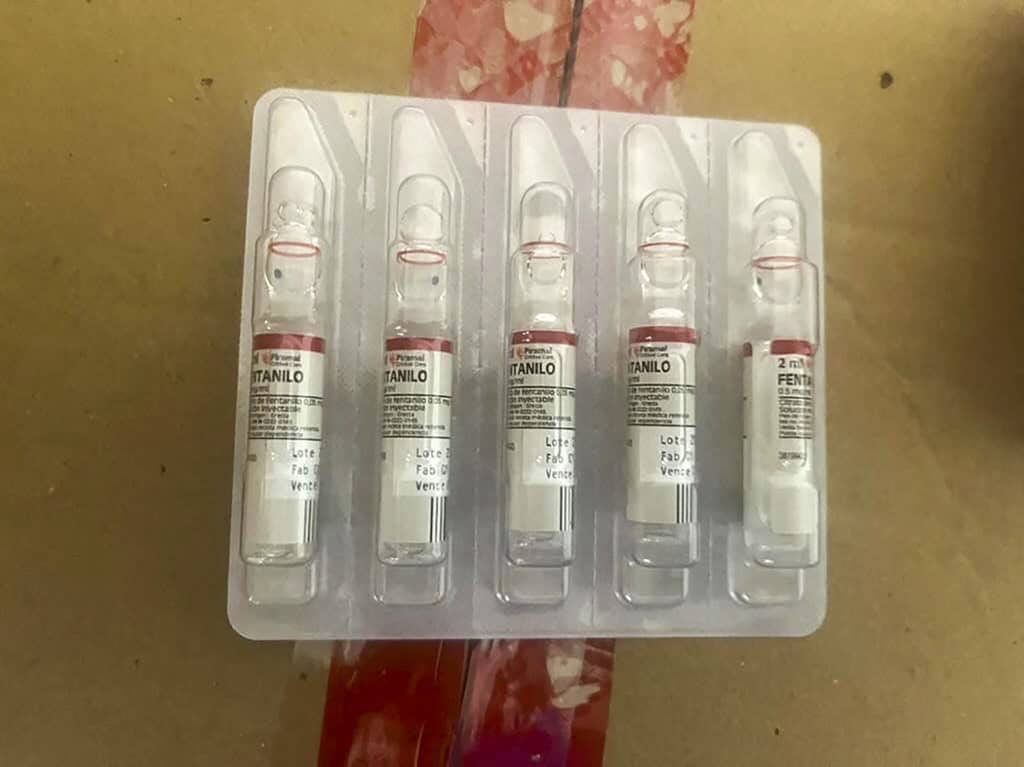
Costa Rican authorities are probing reports of missing fentanyl from public hospitals, raising fears that the potent painkiller is slipping into illegal markets. The Costa Rican Social Security Fund, known as the CCSS, recently filed a formal complaint with the Judicial Investigation Agency (OIJ) over suspected discrepancies in fentanyl stocks at Hospital México in San José.
Officials spotted a gap in records showing 31,500 units listed in the inventory system, but only 10,500 actually delivered to patients. This shortfall, amounting to more than 21,000 doses, prompted the OIJ to launch its own inquiry into potential mishandling of fentanyl and morphine.
The OIJ’s deputy director, Michael Soto, described the incidents as minor grabs of ampoules from national hospitals, often going unnoticed because the drug also treats chronic pain patients. “We see small thefts, not large-scale ones,” Soto said, noting that probes extend to the medical and pharmaceutical sectors.
The CCSS’s internal auditor, Ólger Sánchez, opened a full review of drug custody chains across warehouses, supply rooms, pharmacies, operating theaters, and anesthesiology units in health centers.
Health officials flagged weaknesses in how these controlled substances are tracked, stored, and dispensed, which could limit patient access and allow leaks into black markets. “This breaks rules on managing narcotics and heightens the chance of them ending up in wrong hands,” the probe stated.
The Ministry of Health stepped in with a sanitary order, citing critical mismatches in prescriptions and deliveries tied to the CCSS’s new ERP-SAP accounting system. CCSS leaders blame the issues on digital glitches rather than outright theft, but they added tighter controls like replacing doses only with a prescription and an empty vial.
Similar problems surfaced elsewhere. The CCSS confirmed a theft at the Hospital Geriátrico Blanco Cervantes, where medical-grade fentanyl likely reached criminal groups making synthetic drugs. In January, staff at Hospital San Juan de Dios sought OIJ advice on another possible case, though it stayed internal without proof. These events echo past troubles, like a 2023 probe into fentanyl vanishing from Hospital Calderón Guardia, where ampoules turned up missing and recipes got altered.
Fentanyl serves key roles in Costa Rican medicine, limited to anesthesia, intensive care, and specialists handling patients on ventilators. It acts as a sedative for procedures, but overuse can depress breathing and call for emergency revival. Each vial holds 0.05 milligrams per milliliter in a 2-milliliter dose.
Experts note its strength—100 times that of morphine and 50 times heroin—making tiny amounts deadly if misused. The U.S. FDA approves it for cancer pain or surgery, but street versions fuel addiction crises.
Thefts worry officials because stolen hospital supplies can feed underground trade. OIJ forensics in early 2025 linked at least six deaths to illegal fentanyl use without prescriptions. Low-dose cases are appearing, with vials from CCSS hospitals ending up in criminal networks. Since 2022, authorities seized over 1,000 doses and opened cases on illicit sales.
In February, police nabbed 30,000 fentanyl pills, arresting suspects including a Dominican with a record. Prices hover around $8 to $12 per pill on the streets.
Costa Rica faces this as part of a regional pattern. Neighboring countries report hospital thefts, with fentanyl mixed into other drugs. Local gangs, some tied to Colombian and Mexican groups, traffic it alongside cocaine.
The government rolled out training and awareness drives, like the “Illegal Fentanyl: Just Trying It Can Kill You” campaign, to curb risks. Health and security leaders urge public caution, stressing that one dose can prove fatal. As probes continue, the CCSS vows transparency and stronger safeguards to protect supplies.





