

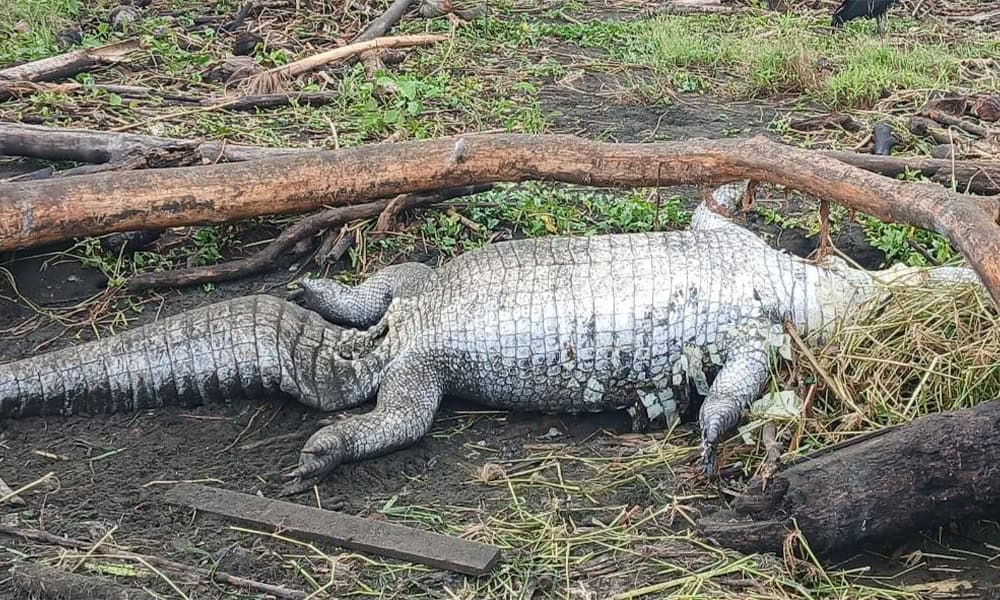
A wave of dead fish, birds and reptiles has washed up along the canals and beaches linked to Madre de Dios Lagoon, signaling a fresh environmental crisis in this key biodiversity zone on Costa Rica’s Caribbean side. Local residents and tourism operators report seeing hundreds of snook, snapper, tilapia, seagulls and even crocodiles floating lifeless in the waters. The die-off, which started about eight or nine days ago, has intensified in recent days, with larger species now affected.
Julio Knight, a tourism business owner in the area, has documented the scene through photos and videos. He points to chemical runoff from upstream banana plantations as the main cause. “This happens year after year,” Knight said. “Heavy rains carry the pesticides downstream, and now it’s spreading to places like the Batán Canal.”
The timing adds to the concern, as many fish species enter the lagoon to spawn during this period. Fishermen and community members express fear over the impact on local wildlife and their livelihoods. “People see the dead alligators and birds and wonder what’s next,” Knight added.
Authorities have received alerts about the situation. Reports went to the National System of Conservation Areas (SINAC), the Public Prosecutor’s Office and the Matina municipality. Some locals also contacted the Presidential House and Health Minister Mary Munive, though no immediate actions have been confirmed.
This is not the first such event in Madre de Dios. Records date back to 2003, when a spill of 20,000 liters of fungicide from the nearby 24 Millas airport contaminated waterways. Since then, similar die-offs have occurred multiple times, often tied to agricultural practices in the region.
Environmental groups and researchers note that banana farms use various agrochemicals, which can enter rivers during storms. A study from the Regional Institute for the Study of Toxic Substances at the National University highlights how these substances harm aquatic life, leading to repeated mass kills.
In May 2025, a similar incident struck Madre de Dios and the nearby Santa Marta Lagoon, where thousands of fish died over several days. Fishermen there reported losses in catches and called for investigations into plantation operations. That event, the third in eight months at the time, prompted temporary fishing bans and water testing.
Now, with the latest outbreak, calls grow for a permanent response plan. Advocates push for stricter regulations on chemical use and better monitoring of runoff. “We need protocols to handle these disasters and prevent them,” said one local activist involved in past complaints.
The Caribbean coast’s ecosystems support tourism, fishing and conservation efforts. Madre de Dios Lagoon forms part of the Tortuguero National Park area, home to endangered species and a draw for eco-tourists. Continued pollution threatens not just wildlife but also jobs in the sector.
Officials from SINAC say they are looking into the reports, with teams possibly sampling water soon. The Health Ministry advises avoiding contact with affected areas until tests confirm safety. As rains persist, residents watch the waters closely. Knight and others plan to keep sharing updates to pressure for change. For now, the lagoon’s once-teeming life remains under threat from this ongoing issue.





