
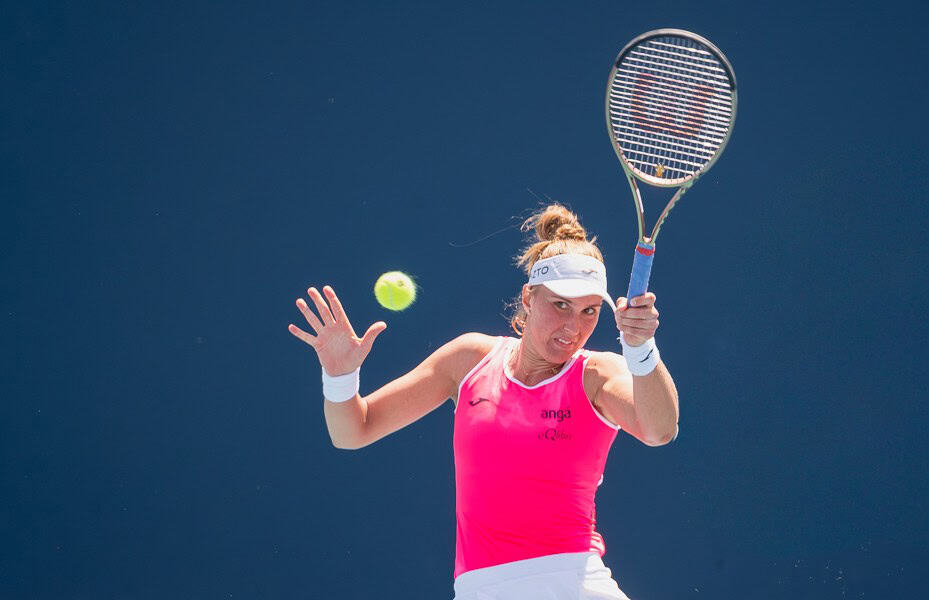
Beatriz Haddad Maia comes to the Australian Open in January 2026 as Brazil’s clearest singles reference point and one of the few Latin American players with a résumé that already includes deep Slam runs in both singles and doubles. She is a left-hander with size, an assertive serve pattern, and the kind of forehand that can change the shape of points quickly on hard courts.
On paper, she sits in the middle of the women’s main-draw entry list. In reality, she plays like someone who has already proven she can climb into the sport’s top tier, and she still carries the tools to disrupt seeds if her timing is right.
Haddad Maia’s story is not a straight line. It is a story about building a high-end game that survives the tour’s grind, then learning how to reproduce that level under the spotlight. That matters in Melbourne, where the first week is full of traps: heat, fast courts, short turnarounds, and opponents who punish hesitation.
What she is at her best
Start with the obvious: she’s left-handed, and that alone changes matchups. Against right-handers, her serve and forehand can drag the ball into awkward contact zones, especially when she finds the wide angle in the ad court. When she’s serving confidently, points begin with immediate pressure and end with her stepping forward, either to finish with a forehand to the open court or to move in behind the serve and shorten exchanges.
Her height and reach do more than create a bigger serve. They make her a credible net threat. She looks comfortable finishing points up close, and that’s not a minor detail. When her instincts pull her forward, she becomes harder to read. Rallies stop feeling like a predictable baseline script and start feeling like a sequence of decisions she’s making in real time.
The forehand is the centerpiece. It’s the shot she uses to take the court, not just trade. When it’s working, she hits a heavy ball that pushes opponents back and opens angles that don’t exist against flatter hitters. The backhand is steadier than flashy, but it does its job: it absorbs pace, holds the line, and buys time for the forehand to reappear.
Why her name carries weight in Latin America
For Brazil, Haddad Maia occupies a rare position. She isn’t a promising talent. She’s not a nostalgia story. She’s the player who already broke through.
In 2023, she reached the Roland Garros semifinals, a landmark result that placed her in a very small historical bracket for Brazilian women in singles. That run also preceded another milestone: she became the first Brazilian woman to crack the WTA top 10 since the rankings era began. Those two facts still frame her in any serious profile because they explain the expectation she carries every time she shows up at a major.
The key point for Melbourne is that this is not just a clay-court narrative. Her best tennis is built around patterns that translate: serve placement, lefty geometry, willingness to finish, and enough resilience to grind when the match turns physical.
The doubles résumé that’s part of the same identity
If you want to understand why Haddad Maia looks so natural moving forward, you can’t ignore doubles. In 2022, she reached the Australian Open women’s doubles final. That run matters because it happened in this tournament’s environment, on these courts, in this schedule. It’s proof she can manage the Australian Open’s pace and still play her best tennis late in the fortnight.
Even when her singles results have stopped earlier, doubles has kept her in the building, in pressure moments, dealing with the mental churn that defines majors. It also sharpens the parts of her game that matter on hard courts: first volleys, quick reactions, and the confidence to take the ball early.
What her Australian Open track record tells you
Her best singles result in Melbourne so far is the third round, and she’s reached it in consecutive years. That doesn’t sound dramatic, but it’s a useful reality check. The Australian Open is often less forgiving than it looks on paper. A slight dip in first-serve percentage can turn a routine match into a scramble. A single bad service game in a set can decide the night. For Haddad Maia, the gap between an early exit and a genuine run has often been a small margin.
That’s also why she’s so interesting. She’s good enough to beat top players. She has the size and patterns to take control against opponents who don’t return well. She also has enough variance that you can’t assume she’ll cruise through the first two rounds.
What to watch in January 2026
Three tells usually show you quickly which version of Haddad Maia is in the match.
First, the serve locations. When she is hitting her spots and committing to the wide lefty angles, she starts points in front. When she misses targets and lands too much in the middle, she gets dragged into neutral exchanges where her advantage shrinks.
Second, forehand depth under pressure. When she’s confident, the forehand has weight and shape. When she’s tight, it can land shorter and invite opponents to step in.
Third, net commitment. When she’s moving forward decisively, it’s usually a sign her mind is clear. When she hesitates, she can get stuck playing too many points from five feet behind the baseline, letting quicker opponents turn defense into offense.
The bottom line
Haddad Maia is a legitimate upset threat in Melbourne because she doesn’t need a perfect day to beat a seed. Her best weapons are structural: lefty serve patterns, forehand pressure, and the ability to finish. Her doubles background isn’t decoration. It’s part of the reason she plays with a sense of options that many singles-only players don’t have.
For Latin American coverage, she is one of the few players in the draw who can credibly be framed as more than a first-week storyline. If she strings together early wins, the tournament starts to make room for her. And if she doesn’t, the reasons will almost always be visible in the same places: serve accuracy, forehand depth, and whether she chooses to step forward or retreat into the grind.