

Corcovado National Park has spent the past five months caught in a tug of war that has left many in the Osa Peninsula’s conservation community asking the same question: who is actually deciding how many people the park can handle?
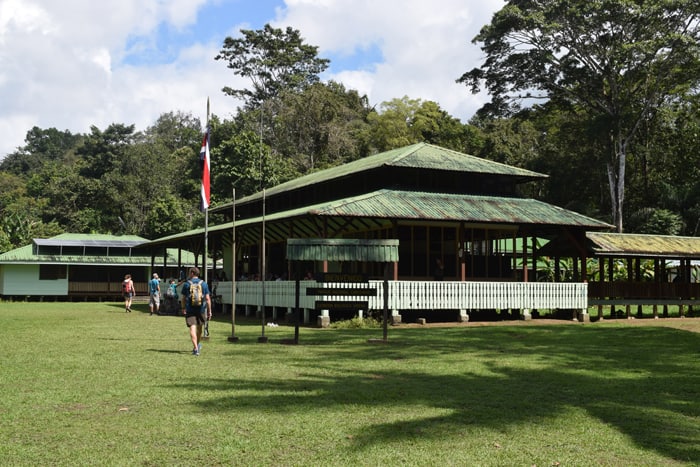
The dispute centers on the Sirena Biological Station, the heart of Corcovado and its most visited sector. Technical reports compiled in June concluded that the station’s wastewater treatment plant had been discharging sewage since at least 2024 into the Camaronal creek, a tributary of the Sirena River, inside a protected area created in 1975.
The problem was not new to authorities. The Health Ministry had ordered a remedial plan as early as 2024, with a deadline of Dec. 31, 2025. A ministry inspection in October 2025 found wastewater discharges into the creek and no operating records or quality controls at the plant, and a follow-up inspection in March 2026 found the orders still unmet.
In late June, the acting director of the Osa Conservation Area, Juan José Jiménez Espinoza, cut Sirena’s daily limit to 150 visitors through September, 100 on day visits and 50 staying overnight. His resolution kept the same cap for November and December but limited it to day visits until overnight stays could be cleared.
Jiménez cited not only the sewage problem but an August 2025 Constitutional Chamber ruling that struck down a 2023 increase in park visitation because it had no technical or scientific justification. The court had given the National System of Conservation Areas (SINAC) one month to issue new rules that clearly set out how visitor limits are calculated.
That deadline had long passed. The reaction in the southern zone was swift. Tourism groups, guides and transport operators protested the cut, arguing it lacked a technical basis and was hurting families who depend on the park.
On July 1, the same day residents and tourism business owners blocked roads in Uvita demanding more capacity and Jiménez’s removal, Environment Minister Mónica Navarro transferred him to head a department at SINAC’s national headquarters. Navarro acknowledged the move came after the capacity cut but said his services were more useful in another area of the ministry and that the decision responded to institutional needs.
On July 8, his replacement, Ólger Méndez Fallas, raised the limit to 225 visitors a day, even though the new resolution itself acknowledged that the treatment plant was still out of service. That decision rested on a report from the national water utility, AyA, stating that separate sanitary systems at the station continued to function for certain uses, and on a block of restrooms at the station entrance that operates independently of the plant.
Then, in a resolution that took effect Sept. 17, SINAC raised the limit again, to 366 people a day. The total breaks down into 230 day visitors, 105 overnight guests, 16 places for the Carate-Corcovado community development association that holds the use permit at the station and 15 for park administration.
That is 63 percent above the July figure and more than three times the 100 visitors a day long considered Sirena’s technical limit. SINAC describes the figure as a restoration of the station’s capacity rather than an increase. The Environment Ministry says the change followed compliance with the Health Ministry’s orders and the rehabilitation of the treatment plant, carried out with local communities and volunteer groups who contributed labor, logistics and money.
Yet the September resolution did not make clear whether the plant was operating. Instead, it framed the decision as a way to guarantee the continuity of socioeconomic activities that depend directly on the park. The same document disclosed that the Osa Conservation Area had asked the Constitutional Chamber for an extension to comply with the August 2025 ruling, more than a year after the court issued it.
That sequence is what conservationists find hard to square. The official who acted on a court order and a documented pollution problem was moved out. Capacity was then raised twice, to more than triple the station’s historical limit, while the agency asked the court for more time on the very ruling that requires a scientific basis for those numbers.
Some in the conservation community believe the real beneficiaries are small cruise ships. Their concern is how the tickets get used. Park entry must be reserved in advance, and critics on the peninsula say cruise operators can buy large blocks of the expanded capacity for passengers who arrive by tender, spend a few hours in the park and return to the ship for the night.
When those blocks are gone, they argue, independent travelers who book a lodge in Drake Bay or Puerto Jiménez, hire a local guide and boat captain and eat in local restaurants find fewer places left. In that view, a higher limit does not necessarily bring more money to Osa communities, and could bring less.
There is a precedent behind the suspicion. The legal challenge that led to the 2025 ruling, filed by then-lawmaker Ariel Robles, argued that the 2023 increase included 100 daily places at the San Pedrillo station for the exclusive use of cruise ships. Guides and residents have also complained that boat access has turned many Corcovado visits into same-day trips, which they say leaves less money in towns such as Puerto Jiménez.
Day visitors now take 230 of Sirena’s 366 places, and the increase arrives just before high season, when small expedition ships call along the Osa coast. SINAC has not said cruise traffic played any role in the September decision, and the published breakdown for Sirena includes no separate cruise allotment.
Supporters of higher limits make an argument that carries real weight on the peninsula. Corcovado anchors the economies of Puerto Jiménez, Drake Bay, Sierpe and surrounding communities, and a sudden cut during the busy months hits guides, boat operators and small lodges that have few alternatives.
Critics counter that visitor numbers at Sirena have been building for years while other stations such as Los Patos, La Leona and El Tigre went without investment, and that the infrastructure never kept pace. In June, SINAC asked the Rural Development Institute (Inder) for about 2.63 billion colones (roughly $5.8 million) to overhaul the station and set aside 50 million colones (about $110,000) for immediate work.
Sirena, El Tigre and Los Patos closed to tourists during October for regular maintenance and the heaviest rains. When it cut capacity in June, the Environment Ministry set Dec. 1 as its target for Sirena to run normally with a working treatment plant. With high season about to begin, the central question remains open: whether 366 visitors a day is a figure backed by science or by pressure. For now, the answer rests with the Constitutional Chamber.





