Costa Rica’s ruling party wants the top prosecutor and its acting chief of judicial police to explain to lawmakers how they handled the threat complaints filed by journalist Camilo Rodríguez before he was shot dead on Monday. Nogui Acosta Jaén, head of the Pueblo Soberano caucus, announced in the Legislative Assembly that his party will file a motion in the Special Permanent Commission on Security and Drug Trafficking.
The motion seeks to summon Attorney General Carlo Díaz Sánchez, Deputy Prosecutor Mauricio Boraschi Hernández and acting Judicial Investigation Agency (OIJ) Director Michael Soto Rojas. The summons is not yet approved. The motion must be filed and voted in the commission, where it was expected to be taken up on Thursday. The ruling caucus holds five of the commission’s nine seats.
Acosta said the inquiry should examine how the justice system processed Rodríguez’s complaints and how people who speak out on social media can be protected. He also pointed to one of the journalist’s videos in which, according to Acosta, Rodríguez suggested that the person threatening him had links to the attorney general. Acosta did not present evidence to support that claim, and the Public Ministry has not responded to it publicly.
Opposition lawmaker Claudia Dobles of the Coalición Agenda Ciudadana said she supported calling the judicial officials but questioned why the motion leaves out Public Security Minister Gerald Campos Valverde. The motion comes two days after the ruling caucus approved, by 29 votes to 21, a separate motion demanding the resignations of Díaz and Ombudswoman Angie Cruickshank over their inspection of the new maximum-security prison. Opposition lawmakers criticized the timing of that vote.
On Wednesday, the Public Ministry announced that Díaz will personally lead a specialized team of organized crime prosecutors and prosecutors from Heredia to direct the murder investigation alongside the OIJ. Díaz said the decision reflected the seriousness of the case and that the team would act with rigor and technical precision.
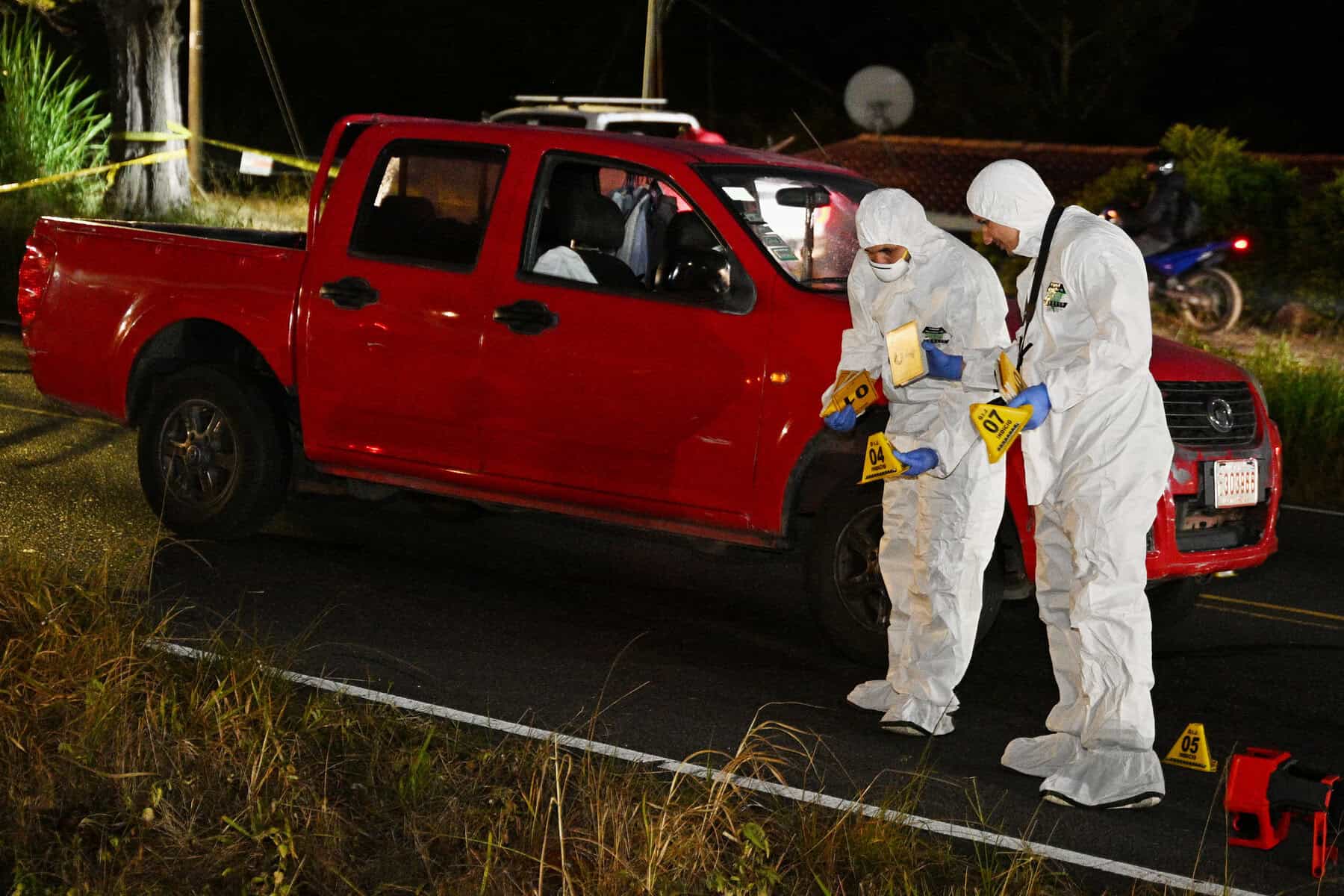
Rodríguez, 50, was killed on the afternoon of Nov. 16 on Route 32 in San Miguel de Santo Domingo, Heredia, as he was returning to San José from Guápiles. According to preliminary reports from authorities, two men on a motorcycle pulled up beside his vehicle, fired repeatedly and fled.
Vladimir Muñoz, acting deputy director of the OIJ, said the attackers had information about the journalist’s vehicle and took advantage of it being stopped in traffic. Investigators are trying to establish whether other people followed Rodríguez and alerted the gunmen, a line the OIJ first raised earlier this week.
Agents searched Rodríguez’s apartment overnight Monday into Tuesday and seized four cellphones, a hard drive, other electronic devices and documents for forensic analysis, according to the Public Ministry and OIJ. No arrests had been announced as of Thursday morning, and authorities have not confirmed a motive.
Prosecutors have said that one of the main lines of investigation concerns Rodríguez’s public allegations about links between organized crime, drug trafficking and political parties. Investigators have not ruled out other motives, including business disputes. Rodríguez had reported multiple threats against him before his death. Díaz has said the journalist was referred to the Public Ministry’s victim and witness protection office but declined the protection measures offered, which are voluntary.
Hundreds of people attended his funeral Mass on Wednesday afternoon at the Cathedral of Nuestra Señora del Carmen in Cartago, where mourners greeted the casket with applause and calls for justice. Bishop Mario Quirós of Cartago asked for comfort for the family and for a more just society.
His mother, Sara Chaverri, called for justice and for the country to act against crime. His brother Andrés Rodríguez thanked the public and said the institutional response must go beyond catching the gunmen and lead to changes that address the violence. Burial followed at the General Cemetery of Cartago.
The killing has drawn condemnation from the government, judicial authorities, the United Nations, Reporters Without Borders, the U.S. Embassy and a joint statement from the European Union, Canada, the United Kingdom and Switzerland, which called it an attack on freedom of expression and of the press.
Rodríguez is the third journalist shot dead in Costa Rica in a quarter century, after radio host Parmenio Medina in 2001 and Ivannia Mora in 2003. How quickly investigators identify both the gunmen and whoever ordered the killing is likely to shape public confidence in the country’s justice system for years to come.