

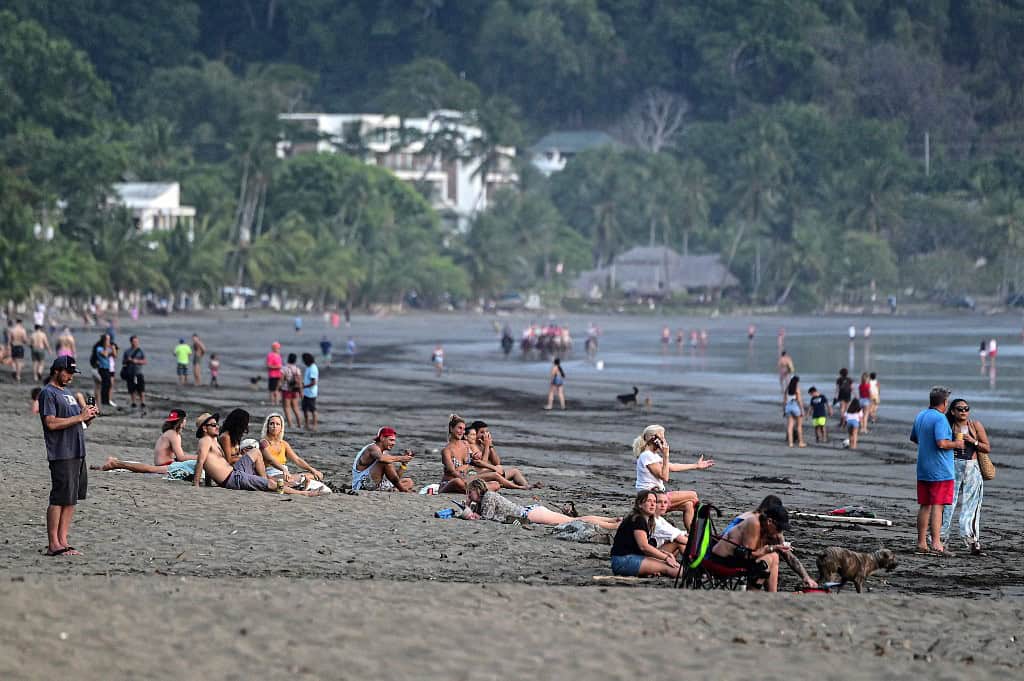
Nearly seven in 10 people in Costa Rica believe rising prices in tourist areas have forced local residents to move away, according to a national survey that also found crime is now seen as the biggest problem facing tourism.
The National Survey on Tourism in Costa Rica 2026, carried out by the Institute of Social Studies in Population (Idespo) at the Universidad Nacional (UNA), found that 68.6% of respondents said the displacement of residents by higher prices happens a lot in tourist areas. Another 71.4% said luxury housing is prioritized over affordable housing, and 75.2% said the profits from tourism benefit some sectors more than others.
The survey also points to unease about who shapes life in tourism towns. Six in 10 respondents, 60.3%, said tourism develops without taking the views of local communities into account, and 47.8% said foreigners have more influence in those communities than the people who live there. A further 41.7% said hotel and residential development has made basic public services worse.
Trust in oversight is low. Some 59.7% said authorities handle complaints about legal violations with little or no effectiveness. More than half of respondents, 52.9%, said they were unfamiliar with the work of the National Environmental Technical Secretariat (Setena), the agency that reviews the environmental impact of development projects, and 62% said the same of the Environmental Administrative Tribunal.
Asked to name the main problems of tourism in Costa Rica, 37.7% pointed to crime and insecurity, well ahead of the cost of travel at 17.6%. The deterioration of San José and the greater metropolitan area followed at 10.2%, then road conditions at 8.2% and pollution at 6.5%. The result contrasts with an international risk map released this week that ranked Costa Rica among the 10 safest countries to visit in 2027.
None of that has stopped people from traveling at home. Seven in 10 respondents, 69.8%, said they had taken a trip inside the country in the past two years, staying an average of three nights, and 75.7% of those travelers went by private car. Guanacaste was the preferred destination for 45.6%, followed by Puntarenas at 19.2% and Limón at 16%, and beaches were named as the main draw by 56.4%.
Budgets are tight. Some 44.2% said they spend less than 50,000 colones (about $112) per person per day on domestic trips, and nearly three-quarters spend less than 100,000 colones (about $224). Price was the most cited factor in choosing lodging, at 44.1%, in a place that has become Latin America’s priciest place to retire as the dollar hits a record low.
Views on where the industry is heading are mixed. Only 34.5% said Costa Rica has improved as a destination for domestic travelers, while 41.6% said it has improved for foreign visitors. Idespo interviewed 899 adults by cell phone between June 3 and 11, including Costa Ricans and foreign residents who have lived here for at least two years. The survey has a margin of error of 3.3 percentage points at a 95% confidence level.
The research team identified three challenges from the results. They are narrowing the gap between what Costa Rica offers domestic and foreign tourists, strengthening environmental oversight, and giving communities an effective say in decisions about local development.





