
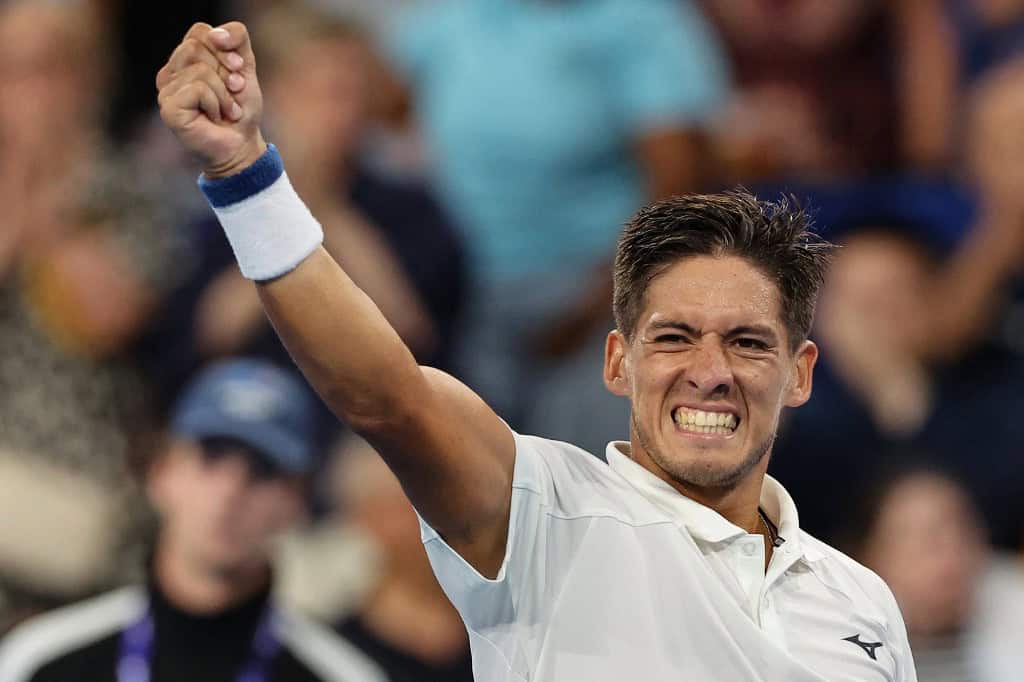
As the tennis world turns its attention to Melbourne for the 2026 Australian Open, Argentine player Sebastián Báez stands out as a steady force in the Latin American contingent. At 25, Báez has built a reputation for grinding out wins through smart, patient play rather than overwhelming power. His recent performances at the United Cup in Perth signal that he arrives in Australia with confidence, ready to challenge in a draw where his No. 45 ranking puts him in a tricky spot.
Báez kicked off the new season with back-to-back victories that highlight his resilience. In Argentina’s opening tie against Spain, he secured the first point with a 6-4, 6-4 win over Jaume Munar, marking the initial singles victory of the 2026 ATP Tour. That straight-sets effort set a tone of control, where Báez dictated rallies and kept his opponent on the defensive.
Just days later, he delivered his biggest career win by upsetting world No. 6 Taylor Fritz 4-6, 7-5, 6-4 in a comeback thriller against the United States. Down a set and a break, Báez flipped the script by staying composed, breaking serve four times in the final two sets, and outlasting the American in extended exchanges.
This win over Fritz, a five-time ATP title holder and defending United Cup champion, snapped a five-match losing streak against him and represented only Báez’s second Top 10 victory in 20 tries. It also underscored his ability to perform under pressure on hard courts, the surface that dominates the Australian summer.
Fritz, dealing with lingering knee issues, admitted post-match that the issue affected his movement, but Báez’s tactical discipline forced the errors that sealed the result. For Argentina, the point propelled them forward in the team event, with Báez expressing satisfaction at contributing to a long-sought team dynamic.
Born in Buenos Aires, Báez turned professional in 2018 and has climbed steadily through the ranks. He trains under coach Sebastián Gutiérrez, who has helped refine his all-court approach. Báez’s career-high ranking of No. 18 came in 2023, and he has collected seven ATP singles titles, most on clay but with growing success elsewhere. His 2025 season included defending the Rio Open crown in February, where he beat Alexandre Müller 6-2, 6-3 in the final, proving his consistency over a full week of matches.
What sets Báez apart is his point construction. He thrives in prolonged rallies, trading shots cross-court until he spots a weakness, then redirecting with precision to wrong-foot opponents. His speed allows him to cover the court without rushing, and his return game often turns second serves into opportunities.
Báez doesn’t rely on aces or massive groundstrokes to dominate; instead, he wears down players by making them hit one more ball, building pressure until cracks appear. This style demands high fitness levels, which Báez maintains through rigorous training, and it pays off in matches that turn physical.
On hard courts like those at Melbourne Park, Báez’s game adapts well when conditions favor baseline battles over quick points. His serve, while not a weapon for freebies, needs to be reliable to start points on even terms. When his first-serve percentage stays above 60%, he controls the pace; dips below, and aggressive returners can push him back. In his best outings, Báez keeps service games tight, forces opponents to overplay, and capitalizes on late-set tension.
Báez’s Australian Open history shows promise but also the challenges of his profile. His top result remains the third round in 2024, where he beat players like J.J. Wolf and Alejandro Davidovich Fokina before falling to Jannik Sinner. That run demonstrated he can handle the early rounds, but advancing further requires navigating power hitters who aim to shorten points.
At No. 45 on the entry list, Báez sits in a vulnerable bracket zone – high enough to expect first-round success if focused, but low enough to potentially draw a seed early. An ideal path would involve opponents who engage in his preferred rhythm, allowing him to build momentum through physical tests rather than shot-making shootouts.
The United Cup triumphs add intrigue to his Melbourne prospects. Beating a Top 10 player like Fritz, especially in a comeback, boosts his belief heading into the Grand Slam. It also reminds fans of his upset potential; Báez can frustrate seeds who arrive underprepared or struggle with the heat. Melbourne’s variable weather and fast courts suit players who stay mentally even, a strength Báez showed in Rio and now Perth. If he maintains that emotional steadiness, he could extend his stay beyond the third round.
Latin American tennis has seen a resurgence, with players like Báez joining countrymen Francisco Cerúndolo and Tomás Martín Etcheverry in pushing boundaries. From a Costa Rican viewpoint, where tennis interest grows amid regional talents like those in Central American circuits, Báez represents the work ethic that resonates across borders. His path from junior success – including a French Open boys’ title in 2018 – to Tour mainstay inspires, showing that height or raw power aren’t prerequisites for impact.
As the Australian Open draw unfolds, Báez will aim to translate his United Cup form into deeper runs. Opponents know they can’t afford lapses against him; one loose game, and he seizes control. For Báez, success in Melbourne hinges on executing his patterns: defend smartly, return deep, and let the rallies do the work. If he does, he could emerge as one of the tournament’s early surprises, proving once more that persistence beats flash in the long game.