
It’s safe to say I probably like camera trapping a little too much. My work is dedicated to that one activity. My social media feeds almost exclusively show me content from other camera trap aficionados like me. Heck, I even dream about reviewing camera traps. The part of camera trapping that has really hooked me is the fact that you never know what you’re going to get every time you start scrolling though the videos on an SD card.
Exceptional videos come in a few different flavors. Sometimes the video features an extremely rare species. It doesn’t even matter what the individual happens to be doing in the video, the fact that it was recorded at all is reason enough to celebrate. Other times the animal itself isn’t especially remarkable, but it happened to be doing an interesting behavior as it passed the few square meters one of my cameras is monitoring.
Yet another category of awesomeness is when I hit play on a video and the first thing I think is, ‘Hey! You’re not supposed to be here!’ These videos are fun because they show that the range map of any given species is more of an approximation rather than something set in stone. Today I am going to feature a few examples of feathered species found outside of their known ranges in Costa Rica. Each of the following birds aren’t supposed to be found in the tropical dry forest of Estación Experimental Forestal Horizontes.
Rufous-vented Ground-cuckoo
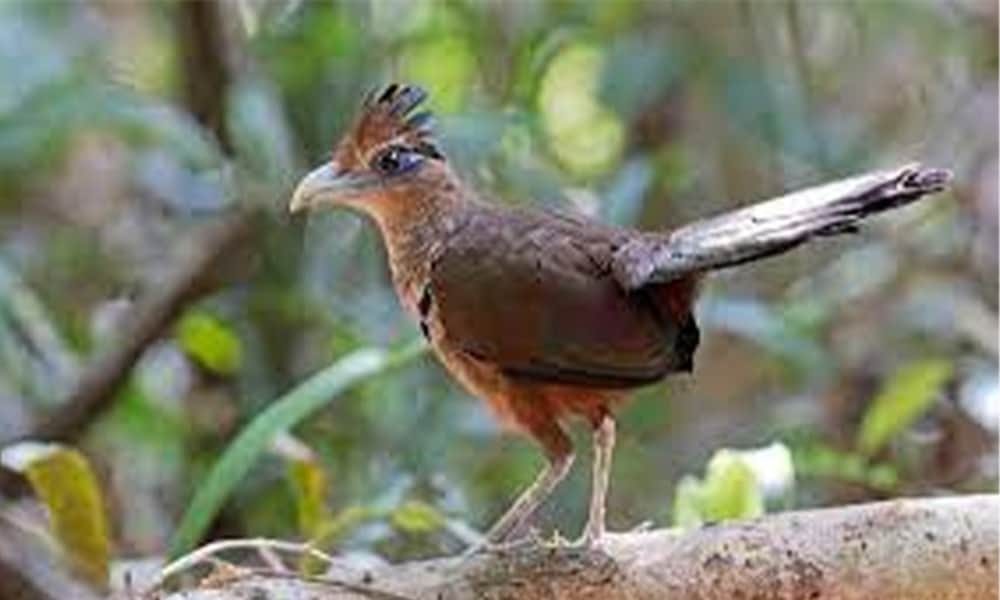
The rufous-vented ground-cuckoo (Neomorphus geoffroyi) is known as the Cuco Hormiguero in Spanish. It boasts another name amongst the birders who pine for the opportunity to spot them in the wilderness, the ghost. It earned that nickname by being exceedingly difficult to locate among the thick, lush underbrush of the humid forests it normally calls home.
These birds resemble roadrunners, but with purple highlights. When they are spotted, they are often hot on the heels of a swarm of army ants, scarfing down small creatures as they flee the hungry insects. I’ve had the good fortune of recording them a handful of times in the places where they’re supposed to be, the damp forests in Limón and around Tenorio Volcano National Park. However, I was absolutely floored to discover I had recorded a video of one in the tropical dry forest. You never know what you’re going to get.
Agami Heron
The agami heron (Agami agami) is also called the chestnut-bellied heron in English. In Spanish, it’s the garza pechicastaña or garza agami. These birds are famous for their beauty. They’re a medium sized heron with a very long beak. The plumage is what makes them stand out. I can try to describe it, a combination of chestnut and dark glossy green with a white stripe down the center of the neck that looks like it was painted on by an artist, but you really need to do an image search to fully appreciate it. I’ll wait while you look it up…
Beautiful, right?
Traditionally, it was thought that agami herons were confined to the Caribbean lowlands as well as the coastal areas around the Golfo Dulce in the Osa Peninsula, but it seems as though they’re being spotted in other areas as time passes. Even with their recently documented habitat expansion, I had no inkling that one would appear on a camera monitoring a puddle in the tropical dry forest, but that’s exactly what happened a few months ago.
Green Ibis
This one is hot off the presses. Just last week I was reviewing a camera trap perched above a puddle next to a clear, flowing stream expecting to find the usual suspects but secretly hoping for an elusive neotropical river otter. The previous month of monitoring didn’t result in any otter videos, but it did provide a series of videos of a pair of green ibises.
The green ibis (Mesembrinibis cayennensis) is known as the ibis verde in Spanish. They were doing exactly what the literature says they do, patrolling a forested waterway, using their curved beaks to probe the water’s edge for food. The surprising part was they were doing all of that well outside of their known range, across northern Costa Rica and down the Caribbean coast.
Click on the video below to enjoy a glimpse of the lives of a rufous-vented ground-cuckoo, an agami heron, and a pair of green ibises. If you really want the full effect, as each species appears you have to think to yourself, ‘Hey! What are you doing here?’
About the Author
Vincent Losasso, founder of Guanacaste Wildlife Monitoring, is a biologist who works with camera traps throughout Costa Rica.