

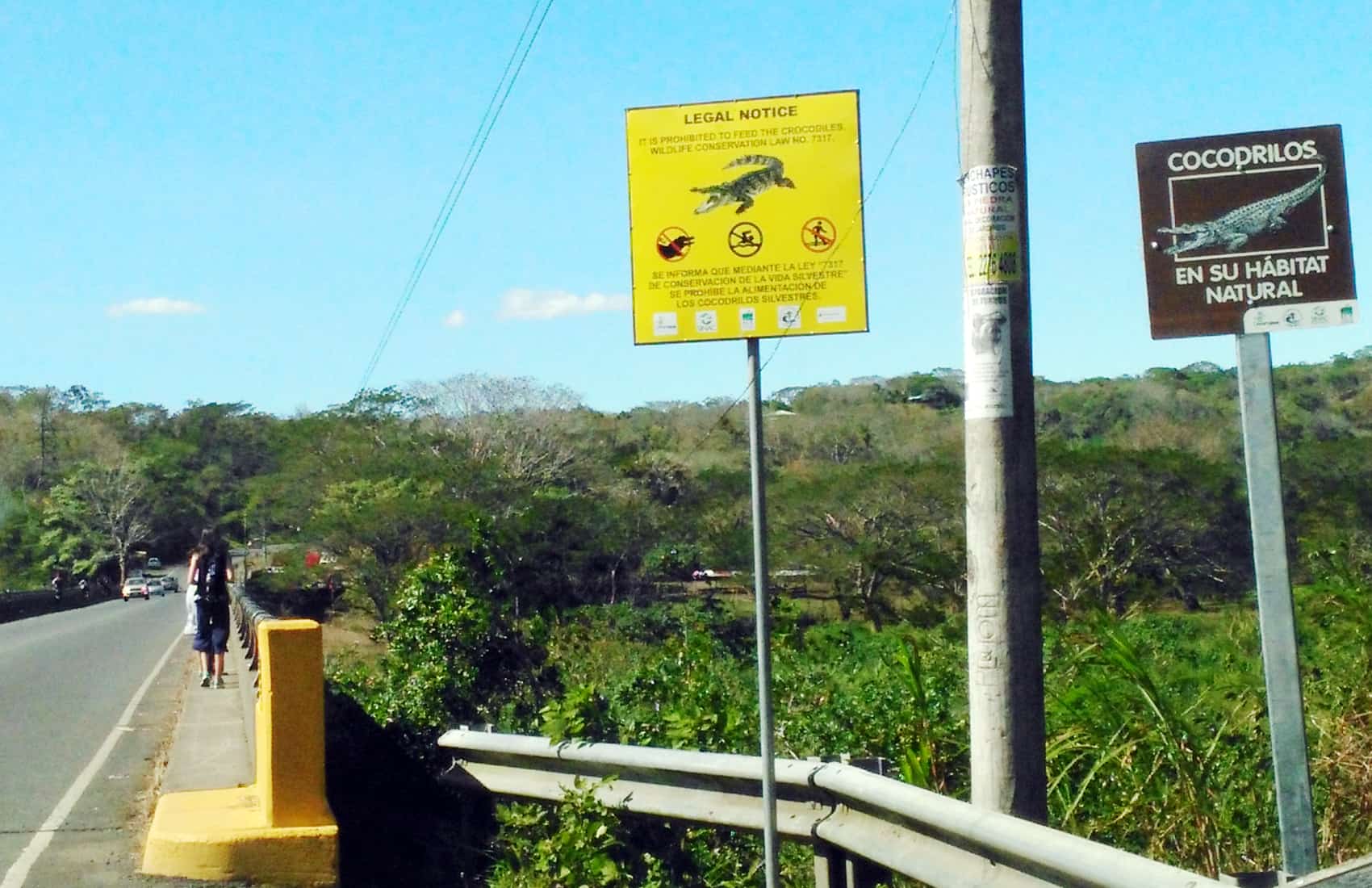
Drivers heading between Costa Rica’s Central Valley and the Central Pacific should prepare for delays this week as the Tárcoles bridge on Route 34 returns to single-lane operation for final rehabilitation work. The bridge, widely known as the Crocodile Bridge because of the large crocodiles often seen below in the Tárcoles River, is one of the main links for travelers heading to Jacó, Manuel Antonio, Quepos, Dominical, Uvita and other Pacific coast destinations.
The latest schedule from the Ministry of Public Works and Transport shows one-lane regulated traffic from yesterday at 6 a.m. through 11:59 p.m. Friday, May 8, and again from 6 a.m. Monday, May 11, through 11:59 p.m. Friday, May 15. Traffic will return to two lanes on Saturday and Sunday.
The work involves installing expansion joints on the upper part of the bridge. These joints allow the structure to expand and contract with temperature changes and vehicle loads, making them an important part of the bridge’s long-term operation.
Traffic will move one direction at a time, with workers controlling the flow in alternating intervals. The speed limit in the work zone is 30 km/h. MOPT and CONAVI are asking drivers to follow signs, obey workers in the area, and plan extra time before traveling.
The Tárcoles bridge is a choke point even on a normal day. With only one lane open, those going there should expect backups that can add one to two hours, especially during peak travel periods and late afternoons when beach traffic heads back toward San José.
The work forms part of the Emergency Program for the Comprehensive and Resilient Reconstruction of Infrastructure, known as PROERI, and is funded with $6.73 million from the Central American Bank for Economic Integration.
The bridge is not the only trouble spot on Route 34. Separate stabilization work continues at kilometer 27 between Tárcoles and Herradura, where crews are working on slope stabilization through June. That project is also affecting daily travel, with regulated traffic expected from 6 a.m. to 5 p.m.
Together, the two work zones could make the drive to the Central Pacific slower than usual for those using the Costanera Sur. The best option for anyone heading to Jacó, Manuel Antonio, Quepos, Dominical or Uvita is to leave earlier than usual, check live traffic before departure, and avoid tight airport, hotel or tour connections on the same travel day.
The inconvenience is temporary, but the timing is rough for one of Costa Rica’s busiest tourism routes. Until the work is finished, the Bridge will remain a place that will test your patience. For those heading to the airport or any pressing engagements, make sure to leave yourself plenty of time.





