
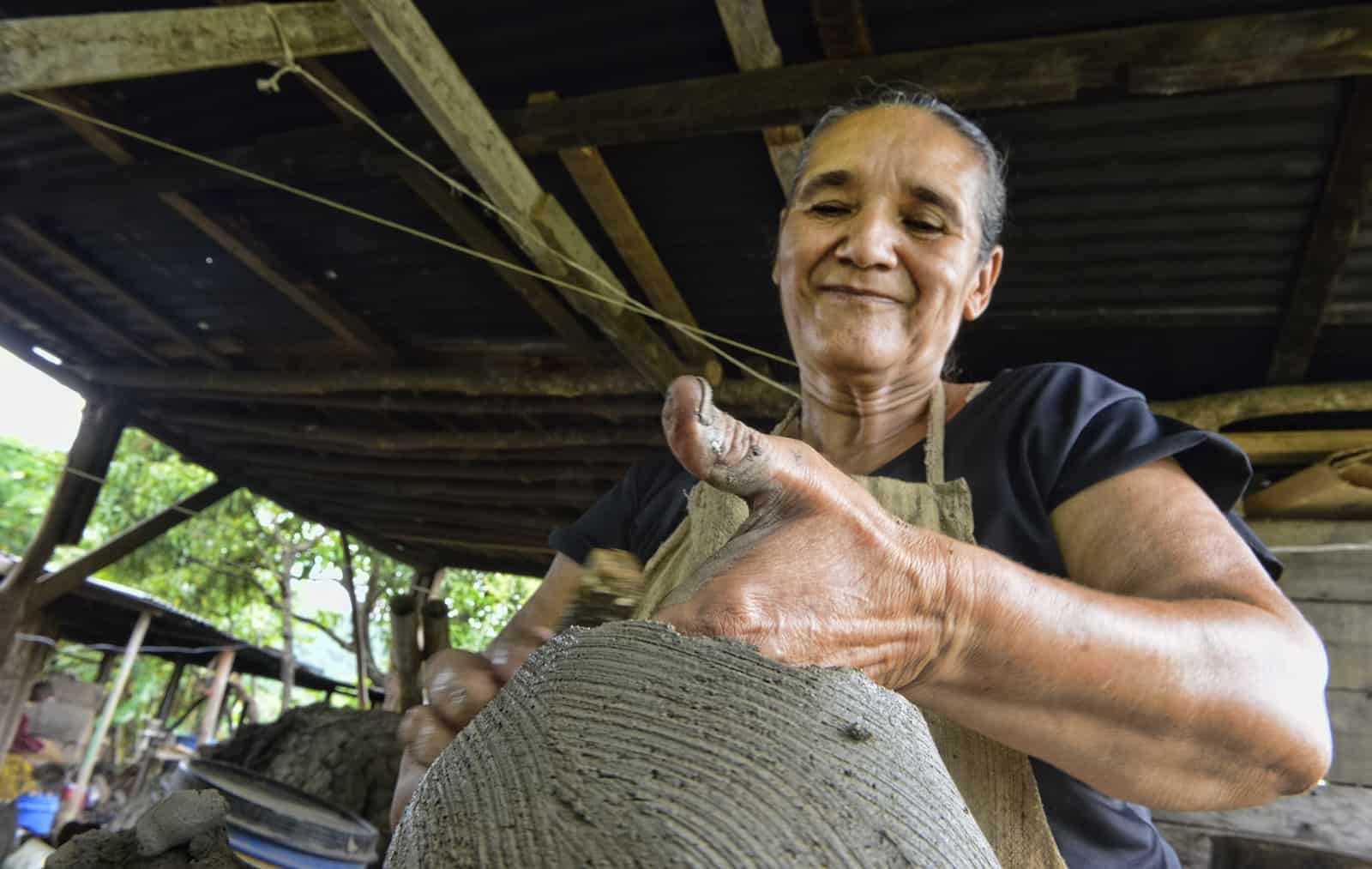
Guaitil is a community of true authenticity preserving history and time throughout the years, there are no replicas or facades here, just ingenuity and spirit. Nestled off the beaten path between Santa Cruz and Nicoya is where you will find the artesian pottery village of Guaitil, in Guancaste’s province often referred to as the Chorotega region.
The Chorotega people inhabited the Guanacaste region of Costa Rica originally after being driven away from Mexico. However, through the years the Chorotega indigenous community has decreased with time. Although they are not a population that once was, they are proud of their ancestral methods and culture preserving their legacy through their famous art of clay pottery making.
From generation to generation over centuries the artisan pottery traditions have been passed down keeping the primitive techniques of the Chorotega indigenous people alive. Every step and tool involved is in its purest form embracing their heritage which is displayed through each carefully crafted piece of pottery. Traces and influences of their culture can be seen within many of their designs.
Guaitil Pottery Making Process
It is a not simple process by any means as they carry on the traditional ways which have continued to make their pottery so desired and adored. Right from the beginning, the ingredients that are used to create these original pieces come straight from the earth using local clay. The community sustains their livelihood from the production of their distinguishable pottery and takes great pride in maintaining its authenticity and original roots local sourcing all that is needed.
The mud is not collected by machine or tractor, it is done by hard labor with a cart and shovel extracting it themselves to be brought back to be dried. The labor continues as it is then pulverized and pounded to become a powder within large mortars and pestles and wooden urns using their own energy and strength. It then must be broken down even further separating the larger pieces of materials, rocks, and pebbles through a sieve.
Once it has become a dusty powder consistency it is mixed with one of their most important elements, the iguana sand. This odd-sounding sand is named rightly so, after the iguanas. It is the sand in which the iguanas often lay their eggs and is found several kilometers from Guaitil at the riverside digging below the surface to find their most special ingredient.
Together the iguana sand and the powder are combined with water to begin the process of creating the substance needed to work with. The expert hands then knead it, working it to make it pliable enough to create the desired texture for their beautiful shapes and structures. Some may even use the help of their feet to get it soft and malleable enough to transform its consistency. There are no quick easy ways around this, just 100 percent heart and sweat carrying on their ancestor’s respected methods.
Love and Passion
The love and passion for their handicraft continue as they mold their creations on the pottery wheel shaping vases, jars, pots, pitchers, bowls, ornaments, and urns. Much of craftwork has been expertly practiced emulating the original artifacts in Costa Rica’s museums as the government has provided them photographs allowing the artisans to craft the details true to history and design.
Finalizing the design and form is done with all-natural materials of knives, wooden spoons even tools made from gourds, rubber, and sticks by the steady expert hands of the artesian. Placed outside for at least 24 hours to dry, the power of the sun continues the traditional process.
A natural stone creates the protective shine and polish on the clay sculpture by their steady and practiced hands. The ingenuity of the Chorotega people shines through their use of mineral stones what they call “curioles”. Curioles are created from the oxidation of natural elements from the earth.
The stones are all collected by hand and brought back to the village to create their colored “paints”. The natural mineral stones are broken down and pulverized to be then mixed with water. Oxidized iron becomes red, manganese creates black and white is the oxidization of zinc all providing the beautiful colors of their artistic palette. Never once are harmful or toxic materials added to the pottery or materials involved.
The natural process of clay pottery making of the Chorotega indigenous people does not happen in just a matter of a day. It is a timely process from the collection of the earth’s natural materials, to the meticulous sculpting and shaping, drying, and polishing.
Pottery Culture
Patience, dedication, mastery, and respect to their ancient culture go into each piece. Every little detail has been perfected through the centuries. The sculpture is set for its final step when it is fired up inside a primitive and naturally made wood-burning kiln of extreme temperatures.
Not only is regard given to the Chorotega people’s history but to the earth and nature of the village, the small town found its namesake from a special tree that grows throughout the area, the Guaitil tree. Also commonly known for its tattoo fruit, the unripe fruit produces a liquid, a dark blue dye that can be used for tattoos, skin painting, and even pottery.
The traditional pottery of the Chorotega indigenous people of Guaitil is from the soul, it is the heart of the town and is a beautiful craft to witness. Authentic and handmade in the truest sense of the word.
The pottery village of Guaitil is much more than just an artesian stop on your journey and a souvenir of your trip. It is a glimpse into the culture and history of Costa Rica and the Chorotega people, a respect for the ancient traditions that hopefully continue for many more generations to come.
This article was first posted in 2021