

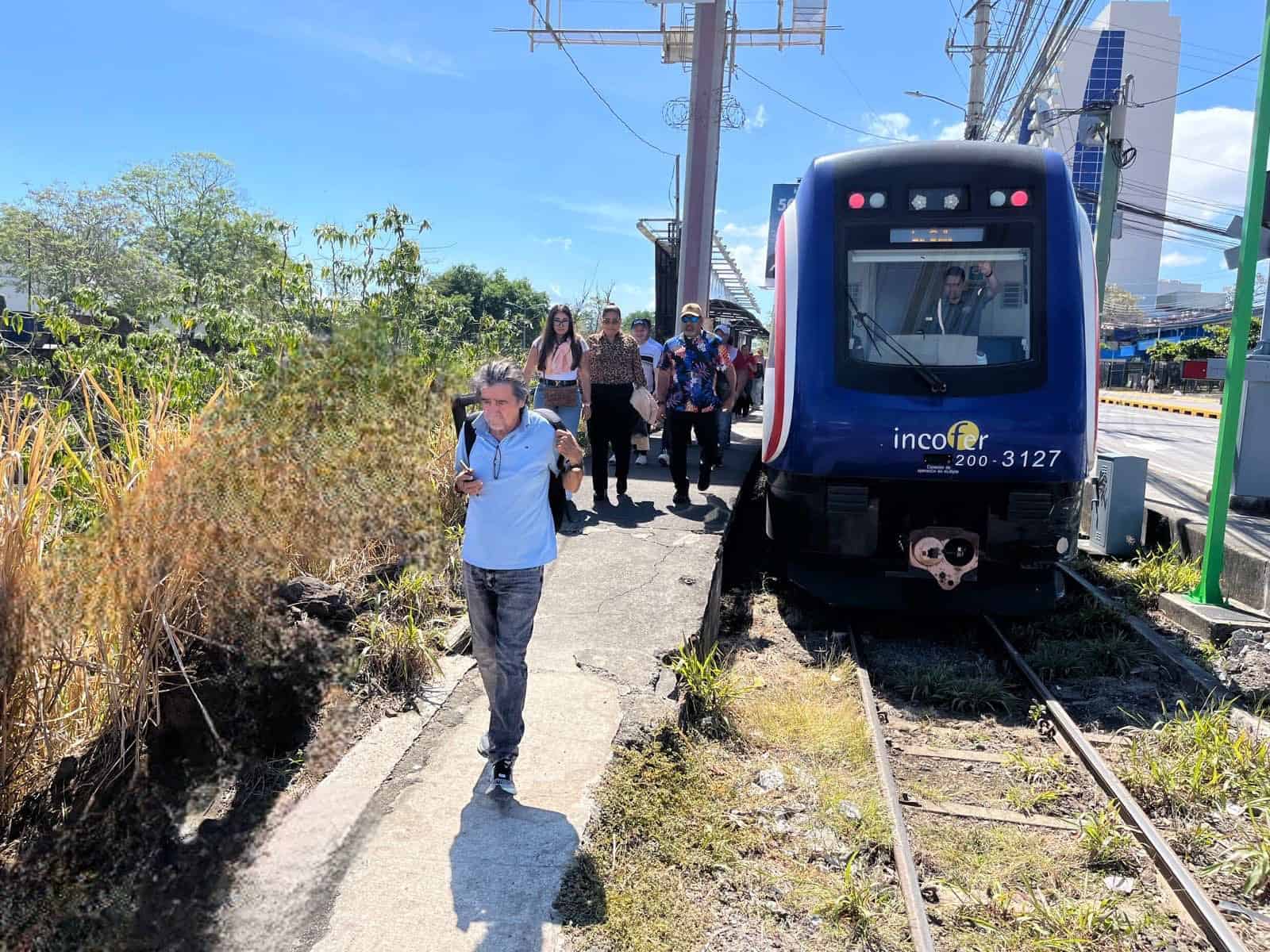
More than 400 homes, shops and other buildings stand inside the rail corridor that Costa Rica’s planned Tibi electric train will use, according to the Costa Rican Railway Institute (Incofer), and they face removal as the project moves toward construction. Incofer said its feasibility study identified the structures within the railway right-of-way, the strip of public land that runs along the tracks.
The institute said the situation will be handled under the existing rules that protect that corridor. Those rules come from a 1993 decree of the Ministry of Public Works and Transport (MOPT), which reserves 6.7 meters (22 feet) on each side of the tracks on flat ground and 5 meters (16.4 feet) on slopes and in mountainous areas. Much of that space has been occupied for decades along a line that carried a single track.
The Tibi design calls for two tracks on each route, which requires more of the corridor than the current line uses. That is what brings the occupied sections into conflict with the project. Because the right-of-way is public land, the people occupying it are in a different legal position from owners of private property the project needs. Incofer has not said whether occupants will receive any payment.
The institute said that where the socioeconomic situation of occupants warrants it, it will coordinate with the institutions responsible for social welfare and housing, within their mandates and available budgets. It added that this coordination is already underway. Separately, the state must get 145 privately owned properties for the train. Incofer President Álvaro Bermúdez said the institute is putting together case files and appraisals before the expropriations begin, describing the process as complex and involving a significant number of properties.
Costa Rica’s Constitution requires prior compensation when the state expropriates private property. The acquisitions are budgeted at $24 million, funded by MOPT and scheduled between now and 2028, according to Incofer. Earlier financing plans for the project put the ministry’s land contribution at $26.5 million.
Bermúdez said both the number of occupied sites and the number of expropriations could still change. Some expropriations have already been ruled unnecessary because the design can be adjusted, he said. The project is also behind its original procurement schedule. The Planning Ministry’s (Mideplan) public investment registry had the first tenders starting in July 2026 and still lists pre-execution progress at 0%.
Bermúdez said the first tender, for project management, is close to publication and should come out this month or next. Bids for design, construction and rolling stock are being prepared, and the final design is due before July 2028. Under Incofer’s work plan, construction on the San José-Heredia-Alajuela line would run from 2028 to mid-2029. The San José-Cartago line would follow from mid-2029 to 2031.
Then-President Rodrigo Chaves announced the Central Valley electric train in September 2025. Project plans describe a 51.9-kilometer (32.2-mile) double-track system linking San José, Heredia, Alajuela, Cartago and Paraíso, keeping the 31 existing stops and building two main hubs at the Atlantic and Pacific stations in the capital.
The $800 million system is financed with $550 million from the Central American Bank for Economic Integration, including Green Climate Fund support, and $250 million from the European Investment Bank. The government has said it wants the line 80% complete by 2030, and project plans call for regular train service to be suspended in 2029 during the major road and rail works ahead.
For those households and businesses that line the tracks across four provinces, the outcome now depends on how much of the corridor the final design needs, and on what support, if any, follows for those who have to leave.





