

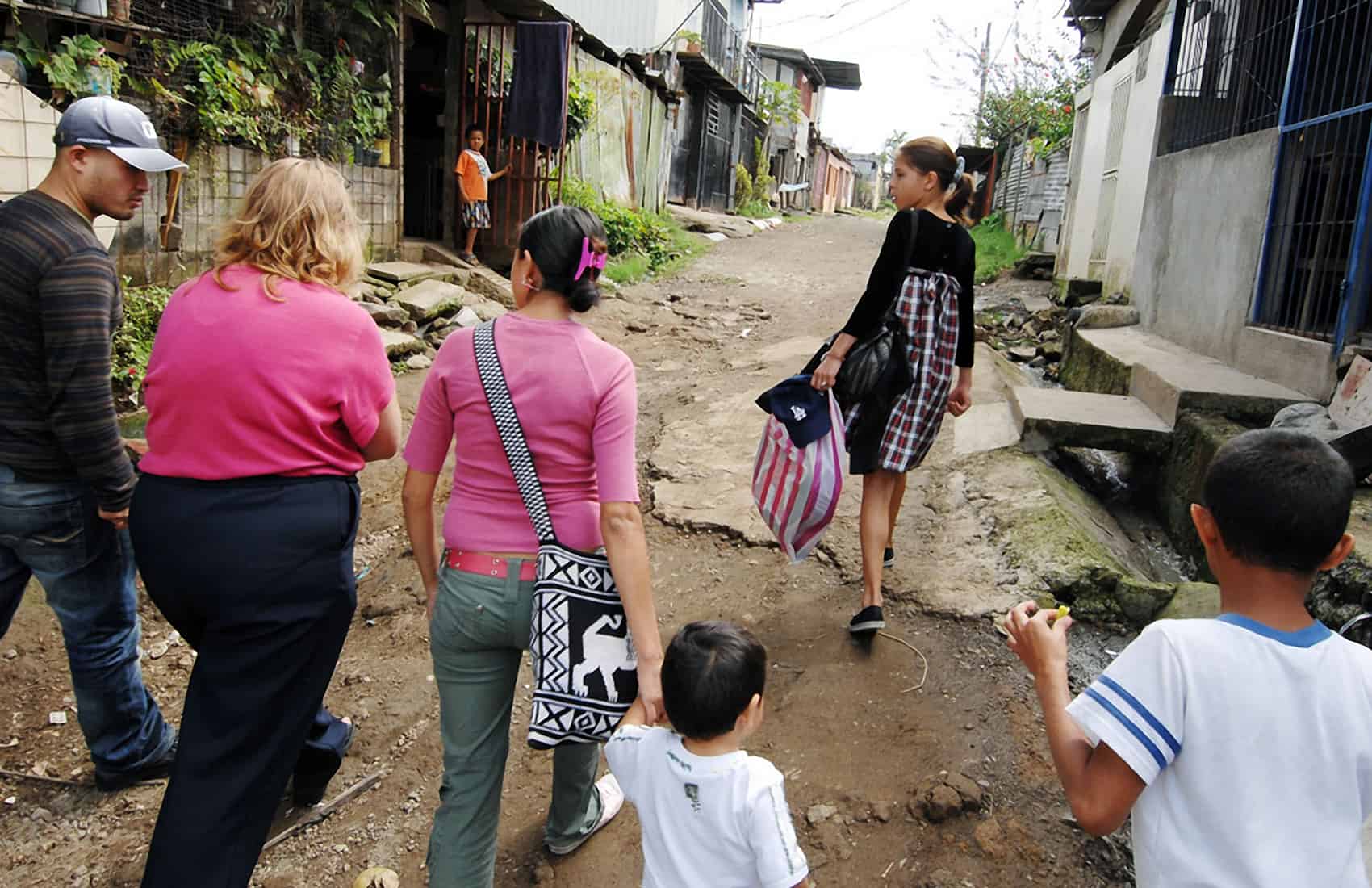
More than 557,000 children and teenagers in Costa Rica are classified as living in basic or extreme poverty, according to a study released by the National Council of Rectors (Conare), the body that represents the public universities. The study, titled La deuda de Costa Rica con sus niños, niñas y adolescentes (Costa Rica’s Debt to Its Children and Adolescents), was written by Ana Teresa León Sáenz, a psychologist, retired Universidad Nacional (UNA) professor and former executive president of the National Children’s Trust (PANI).
Conare presented the work on Sept. 24 after two years of research. The poverty figure is drawn from 2024 records of Sinirube, the national registry the state uses to identify people who receive or may qualify for social assistance. Of 810,394 minors evaluated in that system, 290,026 were classified in extreme poverty and 267,167 in basic poverty, a combined 68.8%. Another 253,201 were classified as not poor.
The numbers are not a national child poverty rate. León has noted that Costa Rica’s population under 18 is roughly 1.3 million, and because Sinirube records people who are current or potential recipients of state aid, the 557,193 total describes children already identified by the welfare system rather than a representative sample of all minors.
Younger children make up the largest share. The study counts 371,610 poor children between birth and age 12, of whom 200,236 are in extreme poverty and 171,374 in basic poverty. Among adolescents ages 13 to 17, 185,583 are classified as poor, including 89,790 in extreme poverty and 95,793 in basic poverty.
Alajuela and San José hold the largest numbers of poor children ages 12 and under. In Alajuela, more than 50,000 children in that age group fall into extreme poverty and some 35,000 into basic poverty, while in San José both figures are close to 45,000. The sharpest concentrations appear at the local level. In Sarapiquí, 78.1% of registered children and 75% of registered adolescents are in some form of poverty, according to the study.
Puntarenas, Coto Brus, Buenos Aires and Osa are among the areas where more than 30% of households face economic deprivation. In Coto Brus, Buenos Aires, Corredores and Golfito, fewer than half of minors have their material needs met under the UNICEF Child and Adolescent Wellbeing Index used in the research.
Education gaps follow a similar map. All 11 areas in Guanacaste register average schooling below six years, and six of them fall below five years. The study also flags coverage, connectivity and access problems across the Northern Region. León has described poverty as perhaps the most critical factor in the lives of the children studied. She explained that stress, poor nutrition and harmful surroundings associated with poverty can impair brain development, slowing language skills in ways that later show up in school performance.
She also warned that early childhood contains critical periods in which nutrition, stimulation and care are essential, and that opportunities missed then are extremely difficult and costly to recover. In her view, a generation that does not receive that attention and protection now will struggle to be productive later, and families cannot carry the burden without outside support.
The study links the deterioration to budget decisions since the 2018 public finance law, Law 9635, and the fiscal rule it created, arguing that spending limits have cut programs for minors and eliminated some, particularly those focused on prevention. It cites recommendations from the United Nations Committee on the Rights of the Child urging Costa Rica to protect child-related budget transfers, including a Constitutional Chamber ruling that requires 7% of income tax revenue to be allocated to PANI.
The research also documents pressure on the child protection system. PANI records examined for 2022 include 59,469 cases classified as failure to attend to a child’s integral development and 44,909 classified as neglect, which together accounted for 77.6% of that year’s caseload.
On sexual violence, the study lists 2,109 PANI case files in 2022, 2,607 in 2023 and 1,857 in 2024. The Costa Rican Social Security System (CCSS) separately recorded 11,768 outpatient consultations for sexual abuse of patients under 18 in 2024. The study cautions that the figures come from different administrative records and cannot be added together or read as a count of victims.
Mental health is another concern. Citing the 2018 Third National Youth Survey, the study reports that 8.6% of respondents ages 15 to 17 said they had wanted to end their lives and 4.8% said they had attempted to do so.
All of this is unfolding as Costa Rica’s child population shrinks. Minors fell from about 33% of the national population in 2012 to roughly 25% in 2023, a trend that has left Costa Rica facing a future with far fewer children. The study argues that a smaller cohort does not reduce the need for services and should instead be treated as a chance to strengthen them.
Among its proposals for early childhood are “Cajas Cuna,” baby boxes paired with parenting education for mothers, and “Bebetecas,” mobile services that teach positive parenting to families with children under 4. It also recommends mobile units running parenting academies, early intervention centers in high-need communities and wider coverage of the national childcare network for children up to age 12.
For adolescents, the study proposes clubs that combine tutoring, sports, arts and psychological care, along with more public spaces for recreation. It calls for an evaluation of whether Avancemos, the state’s cash transfer for secondary students, is keeping young people in school and whether payment amounts meet family needs.
The study further recommends strengthening PANI by reviving its children’s observatory, creating a unit to monitor programs and expanding its regional and cantonal presence, as well as giving the National Council for Children and Adolescents greater capacity. Rather than a single national plan, it sets out three-year investment estimates and projected beneficiaries for each province.
Conare President Jorge Herrera Murillo said public universities have a responsibility that goes beyond training professionals and includes producing evidence on the main challenges. He said the study offers a clearer view of the conditions in which Costa Rica’s children live and should inform decisions aimed at guaranteeing their rights.
León wrote that she hopes communities, local development associations, municipalities, institutions and authorities in all three branches of government will weigh what she calls a growing debt to the children and make the decisions within their reach to change the course of thousands of young lives.





