

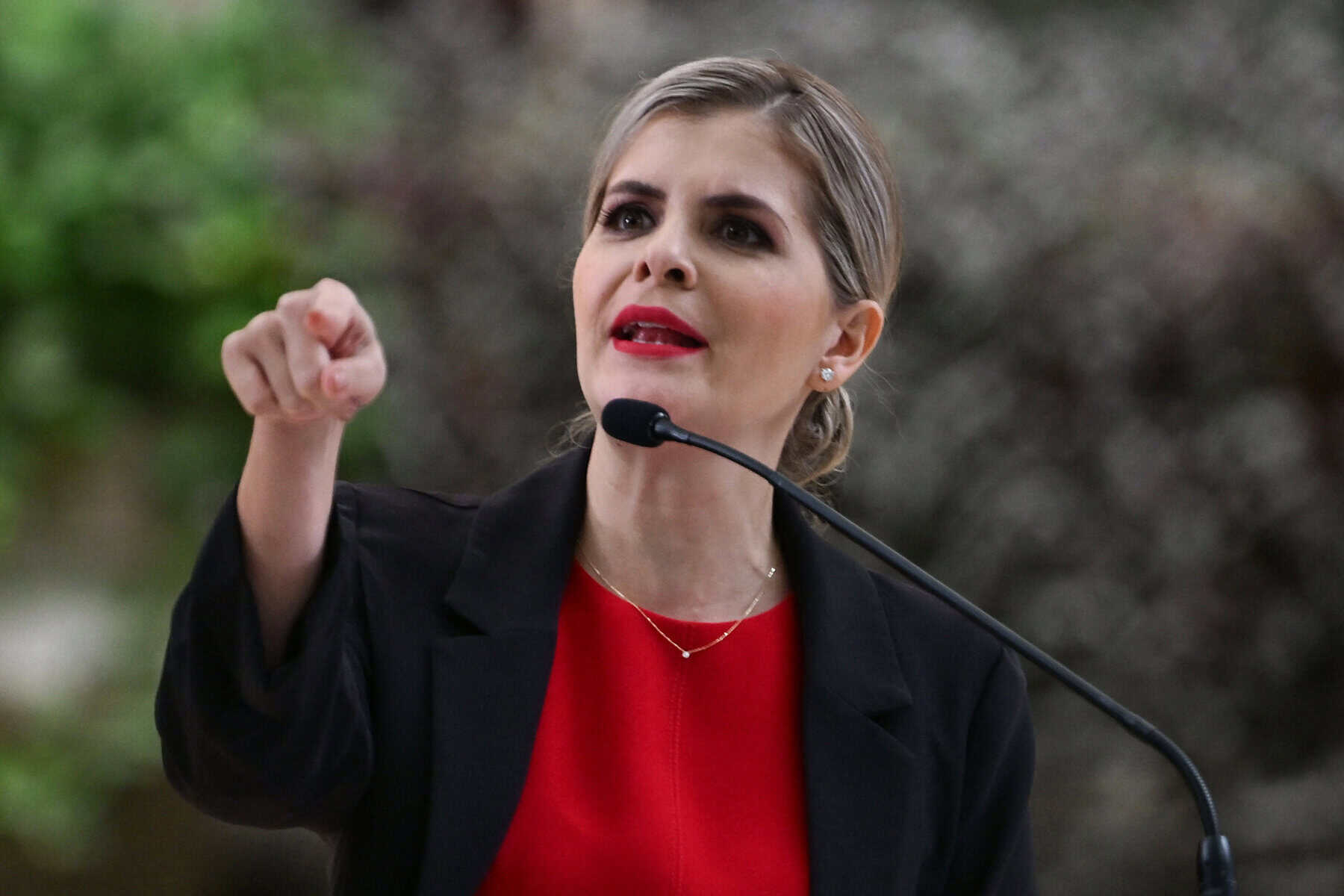
Today, President Laura Fernández removed Foreign Trade Minister Indiana Trejos and ordered that Costa Rica not sign its accession to the Comprehensive and Progressive Agreement for Trans-Pacific Partnership, ending a four-year effort to join one of the world’s largest trade blocs.
The president said she had instructed the Foreign Trade Ministry (Comex) to share the full terms of the agreement with the sectors it would affect, and that the order was not carried out. She said the negotiators had declared the complete text confidential, so almost no one knew what it contained, whom it would benefit or whom it would harm.
She also said she could not put at risk the future of thousands of Costa Rican families who make their living from cattle ranching, dairy production and small and medium-scale fruit and vegetable farming. She ordered the accession file archived. The decision reverses a policy the government had defended and that she had included in her government plan.
Former president Rodrigo Chaves, now Minister of the Presidency and Minister of Finance, celebrated the conclusion of negotiations in early May as a major victory for the country. The CPTPP groups 12 economies: Australia, Brunei, Canada, Chile, Japan, Malaysia, Mexico, New Zealand, Peru, Singapore, the United Kingdom and Vietnam.
The president acknowledged the agreement’s commercial value, citing access to a market of roughly 600 million consumers. Costa Rica formally applied to join in August 2022, and members agreed in November 2024 to open the accession process. According to Comex, the remaining steps after the May announcement were the legal review and drafting of the accession protocol, its signature and its submission to the Legislative Assembly.
Costa Rica had been expected to decide whether to sign at a meeting of members scheduled for Nov. 23 to 27. Trejos, who had been vice minister before taking over the ministry when the new administration began in May, defended the negotiation before lawmakers. Appearing before the Legislative Assembly’s Treasury Affairs Committee on Oct. 13, she said the process had been transparent and that the terms closed in May could not be renegotiated.
President Fernández met with representatives of the productive sectors on Oct. 9 in a session that lasted nearly seven hours. Afterward, she criticized the previous Comex administration for a lack of dialogue and transparency. Agricultural groups led the opposition. Ivannia Quesada of the National Chamber of Milk Producers said the agreement was not in the interest of the country or the national agricultural sector, citing import competition and the risk to domestic production and dairy jobs.
The Coffee Institute of Costa Rica, through Gustavo André Jiménez Elizondo, raised concerns about rules of origin and coffee traceability in a sector already under pressure from the strong local currency. Business groups had backed accession. Arturo Rosabal of the Chamber of Commerce said productivity gaps should be closed through improvements in production, while Rodney Salazar of the Costa Rican Chamber of Exporters (Crecex) supported the deal and acknowledged the concerns of agricultural producers.
The agreement also faced an uncertain path in the Legislative Assembly, where the National Liberation Party had said it would not support it under current conditions. Nogui Acosta, a lawmaker for the ruling Pueblo Soberano party, had defended an export-oriented trade policy and said the party would be watching for the signing.
The president said Comex will continue its work with support from the Agriculture and Economy ministries. She announced support for farmers who do not export, including a stronger Institutional Supply Program, run by the National Production Council, to increase government purchases from local producers, along with action against smuggling and illicit trade.
She did not give a budget or timeline for those measures, and the government did not immediately name a replacement for Trejos.





