

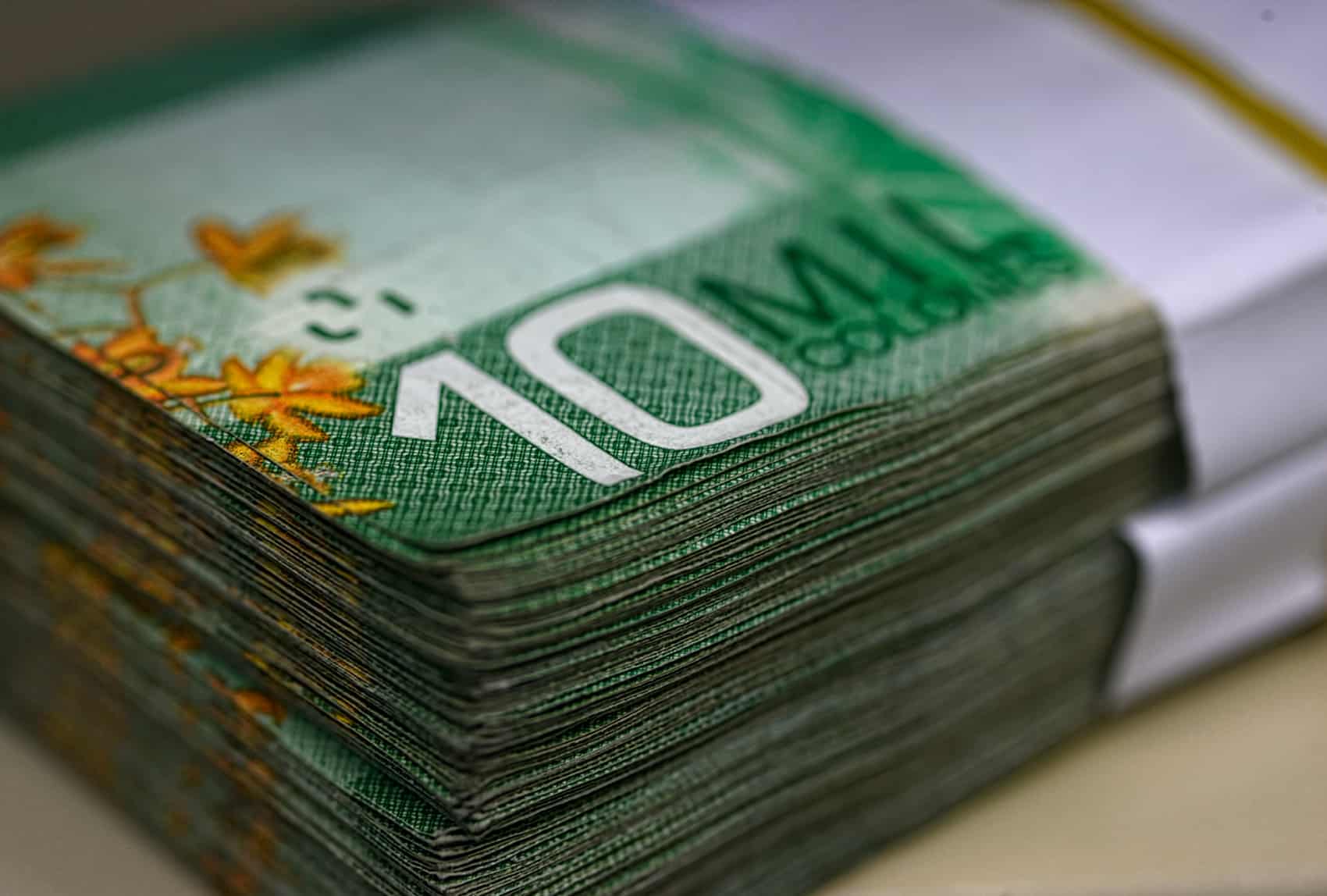
Costa Rica’s coffee producers have seen their income fall by close to 30%, according to the Costa Rican Coffee Institute (Icafé), as a persistently strong colón combines with lower world coffee prices to squeeze one of the oldest export industries. Gustavo Jiménez, Icafé’s executive director, said the problem is built into the business.
Coffee is sold abroad in dollars, while labor, fertilizer and other inputs are paid in colones, so every decline in the exchange rate cuts directly into what growers take home. He warned that the combined pressures put the sector’s sustainability at risk. The Central Bank of Costa Rica (BCCR) reference rate in effect through the weekend is ₡450.04 to buy dollars and ₡456.32 to sell them. On Monex, the central bank’s wholesale foreign exchange market, the dollar closed Friday at ₡454.31, up ₡3.32 from a week earlier after slipping back toward 450 colones earlier this month.
That small weekly gain does little to change the longer trend. In June 2022, the BCCR buying rate stood at ₡685.43, which means a dollar now converts into about 34% fewer colones than it did a little more than four years ago. For anyone whose income arrives in dollars, the gap is easy to measure. At the June 2022 buying rate, $2,000 converted to about ₡1.37 million. At this weekend’s reference rate, the same amount converts to about ₡900,000, a difference of roughly ₡470,000 a month.
Retail rates are less generous still. On Friday, banks were paying at least ₡440 per dollar, while Banco de Costa Rica and Banco Nacional were selling dollars at ₡461 and Banco Popular at ₡462, according to the rates the banks posted. Jiménez also cited the drop in international coffee prices and the possibility that Costa Rica will join the Comprehensive and Progressive Agreement for Trans-Pacific Partnership (CPTPP) as added threats to producers.
Concern over the trade pact extends beyond coffee. The Ombudsman’s Office (Defensoría de los Habitantes) this week warned of possible effects of the agreement on Costa Rican agriculture, and the National Liberation Party has said it will vote against Costa Rica joining the pact.
Producers have been raising the alarm for weeks. Earlier this month, coffee growers warned that the strong colón was forcing job cuts on farms. Icafé has pressed the government and the Central Bank over the exchange rate since at least early 2024, when Jiménez said the falling rate was costing producers ₡19,306 on every fanega, the traditional unit for coffee sales.
A stronger colón lowers the local cost of imported goods and travel abroad, but it reduces the value of every dollar earned from exports, tourism and remittances. The Central Bank publishes a new reference rate each business day, and Monex trading resumes Monday.





