

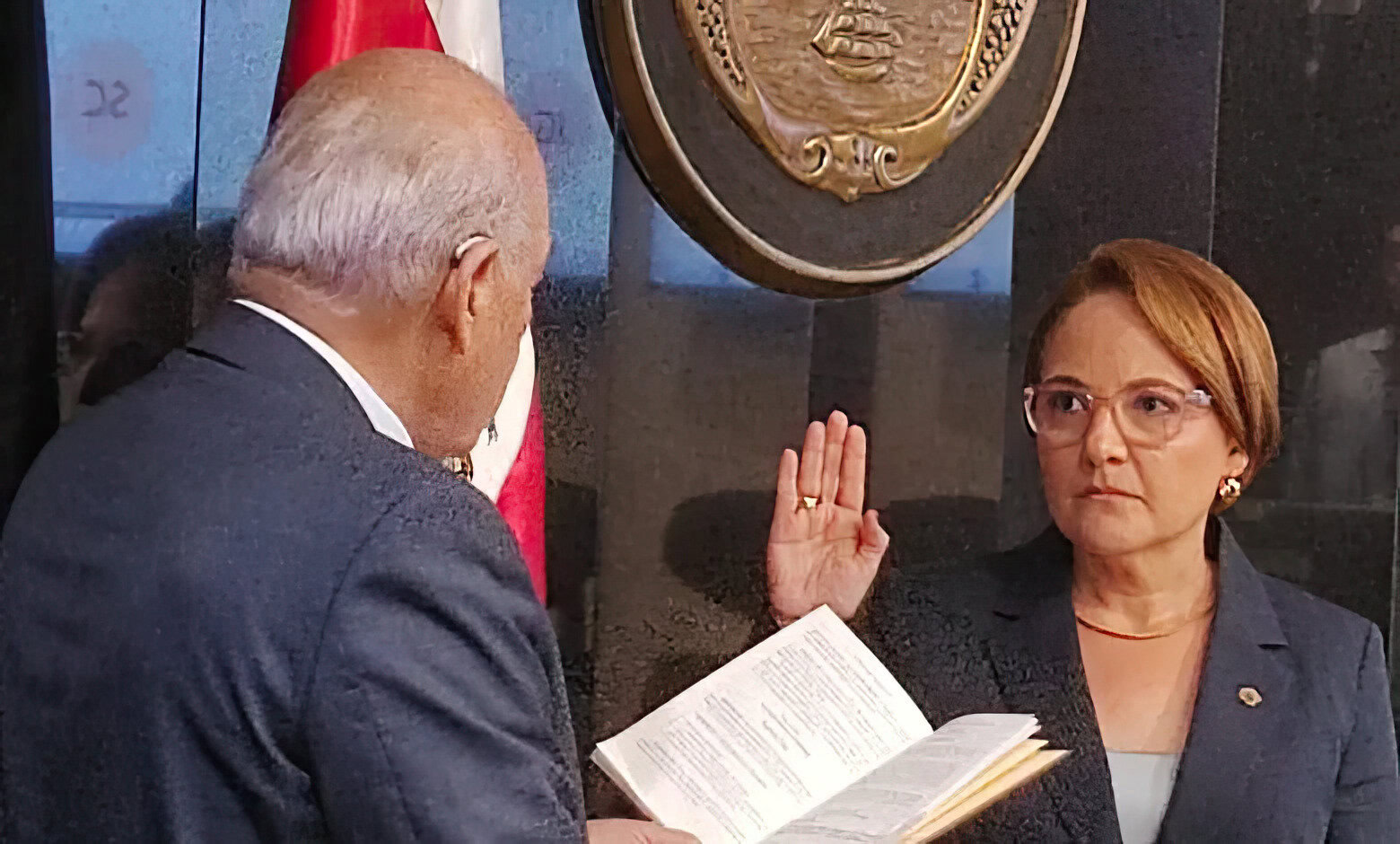
For the first time in our history, women lead all three branches of government after the Supreme Court elected Magistrate Patricia Vargas as its president yesterday. Vargas joins President Laura Fernández, head of the executive branch, Yara Jiménez, president of the Legislative Assembly and Eugenia Zamora also presides over the Supreme Elections Tribunal (TSE).
The full court, known here as the Corte Plena, elected Vargas in its fifth round of voting, when she reached the 12 votes required. Magistrates Patricia Solano, Gerardo Rubén Alfaro and Damaris Vargas were also candidates. It was the first time the court chose its president in a public vote.
Vargas will serve a four-year term as the 58th president of the judiciary. She is the second woman to hold the post, after Zarela Villanueva, who led the court from 2013 to 2017. She has served on the court’s criminal cassation chamber since 2023 and has spent 25 years in the judiciary. The post opened after Orlando Aguirre chose not to seek another term.
Fernández marked the moment on Facebook, writing that the country grows stronger when people work with courage for the well-being of the population. The new chief justice takes office in the middle of a months-long clash between the executive and the courts, much of it over money. Vargas said budget execution rules in the 2027 spending law tie up roughly ₡30 billion (about $65.7 million) and restrict 2,463 vacant positions that keep court services running.
She backed a constitutional challenge already filed against those rules. She said the judiciary is not asking for more money, only for what it needs to function, and that the institution must prepare for the worst. Possible consequences, she said, include being unable to pay for software licenses used to send court notifications, keeping positions frozen and closing court offices when staff cannot be replaced.
Vargas also warned of effects on the operating capacity of the Judicial Investigation Agency (OIJ). Alongside the legal challenge, she said, technical departments are preparing a contingency plan that would prioritize basic services, especially in remote areas. On relations with the executive, Vargas said she is willing to meet Fernández as long as there is good faith and mutual respect, and that judicial independence is not negotiable. She rejected personal attacks as a way to settle disputes between branches of government.
She also rejected a remark attributed to Fernández that organized crime has infiltrated the judiciary to its core, saying she does not share that view at all. Vargas acknowledged that corruption cases exist but said the judiciary detects and investigates them and has zero tolerance for corruption.
She said no senior judicial officials attended the opening of the CACCO maximum-security prison because prisons fall under the Justice Ministry, which is part of the executive. Vargas also called criticism of court delays valid, said citizens have the right to demand prompt justice and named clearer communication about how the courts work as one of her priorities.





