

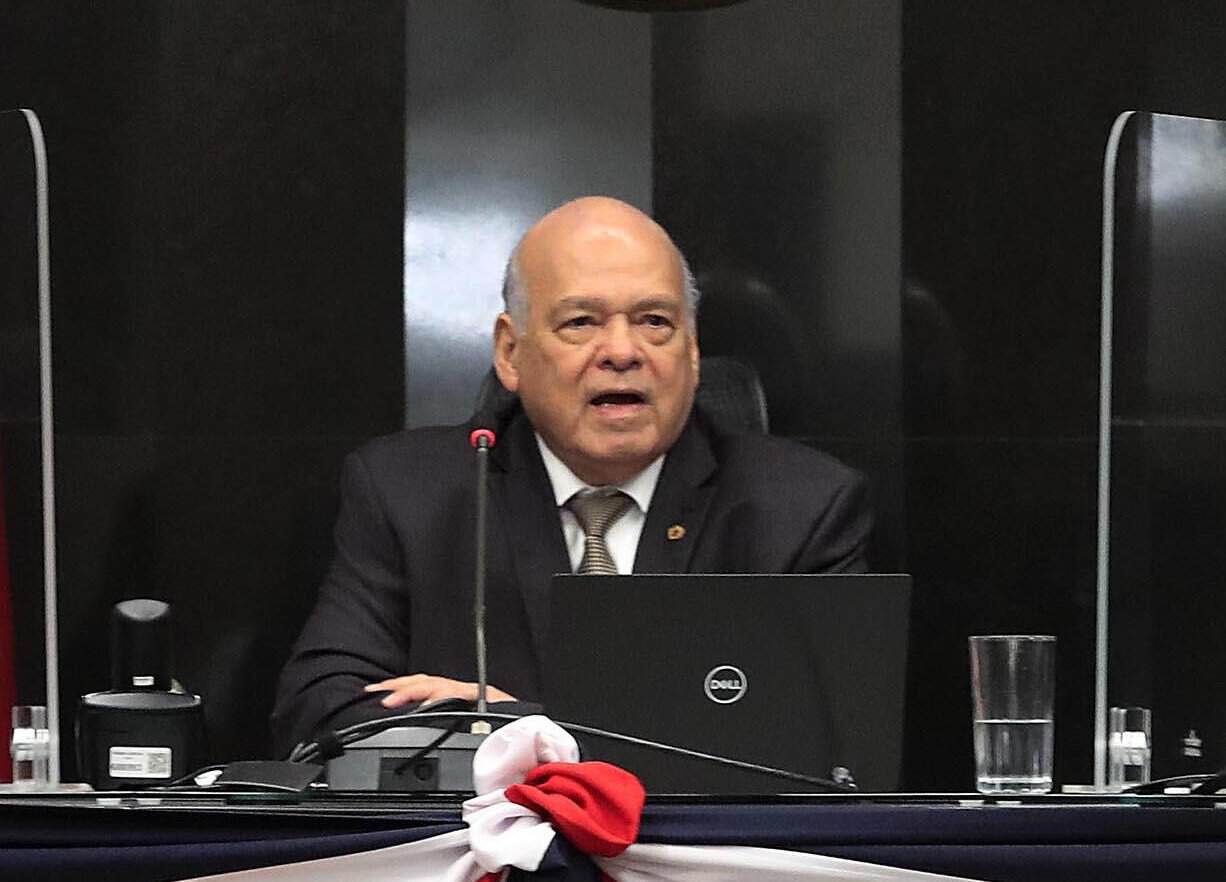
Costa Rica will soon have a new president of its Supreme Court after Orlando Aguirre announced that he will not seek another four-year term leading the country’s Judiciary. Aguirre confirmed his decision Wednesday, August 26, one month before his current term expires on September 26. He will not leave the Supreme Court entirely. Instead, he plans to remain as a magistrate in Sala Segunda, the chamber that handles labor and family matters.
His decision comes at an unusually tense moment between Costa Rica’s government and its Judiciary. President Laura Fernández and other senior government figures have repeatedly criticized the courts over crime, the speed of criminal cases and the handling of high-profile investigations. The Judiciary, meanwhile, has pushed back against government budget cuts and warned against political interference with the courts.
Those disagreements have become increasingly public in recent weeks. Last week, Aguirre declined to participate in a security meeting proposed by Fernández under the conditions established by the Executive Branch. Aguirre said cooperation between the branches of government is necessary but objected to a proposal that would have established goals, deadlines and responsibilities for each branch.
He argued that allowing political authorities to help establish targets or evaluation systems for the Judiciary could interfere with judicial independence. The government subsequently canceled the meeting. The dispute has also moved into the national budget. The Finance Ministry recently ordered another ₡23.72 billion reduction to the Judiciary’s 2026 budget. The Supreme Court has said it will pursue administrative and legal measures to challenge the reduction.
Against that backdrop, Aguirre used his announcement Wednesday to emphasize the importance of keeping Costa Rica’s courts independent. He said the Judiciary faces important challenges and needs to become faster, easier for the public to understand and more open to new technology. But he also stressed that judicial independence, impartiality and due process must remain protected.
Aguirre has led the Supreme Court since September 2022. His election four years ago was anything but simple. Supreme Court magistrates needed five sessions and 19 rounds of voting before he finally secured the 12 votes required to win. The process to choose his replacement will now begin.
Candidates will have an opportunity to formally enter the race, after which their names will be made public. They are also expected to participate in a public discussion about their plans for leading the Judiciary before the 22-member Supreme Court votes. That election could become especially important given the current political climate.
The president of the Supreme Court is not simply Costa Rica’s highest-profile judge. The position also serves as the institutional leader of the Judicial Branch and represents it in discussions with the Executive Branch and Legislative Assembly. Whoever replaces Aguirre will immediately inherit disputes over judicial funding, organized crime, public security and the relationship between the courts and the Fernández administration.
Aguirre, 83, has spent decades in Costa Rica’s judicial system and has been a Supreme Court magistrate since 1989. His current appointment as a magistrate runs until 2029. For the next month, however, he remains president of the Supreme Court. The more consequential question now is who Costa Rica’s magistrates choose to replace him, and whether that person can ease one of the most visible institutional disputes without compromising the Judiciary’s independence





