
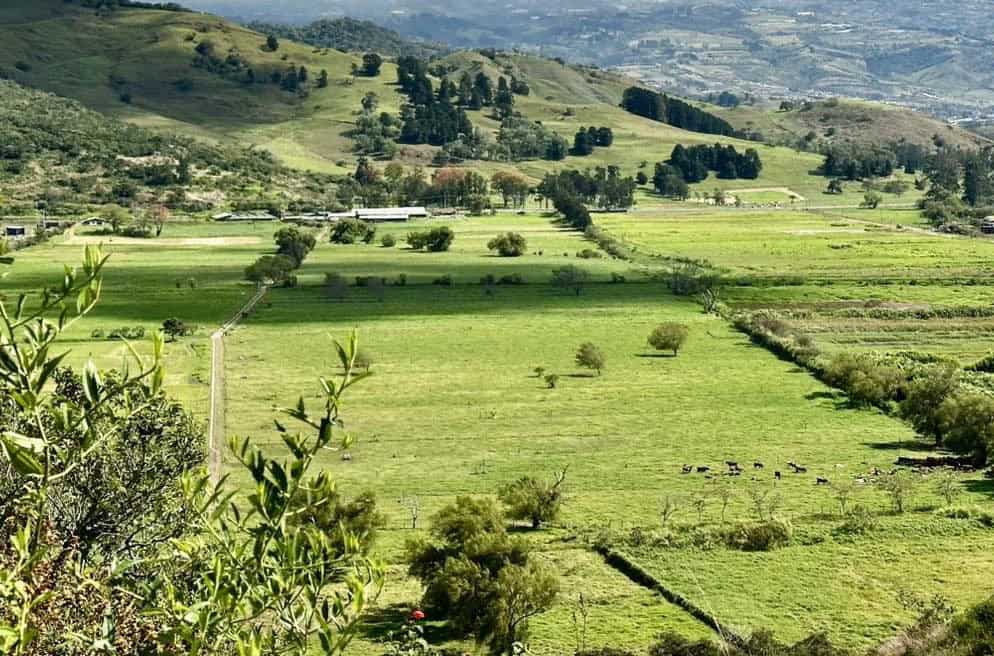
Costa Rican environmental prosecutors are investigating alleged damage to a wetland near Cartago that contains natural hot springs, wildlife habitat and a network of waterways increasingly surrounded by industrial development. The Coris wetland, about 8 kilometers (5 miles) from downtown Cartago, includes at least nine documented thermal springs where water emerges from the ground at temperatures ranging from 40°C to 55°C (104°F to 131°F), according to the National System of Conservation Areas, or SINAC.
The springs are concentrated within an area of roughly 200 square meters, although they form part of a much larger wetland system in the Coris Valley. A SINAC study completed last year identified approximately 130 hectares, or 321 acres, of palustrine wetland in the area. Researchers documented saturated soils, wetland vegetation, three permanent streams, the Coris River and nine thermal outflows. The survey also recorded 129 bird species, including 33 aquatic species.
Environmental officials have also documented extensive changes to the area caused by urban and industrial growth, including fills, artificial channels, roads, dikes, construction and fires. Those alterations are now at the center of several environmental investigations. The Environmental Prosecutor’s Office is examining possible damage involving filling, dredging and other work in areas containing thermal springs and wetlands.
SINAC inspectors have previously ordered work stopped on property where they found evidence that portions of a wetland were being filled. One of the cases involves land used by Hybrida Farms, a company involved in medicinal cannabis production in Coris. Prosecutors have maintained an open criminal investigation for approximately two years into the suspected drainage, filling, drying or destruction of wetlands on the property. The case remains under investigation, and the allegations have not been proven in court.
Authorities are also investigating allegations that work on the property affected waterways and buried one of the documented thermal springs. The Organismo de Investigación Judicial (OIJ) raided the property in February as part of the environmental investigation, collecting documents, computers and other evidence. Judicial agents also conducted topographical examinations of the site.
In July, a criminal court in Cartago ordered restrictions intended to prevent additional environmental damage. The measures prohibited new construction, roads, drainage systems, channels or other work that could alter waterways, springs, wetlands or protected areas while the investigation continues.
The Constitutional Chamber has separately ordered Costa Rica’s environmental authorities to keep construction at the Hybrida Farms project suspended while the National Environmental Technical Secretariat (SETENA), completes an administrative review. SETENA granted environmental approval for the project in May 2024. SINAC had already begun studying wetland conditions in the area and later identified wetland characteristics on portions of the property.
The Constitutional Chamber did not rule that the environmental permit itself was illegal. Instead, the court ordered the suspension to remain in place until the administrative process is completed. The company has disputed the characterization of parts of the property as wetland. Court records show that representatives cited technical studies concluding that the project site did not contain a wetland ecosystem, highlighting the competing technical assessments that remain part of the dispute.
The environmental concerns extend beyond that property. SINAC reports dating back several years describe filling and other activity elsewhere in Coris. After one inspection, officials found evidence that a lot containing a house was being filled in an area they considered part of a wetland ecosystem and ordered the work stopped.
A 2024 inspection also documented a fire that burned approximately 11,449 square meters, or 2.8 acres, near several possible springs. Inspectors found waterlogged soil and wetland plants and animals even though the visit took place during Costa Rica’s dry season. Scientists say the thermal springs make Coris particularly unusual within the Greater Metropolitan Area.
Marino Protti, a geologist with Costa Rica’s Volcanological and Seismological Observatory, has measured water temperatures between 40°C and 55°C at the site. The hot water is associated with tectonic faults running through the area. As groundwater rises through fractures underground, it emerges at the surface as warm springs that help feed the surrounding wetland.
The Coris ecosystem also provides habitat for dozens of plant species and more than 100 species of birds despite decades of development around it. The Municipality of Cartago has separately explored creating an ecotourism park in the area, with walking trails, birdwatching areas and other low-impact activities designed to combine conservation with local economic opportunities.
For now, much of the attention remains on determining exactly where protected wetlands begin and end, what damage has already occurred and who, if anyone, should be held responsible. SINAC has documented the broader ecological importance of the Coris Valley, while prosecutors and environmental agencies continue examining individual properties and alleged interventions.
That distinction will be important as the investigations move forward: the existence of a large wetland system in Coris has been documented, but responsibility for specific environmental damage still has to be established through the administrative and judicial processes.