

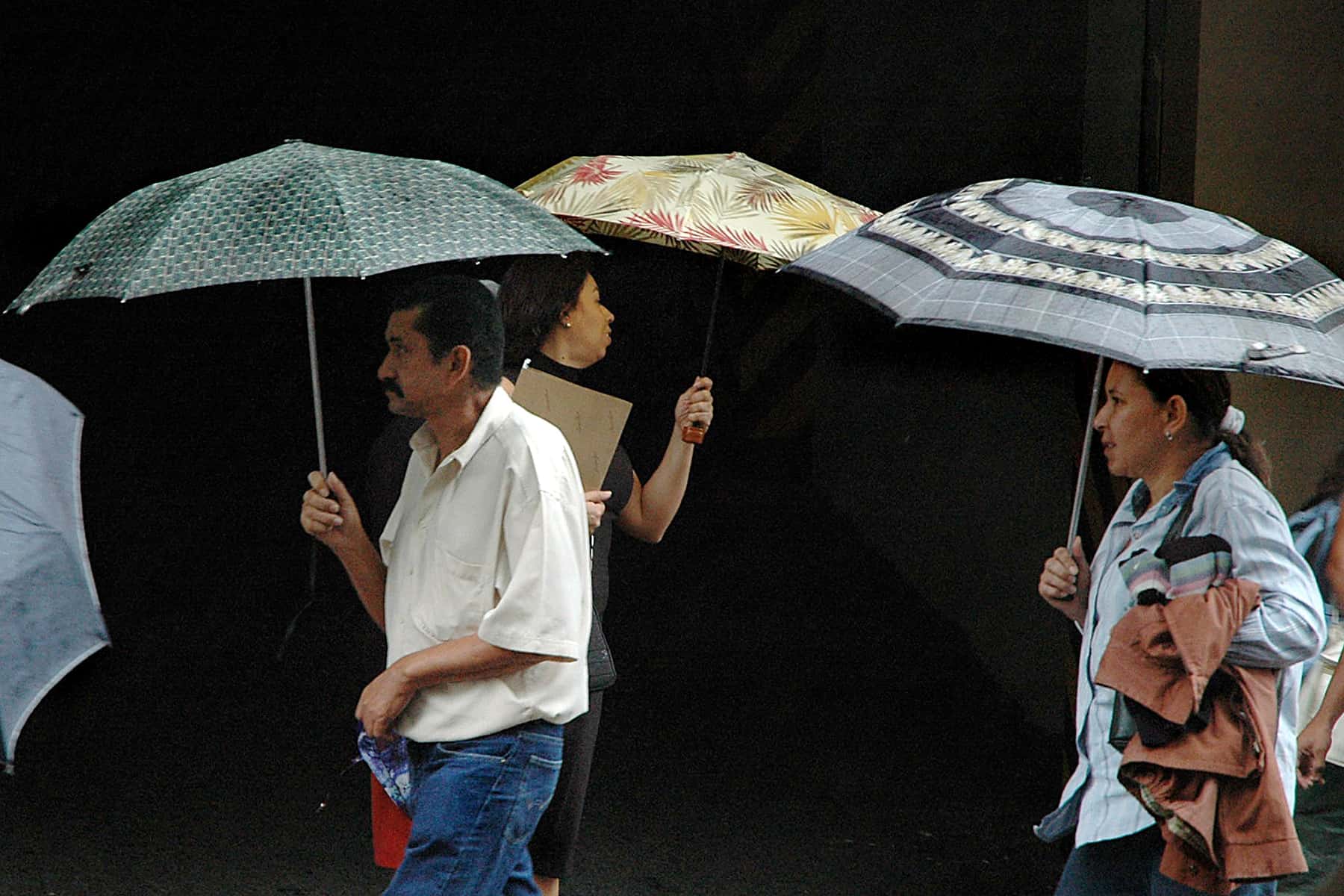
Plan for yet another wet weekend of rainy weather as Tropical Wave No. 50 is expected to reach Costa Rica late Saturday night, adding even more moisture in places that have already had days of steady rain. The heaviest rain is likely in the Northern Zone and the Caribbean, according to the National Meteorological Institute (IMN). The Central Valley and the Pacific should expect scattered showers.
For those non weather experts, a tropical wave is a band of low pressure that drifts west across the Caribbean during the rainy season. It doesn’t spin like a hurricane, but it pulls in moisture and fuels showers and thunderstorms as it passes. The bigger risk, as with every one of these tropical waves, is the ground, not the rain. Soil that has been soaking for days can’t absorb much more water. That means even a moderate downpour can loosen a hillside or push a river over its banks.
Make sure to watch mountain roads most closely and that includes Route 32 through Braulio Carrillo National Park, the main highway between San José and the Caribbean, which is prone (see our earlier article) to landslides in heavy rain. Check conditions before you leave and give yourself extra time. Don’t drive or walk through flooded roads or rivers. Fifteen centimeters (6 inches) of moving water can knock you off your feet, and 30 centimeters (1 foot) can float many cars. You often can’t tell how deep or fast the water is from the edge.
For those of you visiting us, if you have river tours, waterfall hikes or rafting booked in the north or on the Caribbean side, confirm with your operator before you go and have a backup plan. Low-lying neighborhoods that flood easily should keep an eye on nearby rivers and drains through Sunday. This rainy season has been unusually busy. Of the first 48 tropical waves recorded in 2026, 41 influenced Costa Rica’s weather whereas in all of 2025, 34 tropical waves affected us.
Each new wave arrives before the ground has had time to dry out from the last one. That repeated soaking is why landslide and flood risk keeps building even when a single wave isn’t especially strong. The IMN and the National Emergency Commission (CNE) post updates on their official channels as conditions change. Check them before you go anywhere this weekend and follow local instructions if alerts are raised.





