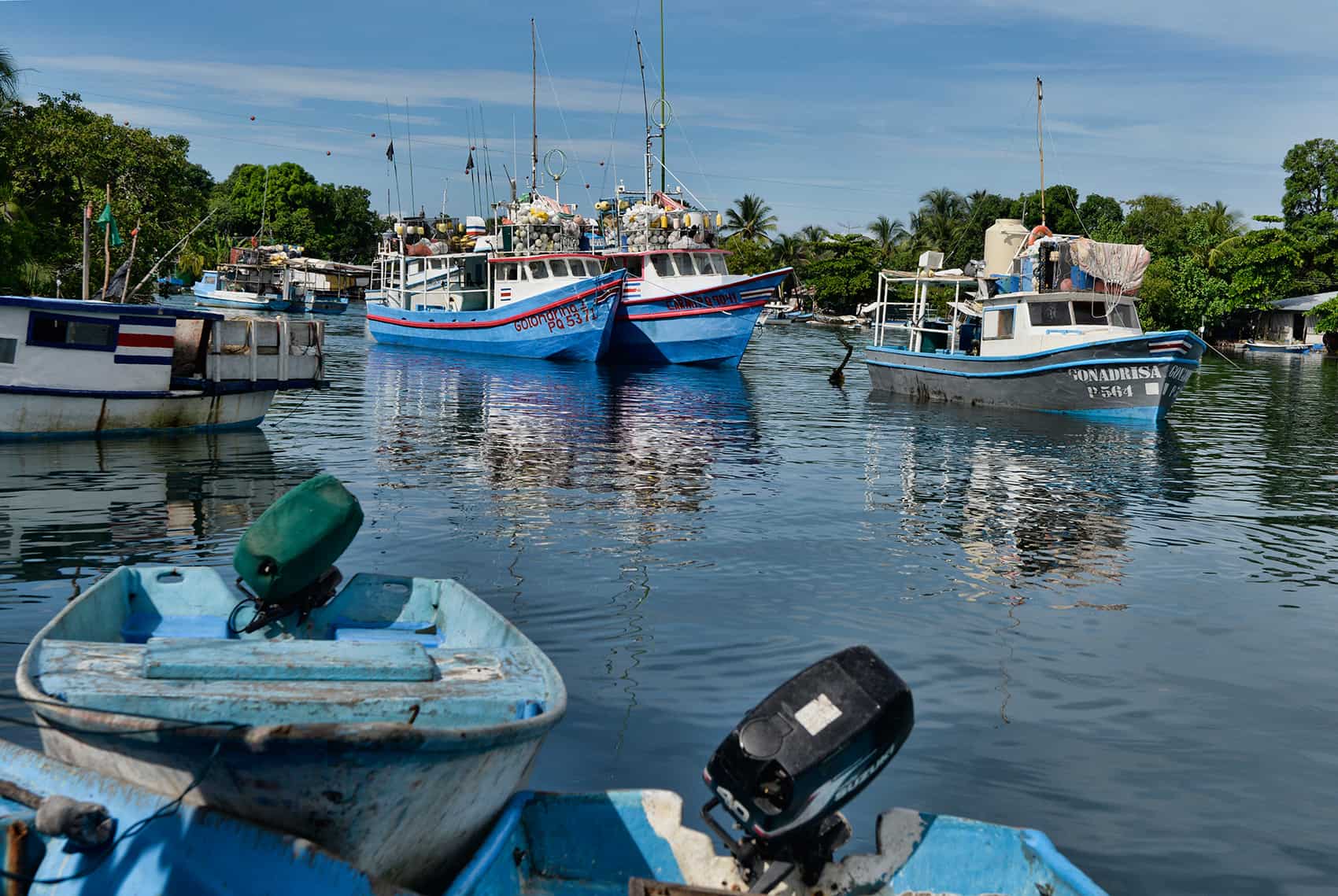
Costa Rica is once again under scrutiny from the United States over shortcomings in the monitoring of its fishing fleet, less than three years after receiving a positive certification for correcting earlier problems. The U.S. National Oceanic and Atmospheric Administration (NOAA) identified Costa Rica for illegal, unreported and unregulated fishing in its 2026 Report to Congress on Improving International Fisheries Management.
Costa Rica was one of six countries identified in the latest report, alongside Grenada, Mexico, Morocco, China and Russia. The designation does not mean that the United States has imposed sanctions on Costa Rica or concluded that all Costa Rican fishing activity is illegal. Instead, the finding begins a consultation period during which Costa Rica will have an opportunity to address the problems identified by U.S. authorities before NOAA makes a future certification decision.
At the center of the U.S. concerns is Costa Rica’s failure to meet international requirements for independent observers aboard larger longline fishing boats. NOAA said Costa Rica failed to ensure the required observer coverage during 2022, 2023 and 2024 for longline vessels operating in waters managed by the Inter-American Tropical Tuna Commission.
Under the applicable rules, at least 5% of fishing activity by longline vessels longer than 20 meters must be monitored by scientific observers. According to NOAA, Costa Rica had not implemented a national onboard observer program by the end of 2024 and had no observer coverage for its longline fleet operating in the commission’s convention area.
Costa Rica also had not provided required summary reports or operational data concerning the observer program for at least five years. Costa Rica told the commission in July 2024 that it had 21 longline vessels measuring more than 20 meters, although only eight had carried out fishing operations during the previous year.
Authorities said difficulties establishing an observer program included the relatively small size of some vessels, continuous work schedules and Costa Rican labor rules governing working hours. NOAA acknowledged that Costa Rica has since taken steps toward addressing the issue.
Information supplied to U.S. and international fisheries authorities in June 2025 said Costa Rica was developing a pilot program combining human observers and electronic monitoring. Costa Rica said it expected that system to allow it to reach the required 5% monitoring level. Costa Rica’s National Fisheries and Aquaculture Development Plan for 2025-2030 also calls for the creation of an onboard observer program.
However, the U.S. report said those efforts had not yet resolved the deficiencies that led to the new identification. NOAA also raised concerns about gaps in fishing data. The agency said Costa Rica does not appear to have reported catches of relevant species to the Inter-American Tropical Tuna Commission for any year after 2020, despite more than 150 Costa Rican-flagged longline boats appearing on the commission’s vessel registry.
The lack of independent observers also means there may be limited information about accidental catches of protected species, including sea turtles. Scientific observers can record the species caught, fishing locations, the amount of fishing effort and interactions with marine wildlife, providing information that fisheries managers cannot obtain solely from reports submitted by vessel operators.
The latest finding comes after Costa Rica had previously appeared to make progress on the same broader issue. NOAA identified Costa Rica in its 2021 report over problems with fisheries management and the submission of required information to international fisheries organizations.
Two years later, the United States gave Costa Rica a positive certification after determining that Costa Rica had taken corrective steps. That 2023 certification was based in part on Costa Rica presenting plans to establish a national onboard observer program. The new 2026 identification concerns more recent activity and covers the 2022-2024 period.
That distinction means Costa Rica did not lose or reverse the earlier certification. Instead, the United States has opened a new evaluation cycle based on subsequent monitoring failures. NOAA said it will now hold consultations with Costa Rican authorities. When the United States makes its next certification decision, it will consider whether Costa Rica has implemented its observer program, achieved the required monitoring coverage aboard larger longline boats and submitted the required reports.
A negative certification could eventually result in restrictions on access to U.S. ports for some Costa Rican fishing boats and potentially affect imports of certain seafood products. Costa Rica is not currently subject to those sanctions. For now, Costa Rica remains in the consultation stage, giving authorities an opportunity to demonstrate that the monitoring and reporting problems identified by NOAA have been corrected.
The 2026 finding is significant for Costa Rica that promotes marine conservation as an important part of its environmental identity and has expanded protection of large areas of its Pacific waters in recent years. It also places renewed attention on how Costa Rica monitors commercial fishing outside its protected areas and whether regulators have enough independent information to determine what boats are catching at sea.
NOAA says the results of its consultations with Costa Rica and the other countries identified in the 2026 report will be announced in a future Report to Congress.