
A senior citizen couple. A father and his ten-year-old son. A mom and her adult kids from the United States. A retired couple who recently moved to a beach town in Costa Rica. My mom. I think it’s safe to say that these are not the type of people that one typically brings to mind when they’re imagining folks who are carrying out a wildlife monitoring project in the tropical dry forest of Costa Rica. Yet, over the last few months, those are descriptions of just a few of the people who strapped on some rubber boots and struck out into the forest to review camera traps with me.
Since July, I’ve invited the public to participate in a wildlife monitoring project using camera traps that is a collaboration between my organization, Guanacaste Wildlife Monitoring, and a protected area in the Guanacaste Conservation Area called Estación Experimental Forestal Horizontes, or more simply, Horizontes.
Traditionally, camera trap usage in Costa Rica has been the domain of academics and wildlife researchers with years of experience working in the wilds of Costa Rica, and there’s absolutely nothing wrong with that. A huge number of academic papers have been published over the years by scientists who use camera traps in creative ways to discover new and interesting facts about Costa Rica’s wildlife.
After falling in love with Costa Rica and its wild creatures, I have spent the last decade exploring how to find less traditional ways to work with camera traps. Over the years, I’ve worked with educational institutions, private landowners, farms, and other institutions using camera traps to demonstrate the immense biodiversity of this little country. The project in Horizontes is a new tourism-based venture where people from the general public who have a great interest in wildlife get to have a little taste of what it’s like to be a wildlife researcher for a day.
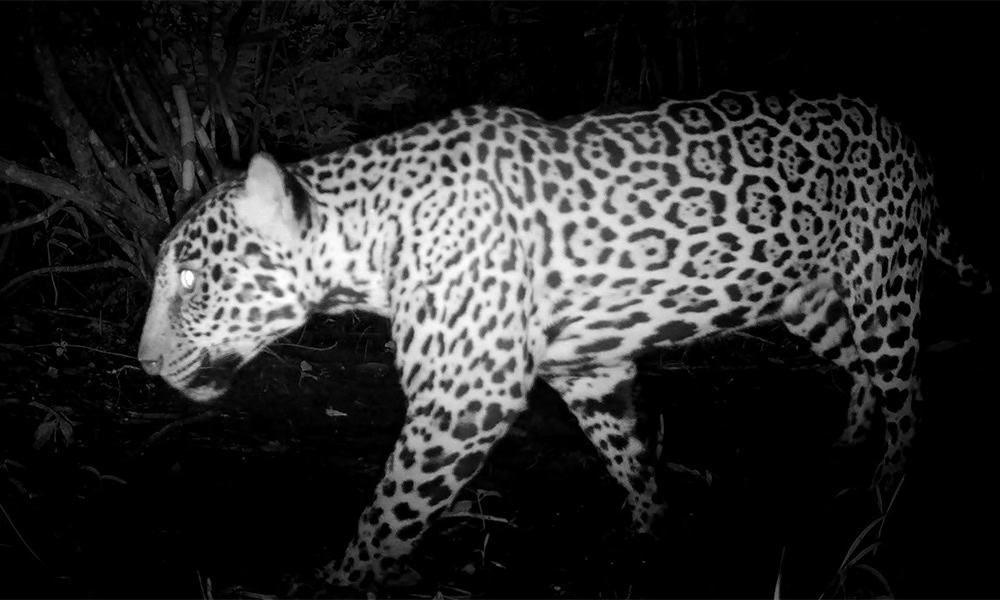
The results so far have been fantastic. To date, the project has recorded over 1,000 wildlife videos of just under 50 species of birds, mammals, and reptiles. Some of the species that have elicited a ‘Wow!’ from the project participants while reviewing videos on my laptop are pumas, ocelots, jaguars, tapirs, and great curassows. We’ve also been lucky enough to record interesting animal behavior including a female great curassow keeping her tail fanned over her chicks, preventing them from being attacked by birds of prey, a crocodile taking a camera trap into its jaws for a little inspection, and a white-throated magpie-jay going for a ride on the back of a white-tailed deer.
It’s not all a walk in the park. Participants must be prepared to hike a few miles, sometimes in the rain, sometimes under a hot sun while also braving some mosquitoes and sticky mud, but so far everyone has concluded the tour with a smile and a greater appreciation for the wildlife that’s usually hidden from view in the depths of the forest. If you’d like to participate, please feel free to contact me or check out this website for more info. If walking through a muddy trail in a tropical forest to review camera traps seems like a little much for you, then just sit back and enjoy some of the results of the project in the video below.
About the Author
Vincent Losasso, founder of Guanacaste Wildlife Monitoring, is a biologist who works with camera traps throughout Costa Rica. Learn more about his projects on facebook or instagram. You can also email him at: vincent@guanacastewildlifemonitoring.com