
Happy November!
A decrease in new Covid-19 cases, hospitalizations and related deaths over recent weeks led Costa Rican authorities to ease pandemic measures for November 2021.
Below are Costa Rica’s updated driving and business measures related to the coronavirus pandemic.
Travel and borders
Costa Rica is welcoming tourists from across the world and does not require a negative Covid-19 test. Cruises carrying vaccinated passengers and crew can make ports of call in Costa Rica. The land borders and airports are open to tourists, residents and citizens, regardless of immunization status.
A negative coronavirus test is not required for entry to Costa Rica. Minors and vaccinated tourists can enter Costa Rica without insurance. Unvaccinated or partially vaccinated adults must purchase health insurance covering the duration of their stay in Costa Rica.
For more information about Costa Rica’s entry requirements, including details regarding the insurance, visit the Costa Rica Tourism Board’s official site.
Driving restrictions
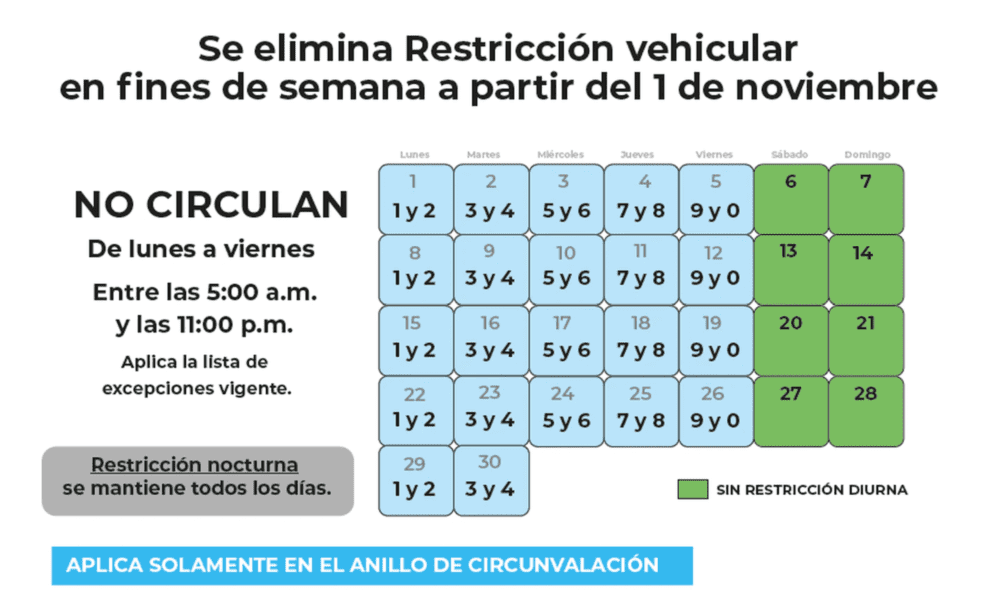
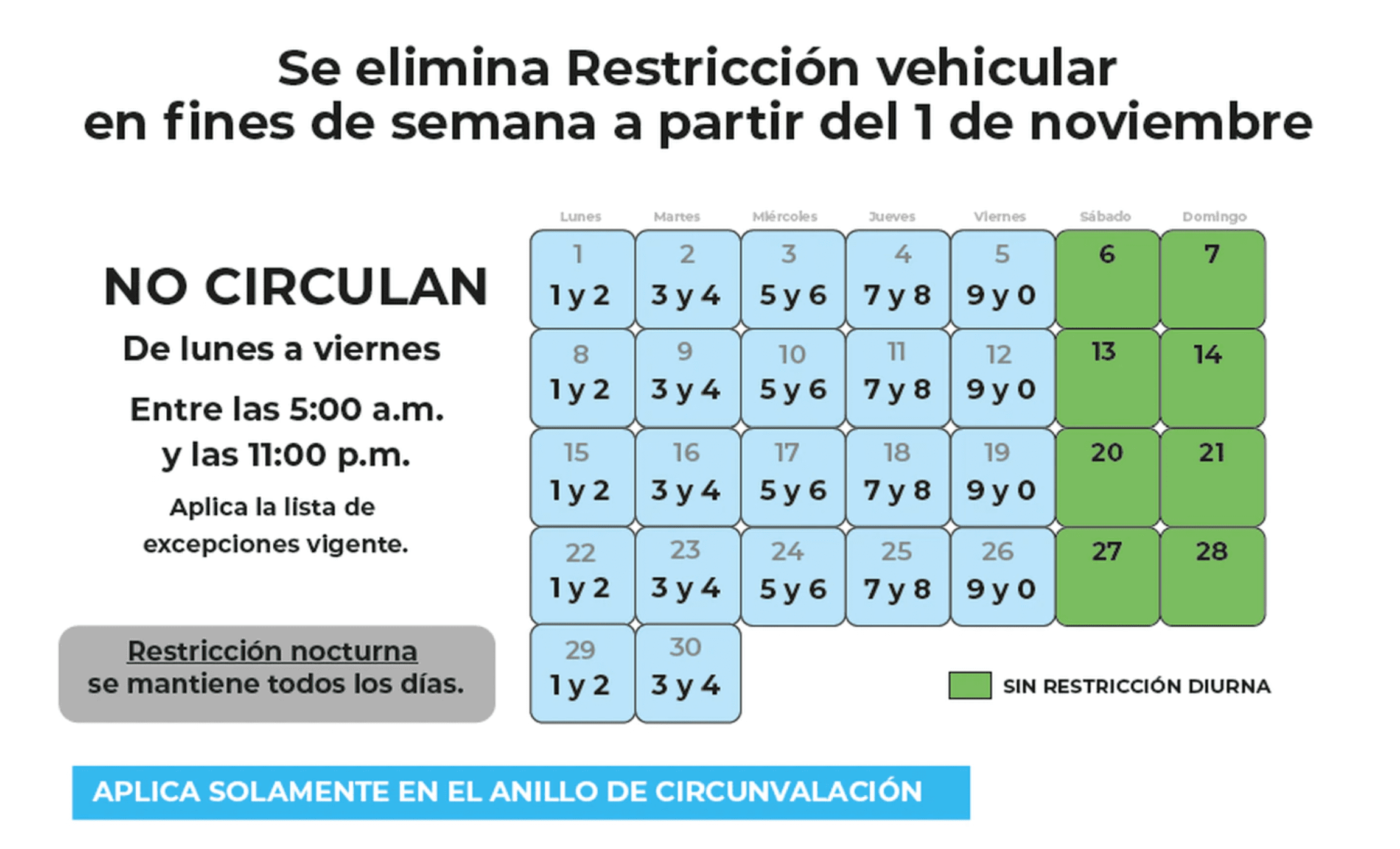
Authorities ended most daytime driving restrictions, with a general nighttime ban that is still enforced from 11 p.m. to 5 a.m.
The only ongoing daytime restrictions will apply in the circunvalación area in San José:
- Monday: Vehicles with plates ending in 1 and 2 cannot circulate.
- Tuesday: Vehicles with plates ending in 3 and 4 cannot circulate.
- Wednesday: Vehicles with plates ending in 5 and 6 cannot circulate.
- Thursday: Vehicles with plates ending in 7 and 8 cannot circulate.
- Friday: Vehicles with plates ending in 9 and 0 cannot circulate.
All vehicles can circulate nationwide during the daytime on the weekend.
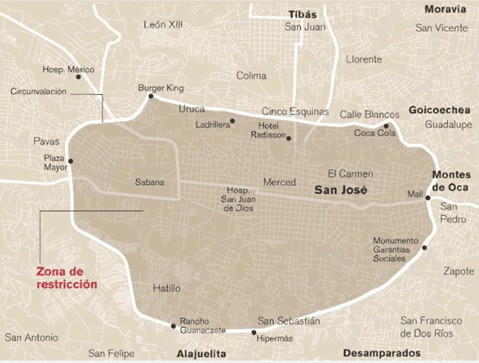
The circunvalación area, where weekday restrictions continue, was established years ago to reduce congestion. It is demarked as follows:
The typical list of exceptions — which includes rental vehicles, people driving to/from a hotel reservation, people driving to/from the airport and people driving to/from work or school — continues to apply in situations where a restriction would otherwise be enforced. The official list of exceptions can be found here.
Tourism activities
All outdoor tourism activities are permitted. All national parks can be open (most up to 100% capacity), and beaches can remain open daily from 5 a.m. to 8 p.m.
Guests are required to wear masks in some outdoors situations, so come prepared. (e.g. You need to wear a mask when purchasing your ticket to a national park, but you can remove the mask when you’re hiking.)
Businesses and activities
The vast majority of businesses can operate (with some capacity restrictions) from 5 a.m. until 11 p.m. This includes restaurants, bars, religious gatherings, movie theaters and farmer’s markets.
Delivery and some essential services can operate without time restrictions.
Costa Rica will allow some mass-gathering events with vaccinated individuals. Concerts with in-person attendance return in November.
Covid-19 testing requirements
Costa Rica does not require a negative coronavirus test to enter or exit the country. However, many foreign countries (e.g. the United States) do require a negative test if flying into or transiting through those nations. Check with your airline or your destination country for the most up-to-date regulations.
More than 100 private labs across Costa Rica offer PCR and/or antigen coronavirus tests. Click here for a list. Both Costa Rica airports offer Covid-19 tests. Click here for more info.
Note that antigen tests are accepted for entry into the U.S. but are not valid for entry to some countries.
Anyone in Costa Rica who is asymptomatic can purchase an antigen test at a private lab. Prices vary but typically start at about $50. Symptomatic individuals should opt for a PCR test.
Samples for PCR and antigen tests in Costa Rica are collected via nasal swabs.
Notable exit requirements
Costa Rica does not impose any Covid-related measures to leave the country. However, some foreign countries (such as the United States) do require a negative test if flying into or transiting through that nation. Both Costa Rica airports offer Covid-19 tests to help facilitate travel.
Panama has a quarantine requirement for unvaccinated visitors who have recently been in Costa Rica or the United States.
Mask wearing and other measures
Masks are required in all public indoor settings. You can be denied entry into an establishment if you are not wearing a mask. Many businesses require hand washing and/or have implemented temperature checks.
In general, individuals should make reasonable efforts to maintain physical distancing of at least 2 meters from others when in public.
All of these measures apply to vaccinated and unvaccinated people.
The official site for coronavirus measures in Costa Rica is: https://presidencia.go.cr/alertas.
Upcoming Costa Rica vaccine mandate
As of December 1, businesses may start requiring a vaccine of their customers (ages 12 and up). As of January 8, 2022, it will be required of most non-essential businesses. In turn, more businesses will be allowed to operate at 100% capacity.
Vaccines will be required to enter: Restaurants and food courts; bars and casinos; stores and commercial centers; museums; gyms; hotels; worship sites; event halls; adventure tourism; theaters and cinemas; sporting events.
Vaccine proof will be via a QR code. Citizens and residents can already request their code through the Health Ministry. Tourists will be able to use the QR code issued as part of the Health Pass. More information here.
How to get a vaccine
Costa Rica is vaccinating all citizens and residents ages 12 and older. Tourists were eligible for vaccines in October and some locations may continue vaccinating visitors. Undocumented migrants who can demonstrate their permanence in the country can receive a vaccine at any time.
Costa Rica administers the Pfizer and AstraZeneca formulas. Individuals may received mixed vaccines depending on availability.
Vaccines are administered at EBAIS, which are the public-health clinics that comprise part of Costa Rica’s national healthcare system. Private establishments (e.g. malls, soccers stadiums) sometimes also host mass-vaccination clinics. Click here for official vaccine information from the CCSS.