

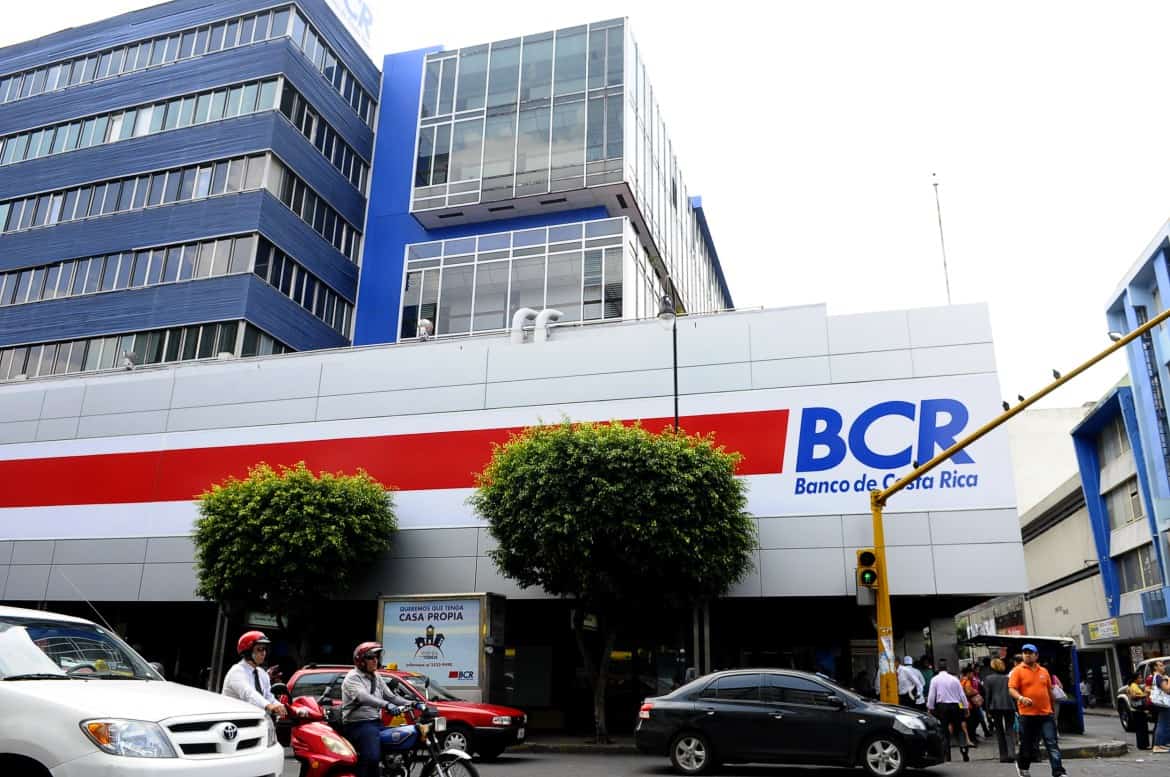
The Fernández administration is preparing a new bill to sell Banco de Costa Rica, reviving one of the most politically sensitive privatization proposals and setting up an early test of how far the new government can move with its 31-seat legislative majority.
Finance Minister Rodrigo Chaves confirmed that the Treasury is working on a proposal to sell the state-owned banking conglomerate through a legal mechanism intended to avoid the 38 votes that legislative legal advisers have previously said would be needed to authorize the sale of a state commercial bank.
The government has not explained the mechanism. The bill has not yet been filed in the Legislative Assembly. That matters because, for now, there is no legal text showing how the sale would be structured, what would happen to customers, how public services now handled by BCR would be transferred, or what protections would apply during a transition.
For BCR customers, nothing changes yet. Accounts, debit and credit cards, loans, online banking, automatic payments and deposits remain under the current bank unless and until lawmakers approve a law and the government carries out a formal sale process.
The bigger question is what would happen if the bank were eventually privatized.
BCR is not just another bank in Costa Rica. It is one of the major state banks and a primary banking relationship for many residents, businesses, retirees and foreign residents. It also handles services that go beyond ordinary banking, including appointments and payments tied to driver’s licenses, passports, DIMEX residency cards, digital signatures and judicial deposits.
That is why any sale would need to answer two different questions. The first is commercial: who would buy the bank, how much would the state receive, and would the buyer continue operating BCR as a full-service bank? The second is practical: where would customers go for public services now handled through BCR branches, its website, mobile app and Punto País network?
A previous sale proposal tried to address that by keeping ordinary banking operations alive under a private structure while moving strictly public functions to another state bank. It also sought to carry existing contracts forward so customers would not suddenly lose accounts, loans or other banking relationships. But that was the old proposal. The current government has not released the new text, so those protections cannot be assumed.
Deposit protection is another issue likely to draw close attention. State commercial banks now operate with broader state backing, while Costa Rica’s deposit guarantee fund covers deposits in supervised financial institutions up to a legal limit. If BCR were sold and became a private bank, customers would need clarity on when the state-bank guarantee would end, how the deposit fund would apply, and whether any transitional guarantees would be written into law.
The political fight is just as important as the banking one. The ruling bloc controls 31 of the 57 seats in the Assembly, enough to pass ordinary legislation but not enough to reach 38 votes on its own. That is why the legal route matters. If the sale is treated as requiring a qualified majority, the government would need opposition votes. If the administration finds a mechanism it believes can pass with fewer votes, opponents are likely to challenge it.
The proposal also has a fiscal message. Successive governments have looked at BCR as a major state asset that could be sold to raise money, reduce debt pressure or support public finances. Older estimates placed the possible value of the banking conglomerate in the rough range of $1.8 billion to $2.5 billion, but the Fernández administration has not published a current valuation.
Two earlier attempts to sell BCR under the previous Chaves administration failed. The most visible effort, filed in 2022, was rejected before reaching a final vote. The renewed push now comes with a stronger governing bloc, a president who campaigned on selling the bank, and a finance minister openly looking for a route around the old vote count problem.
Until the bill is filed, the most important details remain unanswered. Customers do not need to move accounts because of the announcement alone. But anyone who banks with BCR should watch three things once the text appears: whether existing accounts and loans continue automatically, which institution would take over public services, and what guarantee would protect deposits before, during and after any sale.





