
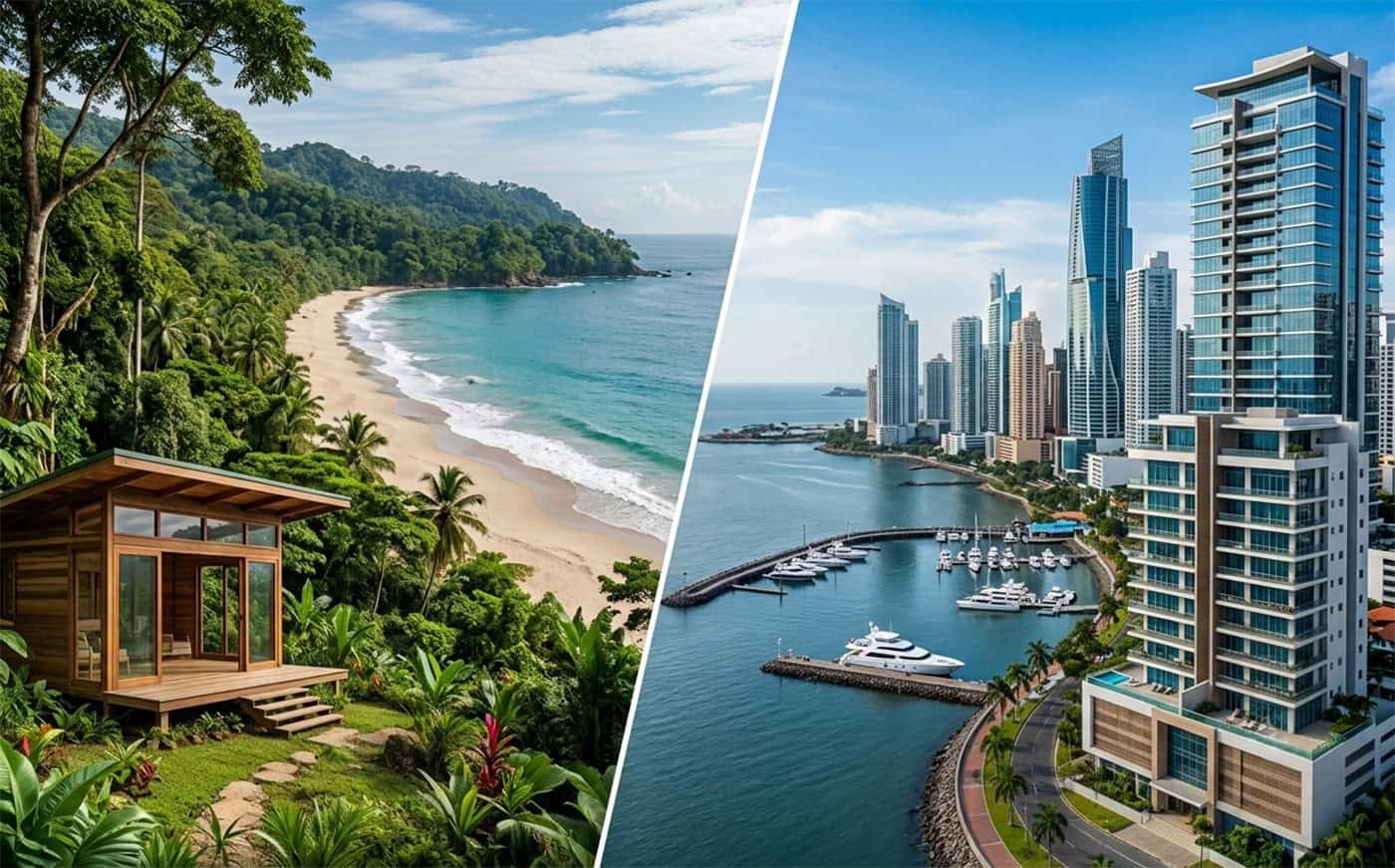
For decades, Costa Rica was the undisputed poster child of Central American expat life. However, a quiet reshuffling of priorities is underway, and a growing number of (Real Estate) investors, immigrations and retirees are now asking: Is Panama the new Costa Rica?
Fresh residency data, shifting visa requirements, and a surge in real estate acquisitions suggest the question is not just rhetorical. Panama’s streamlined immigration framework, its use of the US dollar, and a territorial tax system are redrawing the map for those seeking a second home in the tropics.
To understand the ground reality, we spoke with the team at Expat-Tations, a relocation advisory firm operating in both Panama and Costa Rica, along with their in-house law division who process residency applications daily in both countries. As well as their Real Estate division in Panama that handles property acquisitions, often to align legal residency. Their insights reveal a clear trend: more expats are crossing the border, and the numbers don’t lie.
Quick Takeaway
For investors and retirees seeking speed and a straightforward path to permanent residency, Panama is pulling ahead in 2026. Costa Rica retains its biodiversity and established expat communities, but its slower immigration processing and temporary-to-permanent residency ladder are pushing many toward Panama.
According to senior attorney, Ricardo Batres, at the law firm Expat-Tations in Panama:
“We’re seeing a 40% increase in inquiries from people who were originally targeting Costa Rica. They’ve done their research and realized Panama offers them a permanent solution in a fraction of the time.”

At a Glance: The 2026 Comparison
| Feature | Panama | Costa Rica |
| Permanent Residency Timeline | 30–90 Days (Golden Investor Visa), | 3–5 Years (Temporary to Permanent) on most programs with several complicated renewals |
| Minimum Real Estate Investment | $300k Gold Investor, $200k if Friendly Nations Residency | $150,000 (Temporary residency only at first) |
| Path to Citizenship | 5 years | 7 years (for most nationalities) |
| Forced Social Security Payments | Not required | A requirement for residency with a monthly fee reaching often hundreds of dollars |
| Residency Type Granted | Direct Permanent in most cases (Golden Investor, Retiree) | Temporary first, then Permanent |
| Property Ownership | Via corporation allowed | Personal name only |
| Currency | US Dollar | Costa Rican Colón |
| Infrastructure | Modern metro, fiber-optic, global airport | Poor roads, power outages |
| Cost of Living | ~15% cheaper than San José | Highest consumer prices in Central America |
| Processing time of residency | 3 to 6 months on all, except Golden Investor 45 days | 1 to 3 years until you have a status |
Residency Timelines: Speed vs. Patience
The sharpest contrast between the two neighbors lies in how quickly a foreigner can secure permanent status. According to the legal experts at Expat-Tations, this is the number one factor driving the shift toward Panama. In both countries the law sets a maximum timeline of 6 months, but Costa Rica hasn’t been able to keep that timeline ever, resulting in many cases the process taking up to 3 years.
Panama’s Qualified Investor Residency
In Panama, the Qualified Investor Visa, also called the Golden Visa, delivers permanent residency in as little as 30 to 90 days. A buyer who puts $300,000 into approved real estate walks away with permanent residency almost immediately, without any obligation to live in the country first.
The team at Expat-Tations notes that their Panama-based law firm have streamlined the process to near perfection. Applicants are often surprised at how efficient the system is compared to other countries in the region. Especially cause they also offer the required legal documents, like FBI background check with their digital fingerprint system.
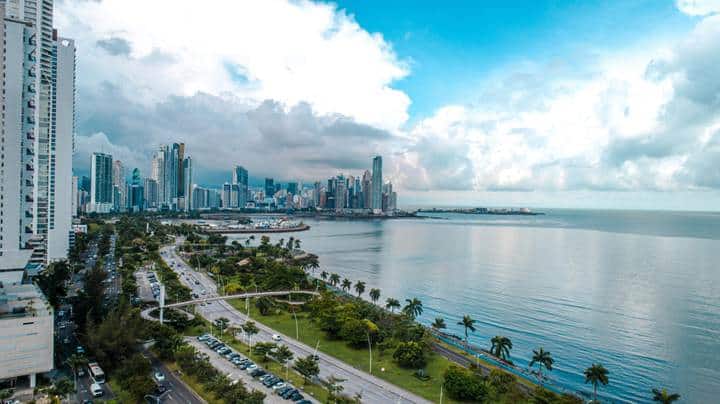
Documents from Panama’s Ministry of Commerce and Industries confirm that real estate is the engine of this speed advantage. Between July 2025 and June 2026, the Qualified Investor program funneled $113.6 million into the economy. Nearly 87 percent of successful applicants chose property as their qualifying asset.
A government spokesperson familiar with immigration processing described the draw in blunt terms:
“Our Qualified Investor program is designed to provide certainty and speed. People don’t want to wait half a decade for a piece of paper when they’re ready to build a life.” [Translated from Spanish]
Costa Rica’s Inversionista Residency
Costa Rica’s main investor category, the Inversionista Residency, tells a different story. A $150,000 investment in real estate, stocks, or a productive project opens the door, but only to temporary residency at first. Holders must renew that status for three years before they can even apply for permanent residence. Many expats end up waiting five years or longer.
This is where Expat-Tations sees the most frustration among their clients. Relocation advisor and Real Estate Broker, Ismael Arcia shared: “People come to us thinking Costa Rica is the easy option. They don’t realize they’re signing up for years of renewals, paperwork, and uncertainty. In Panama, they can get the final stamp in a matter of months with the right property.”

Costa Rica’s migration authorities have been grappling with backlogs. Routine residency renewals can stretch for months, and the path from temporary to permanent status remains a bureaucratic marathon. That sluggishness, combined with a 2024 tax overhaul that began treating worldwide income often as taxable for residents, has pushed many long-time expats to explore alternatives just across the border.
Real Estate Investment: What Your Money Actually Buys
Cost-conscious buyers who compare the two markets often fixate on entry prices, yet the raw numbers rarely tell the whole story. The Expat-Tations real estate team emphasizes that buyers need to look beyond the dollar figure and understand what each investment actually secures.
Panama’s Real Estate Residency Pathway
Current minimum: $300,000 ( For Friendly Nations Residency only $200,000 )
**After October 2026 possible:** $500,000
The impending hike has lit a fire under the market. Agents and the Expat-Tations team report a frenzy of pre-qualification requests from buyers who want to lock in the lower threshold before it vanishes.
What $300,000 buys you in Panama: Direct permanent residency, no waiting period, and the freedom to live in the country immediately.

Costa Rica’s Real Estate Residency Pathway
Minimum: $150,000
Costa Rica’s $150,000 Inversionista line looks cheaper on paper, but it does not buy permanence. It buys a renewable temporary permit. The property must be registered in the applicant’s personal name, a restriction that can complicate estate planning and asset protection.
What $150,000 buys you in Costa Rica: Temporary residency with renewals for 3+ years, no guarantee of permanent status, and personal-name registration only. After 3 years of renewals another application for permanent residency follows.
Property Ownership and Corporate Structures
Property rights also differ in ways that surprise newcomers. In both countries, foreigners enjoy the same ownership rights as locals, with one major exception:
- Panama: The constitution prohibits non-citizens from owning land within ten kilometers of any international border.
- Costa Rica: The Maritime Zone Law creates a similar coastal restriction, though the mechanics are different.
However, the Expat-Tations legal team highlights a critical advantage in Panama: the ability to hold real estate through a Panamanian corporation and trusts, as long as the visa applicant is listed as the Ultimate Beneficial Owner. That corporate wrapper provides layers of privacy and asset protection that Costa Rica’s more rigid personal-name requirement does not easily match.
“This is often a game-changer for serious investors,” explains a Panama-based real estate attorney Luis Mon, from the Expat-Tations Real Estate devision. “You can structure your assets efficiently, protect your privacy, and still qualify for residency. Costa Rica doesn’t offer that flexibility.”

The Currency Advantage for Real Estate Buyers
Another structural difference is currency. Panama uses the US dollar. Buyers who wire funds from North America or Europe sidestep the exchange-rate anxiety that can come with Costa Rica’s colón. In 2024 and 2025, the colón’s volatility against the dollar whipsawed household budgets and made long-term financial planning a headache for retirees and investors alike.
Dollarized pricing in Panama eliminates that variable entirely; a factor that Expat-Tations brokers cite as a decisive tiebreaker for their clients.
The ‘Is Panama the New Costa Rica?’ Debate Gains Momentum
Shift the lens from investment math to daily life, and the conversation only intensifies. Costa Rica still holds a powerful brand built on eco-tourism, biodiversity, and a “pura vida” identity that no competitor can replicate. But expats who have lived in both countries, and the advisors at Expat-Tations who guide them, point to infrastructure and processing gaps that can erode the idyllic image.
Infrastructure: Urban Edge vs. Rural Challenges
- Panama City offers a modern metro system, high-speed fiber-optic network, and Tocumen International Airport as a global flight hub connecting to over 80 destinations.
- Costa Rica’s road network, especially outside the Central Valley, remains notoriously unreliable, and power brownouts are a recurring feature of the rainy season in some regions.
Cost of Living: Panama is More Affordable
United Nations and regional bank data consistently rank Costa Rica as having the highest consumer prices in Central America. Utilities, gasoline, and imported goods carry steeper price tags there than in Panama, where the Panama Canal and the Colón Free Zone keep supply chains humming.
A 2025 cost-of-living survey by a global relocation firm placed Panama City roughly 15 percent cheaper than San José for a comparable expat lifestyle, a gap that widens considerably when housing is factored in.
Tourist Stays and Immigration Enforcement
Tourist stay limits and their observations, have tightened in both countries. Panama recently standardized to 90-180 days per visit for visa-exempt nationalities (including Americans, Canadians, and Brits) with a mandatory 30-day gap before re-entry now often enforced more strictly. Costa Rica similarly enforces a up to 180-day stay, though its exit-and-return practice has long been treated with a wink.
The difference is Panama’s clearly signaled intent to digitize and tighten enforcement while simultaneously speeding up residency approvals for those who commit to investment. The message is clear: short-term tourists are welcome, but people who want to stay should do so through formal channels, and those channels have been polished to work fast.

Junior Attorney and Legal Aid Edgar Landazuri at Expat-Tations sums it up: “Panama is saying, ‘If you’re serious about moving here, we have a fast lane for you.’ Costa Rica is still treating everyone the same, whether you’re a backpacker or a million-dollar investor. That’s starting to frustrate the high-net-worth crowd.”
Pensionado Perks: Residency Without Real Estate
Not everyone wants to buy property, and both countries recognize that.
Panama’s Pensionado Visa
Panama’s Pensionado Visa has carved out a reputation among retirees. Anyone with a lifetime pension of at least $1,000 per month can obtain permanent residency, no real estate purchase required.
The program’s signature draw is a booklet of legally mandated discounts:
- 25% off domestic and international airline tickets
- 50% off movie tickets and hotel stays during the week
- 25% off restaurant meals
- 15–20% off medical services and hospital bills
According to the Expat-Tations legal team, this visa is processed in approximately 3 to 6 months, significantly faster than Costa Rica’s equivalent.
Costa Rica’s Pensionado Regime
Costa Rica’s pensionado regime also requires a $1,000 monthly pension and offers similar discounts on health care, transportation, and entertainment. However, the scope and depth of Panama’s menu of perks is widely seen as more generous and better enforced.
Critically, Costa Rica’s pensionado process still involves a temporary-to-permanent ladder that can take years. Applicants receive temporary residency first, with no guarantee of permanent status down the line and the need of several renewals.

Processing Speed for Retirees
A digital overhaul at Panama’s immigration authority has shortened approval windows and reduced the number of in-person appointments required. Applicants routinely report that the entire procedure, from initial application to the issuance of a cedula (national ID), can be completed in three to six months.
Costa Rica’s understaffed migration offices have struggled to match that pace. Expat-Tations advisors regularly field complaints about delayed appointments, lost paperwork, and unclear timelines.
What the Data Shows
The cumulative effect of faster residency processing, real estate flexibility, dollarized stability, no social security payments and modern infrastructure is no longer a well-kept secret. Property transactions in Panama’s beach communities and mountain towns have climbed steadily through 2025 and into 2026, fueled partly by Costa Rican expats who are shedding their residency and buying anew.
The legal team at Expat-Tations has witnessed this firsthand. One partner commented: “Three years ago, 70% of our inquiries were about Costa Rica. Today, that number has flipped. People are doing the math on time and realizing Panama gives them more certainty, while Costa Rica gives them a waiting game.”
Not everyone will be convinced to leave behind Costa Rica’s cloud forests and conservation ethos, but the question itself is telling. When even loyalists begin asking “Is Panama the new Costa Rica?” , does that mean “The axis of Central American expat life has already begun to tilt?”