

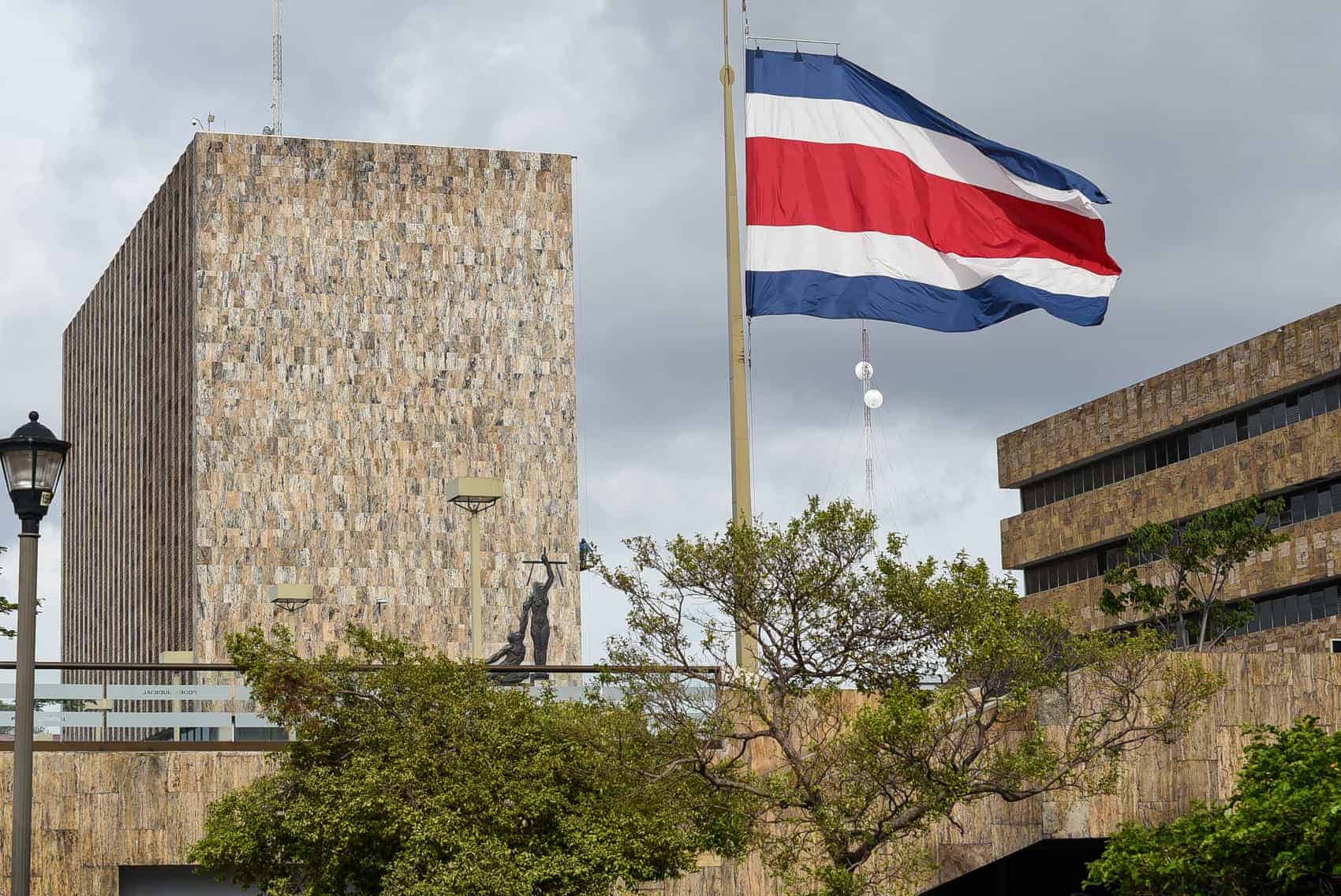
Costa Rica’s Supreme Court formally rejected President Laura Fernández’s claim that organized crime and drug trafficking have penetrated the judiciary, escalating a public dispute between two branches of government over corruption, security and the independence of the courts.
The statement was signed this morning by all 22 magistrates, five days after Fernández said criminal groups were entering the Judicial Branch “to the marrow.” The Court said it categorically rejected the accusation and defended the institution’s record, arguing that when irregularities have been detected, internal investigations and disciplinary proceedings have followed.
The Court also noted that the Judicial Branch has more than 13,800 employees across the country, a point aimed at separating individual misconduct from a sweeping claim against the entire institution.
Fernández made the remarks last Wednesday while criticizing what she described as recurring failures in the justice system. She said she was deeply concerned by signs of organized-crime influence inside the courts and linked that concern to the case of Celso Gamboa, the former Supreme Court magistrate and former security minister extradited to the United States on drug-trafficking charges.
“We already saw Celso Gamboa deported,” Fernández said. “Organized crime and drug trafficking are getting into the Judicial Branch to the marrow.”
She also criticized the response she said she had received from judicial leaders, dismissing references to a compliance policy as insufficient. Fernández argued that the country’s top institutions need to confront organized crime with force and courage, not with what she portrayed as bureaucratic language.
The Court answered that if the president has evidence of criminal infiltration, she should present a formal complaint so the matter can be investigated through the proper channels. Magistrates said broad accusations without evidence damage public trust and unfairly cast suspicion on thousands of judicial employees.
The clash lands in a tense political moment for Costa Rica. Fernández has made security a central issue of her administration, promising a harder line against drug trafficking, organized crime and corruption. Her government has repeatedly questioned judicial decisions involving suspects or convicted criminals who receive alternative measures instead of remaining in prison.
The judiciary, meanwhile, is pushing back against what it sees as a dangerous generalization. Its position is that corruption cases must be investigated and punished, but that individual cases do not prove institutional capture.
The Celso Gamboa case is what gives the dispute its weight. Gamboa once held some of the most sensitive public posts in Costa Rica, including Supreme Court magistrate, deputy attorney general and security minister. His extradition to the United States marked a major moment in the country’s fight against transnational crime and has fueled wider questions about whether criminal networks have reached high levels of public power.
For Fernández, the case shows why Costa Rica must treat organized crime as a threat to state institutions. For the Court, it does not justify accusing the judiciary as a whole of being penetrated by narcotrafficking.
The result is now a full institutional standoff. The president is framing the issue as part of a national security crisis. The Supreme Court is framing it as a defense of judicial independence, due process and the reputation of the thousands of people who work inside the country’s justice system.
Neither side has resolved the central question facing the public: how Costa Rica can confront organized crime inside state institutions without turning suspicion into a political weapon.





