

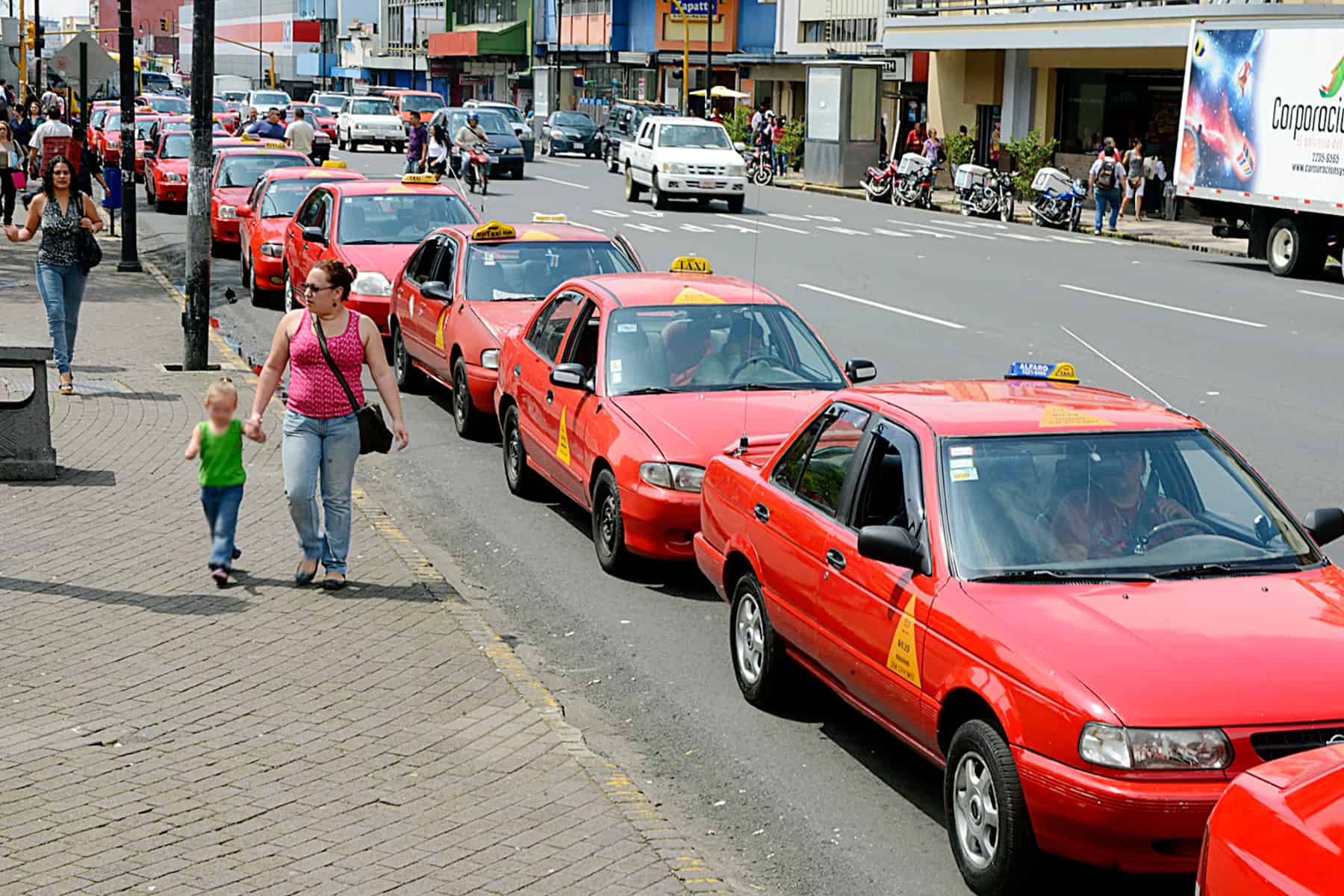
Costa Rica’s traditional taxi industry is proposing a nationwide digital meter system that would allow fares to be calculated and recorded electronically, an effort to modernize a service that has struggled to compete with Uber, DiDi and other app-based transportation. The Unión de Taxistas Costarricenses, or UTC, sent the proposal to President Laura Fernández’s administration on July 30.
The group is asking the government to support legal changes that would give a digital taximeter the same official status as the familiar physical meter known in Costa Rica as the “maría.” Under the plan, passengers would still pay fares established by the Public Services Regulatory Authority, known as Aresep. Taxi drivers would not be able to independently change prices or use the kind of demand-based surge pricing associated with ride-hailing apps.
Instead, the digital system would replace or eventually supplement the physical meter used inside Costa Rica’s licensed taxis. The software would calculate the government-regulated fare while creating an electronic record of the trip and amount charged. The taxi union argues that the change could make fares easier to audit, speed up future fare adjustments and reduce the cost of maintaining and reprogramming physical meters. It also wants the system designed to support digital payments and electronic trip records.
For passengers, one potential advantage would be greater transparency over how a taxi fare was calculated. The proposal calls for systems that can be audited by regulators and for rules covering cybersecurity, protection of passenger data and the ability of different systems to work together. The idea remains just that for now: a proposal from the taxi industry. It has not been implemented, and the changes would require government support and amendments to existing transportation laws.
The UTC wants Costa Rica’s taxi law amended so a digital meter can legally serve as an official fare-measuring device. It is also proposing changes to the law governing Aresep so the regulator could certify the software, establish technical standards and audit how fares are calculated.
Traditional meters would not disappear immediately. The union proposes a transition period during which drivers could continue using existing meters, particularly in areas where mobile connectivity is unreliable. The plan would eventually move through five stages: legal reforms, development and certification of the system, pilot programs in different parts of Costa Rica, voluntary adoption and training for taxi operators, and a final evaluation before broader implementation.
The union has also asked the Fernández administration to create a national working group that would include the Presidency, Ministry of Public Works and Transportation, Public Transportation Council, Aresep, Ministry of Science, Innovation, Technology and Telecommunications, Finance Ministry and taxi representatives.
The proposal arrives as Costa Rica once again debates the future of Uber, DiDi and other transportation platforms. The bill seeks to establish a legal framework for app-based transportation and define how those services coexist with the regulated taxi system. The issue has remained politically difficult since Uber entered Costa Rica more than a decade ago.
The Costa Rican Chamber of Commerce recently urged lawmakers to pause consideration of the current version of the bill, arguing that proposed restrictions could make app-based rides more expensive and reduce transportation choices. Among its concerns are provisions affecting prices and the ability of platforms to operate in high-demand locations such as airports, ports and transportation terminals.
A technical study cited during that legislative debate estimates that roughly 40,000 people earn income through transportation platforms and about two million people use the services in Costa Rica. That competition has put pressure on the traditional taxi industry to offer some of the features passengers have grown accustomed to through apps, including electronic payments, digital trip information and greater certainty about fares.
Costa Rica’s licensed red taxis remain a regulated public transportation service. Aresep currently sets the standard red-taxi starting fare and per-kilometer rate at ₡840 following a fare adjustment earlier this year. The digital-meter proposal would not change that regulatory model. Its central argument is that the government can keep control over taxi prices while replacing a decades-old way of measuring them with technology that passengers and regulators can more easily track.
Whether that happens will depend on the Fernández administration and eventually lawmakers. As of yet, the government had not announced approval of the UTC proposal or a timetable for putting the system into use.





