

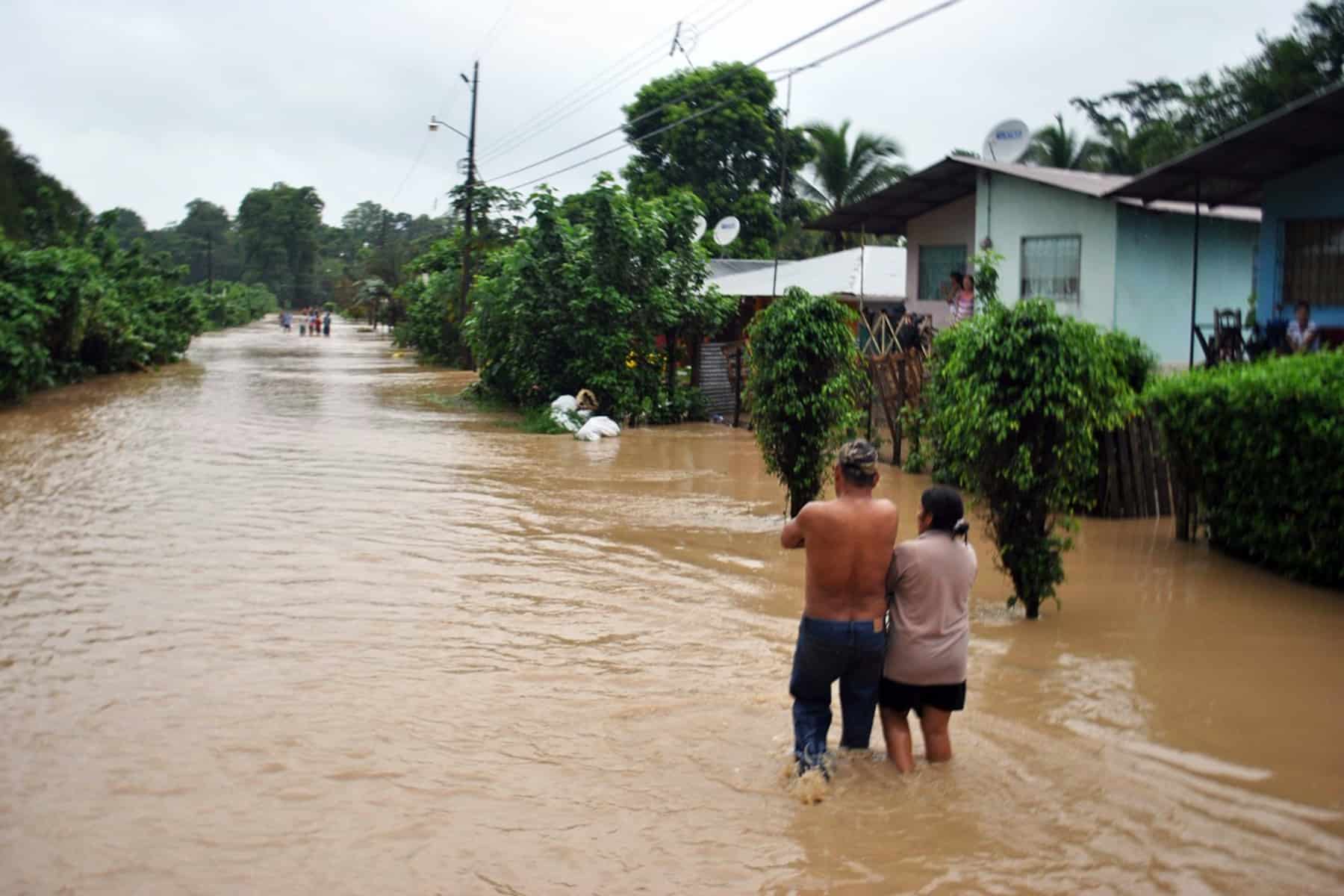
Costa Rica faces another wet weekend after Tropical Wave 19 triggered widespread flooding, forced hundreds of people from their homes and left several communities under emergency monitoring. More than 400 flood-related reports were received during the worst of the rains between Thursday night and Friday morning.
Emergency crews evacuated about 250 people, and nine temporary shelters were opened for families affected by rising water, damaged homes and unsafe conditions. The hardest-hit areas included San Carlos, Limón and Sarapiquí, where heavy rainfall caused rivers and streams to rise quickly and left some roads difficult or impossible to pass.
Sarapiquí was among the most affected areas, with evacuations carried out in communities including La Tigra, La Trinidad and La Virgen. In Limón, flooding affected areas including Siquirres and Batán, while Pital de San Carlos also reported evacuations.
The situation is not over. Tropical Wave 20 is expected to move through Costa Rica between today and tomorrow, raising the risk of more rain over areas where soils are already saturated. That creates a higher chance of flash floods, landslides and sudden river surges, especially in communities that have already absorbed several days of rainfall.
Emergency officials upgraded the alert level for the Northern Zone and the Caribbean to yellow because of the continued risk, while the rest of the country remains under green alert. A yellow alert means conditions are serious enough to require closer coordination by emergency committees and a higher level of readiness in vulnerable areas. A green alert keeps institutions and the public on watch for worsening conditions.
The main concern heading into the weekend is that even moderate rainfall could cause new problems because rivers, drainage systems and soils have little room left to absorb more water. Communities near the San Juan River in Sarapiquí remain under special monitoring, including Cureña and Cureñita, where additional evacuations could be ordered if river levels continue to rise.
Humanitarian assistance is being sent to the affected zones, including food supplies for families in shelters and communities cut off or damaged by the floods. Local emergency committees are still assessing damage to homes, roads and public infrastructure.
The flooding has also disrupted public services in parts of the Caribbean. Some medical services, river transport and access routes were affected by high water, landslides and road damage. In Limón, several child care and nutrition centers reported flooding or access problems, forcing temporary adjustments while crews evaluate conditions and begin cleanup.
Anyone traveling should expect difficult conditions in parts of the country this weekend, especially in flood-prone zones, mountain roads and areas near rivers. Route 32, the main highway linking San José with the Caribbean, has been affected by landslides and closures during the emergency, and additional delays are possible if rain intensifies again.
Residents and visitors alike are being urged not to cross flooded roads, rivers or streams, even when the water appears shallow. Authorities also recommend avoiding unnecessary travel during heavy downpours, watching for falling rocks on mountain routes, securing loose objects around homes and keeping phones charged in case conditions worsen.
The timing is especially sensitive because the weekend coincides with the start of the mid-year vacation period, when more families travel around the country. Drivers heading to the Caribbean, the Northern Zone, mountain destinations or rural river communities should check road conditions before leaving and plan for delays.
Costa Rica’s rainy season often brings afternoon downpours, but tropical waves can quickly intensify rainfall, especially when they interact with unstable atmospheric conditions already present over the country. In this case, the back-to-back arrival of two tropical waves has left emergency officials preparing for another round of problems before the country has fully recovered from the first one.
For now, the message is to remain cautious as flooded areas may remain dangerous even after rain stops, and saturated hillsides can give way hours after the heaviest showers. Anyone in a vulnerable area should follow local instructions, move early if advised to evacuate and report emergencies through 9-1-1.





