

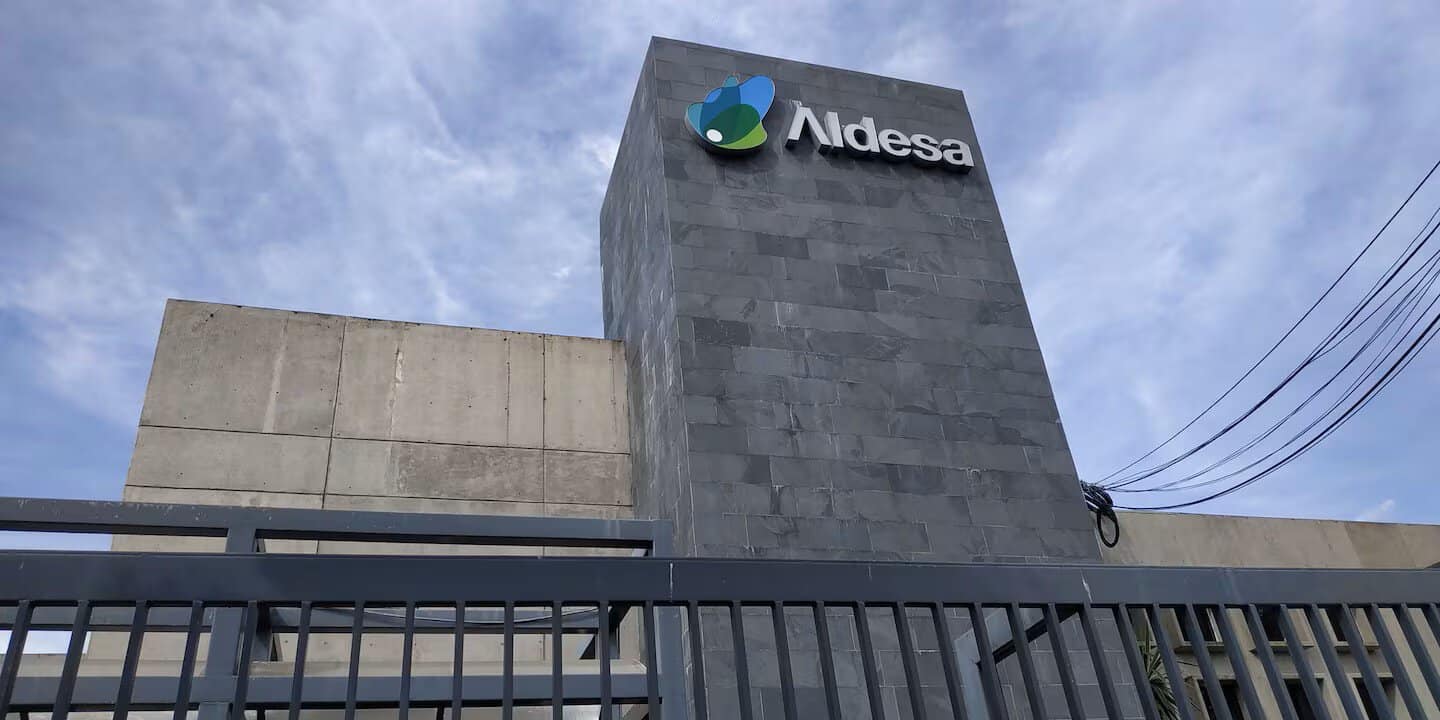
Nearly seven years after the collapse of the brokerage Aldesa, the court proceeding that will determine whether 23 people stand trial has still not properly begun. The preliminary hearing was scheduled to run from August 3 to November 30 at the Juzgado Penal of the Second Judicial Circuit of San José.
Judge Tatiana Le Roy Muñoz of the Juzgado Penal de Hacienda y de la Función Pública set the sessions for Monday through Friday, from 5 p.m. to 11 p.m., an unusual schedule for a proceeding of this kind. The Consejo Superior authorized the change after defense counsel reported conflicting court commitments that made continuous daytime attendance impossible.
The schedule itself then became the obstacle. Several defense and private-prosecution lawyers objected that the Judicial Branch had not suspended or rescheduled their other daytime trials, some outside the Greater Metropolitan Area. Attorney Francisco Campos, who represents Javier Chaves, described a situation in which a lawyer might be in a hearing in Alajuela until 4 p.m. with a single hour to reach Goicoechea. The appeals halted the proceeding entirely.
On the afternoon of August 7, the Tribunal Penal of the Second Judicial Circuit declared those appeals inadmissible through vote 331-2026, and the file returned to the trial court on August 10. The hearing still did not start. On August 14, one of the private-prosecution lawyers failed to appear at the courthouse in Goicoechea, delaying matters again. The judge gave him 48 hours to explain the absence.
The underlying accusation is substantial as the Fiscalía Adjunta de Delitos Económicos charges 23 people with alleged fraud and violations of the Organic Law of the Central Bank, in connection with decisions taken at the investment group. Those accused include former members of the board of directors, stockbrokers, investment advisers and managers.
All reject the charges. The preliminary hearing does not determine guilt or innocence; it decides only whether the accusation has sufficient foundation to proceed to an oral and public trial, which evidence will be admitted, and whether any alternative resolution applies.
The figures attached to the case vary depending on the source, and no single number has settled. According to the accusation itself, the proceeding involves 351 natural persons and 27,550 workers represented through solidarity associations, with estimated economic harm of $171.5 million.
Prosecutors have separately described the negative economic impact as above $200 million, affecting 600 investors and more than 28,000 workers. The original 2019 complaints concerned real estate projects into which clients had placed roughly $200 million. Flora Fernández Amón, an affected investor who speaks for a group of those who lost money, has put the sum Aldesa made disappear at $222.5 million and says many of those affected were older adults, a number of whom have died without seeing the case resolved. Formally registered as offended parties in the file are 26 natural and legal persons.
The structural question at the center of the case is one that matters well beyond Costa Rica’s borders. The Ministerio Público’s investigation focuses on investments made through Aldesa Corporación de Inversiones, an entity that was not subject to supervision by the Superintendencia General de Valores, unlike the brokerage and other regulated companies in the group. According to the prosecution’s theory, that arrangement forms part of the conduct under investigation.
The regulator has already acted on its own track. In late November 2023, the Superintendencia General de Valores concluded a sanctioning procedure it had opened in May 2019, imposing fines totaling ₡927,571,935, roughly $2.05 million at current reference rates, against Aldesa’s brokerage, its fund management company, its former president and several brokers.
The Superintendencia identified thirteen sanctionable infractions, among them carrying out unauthorized activities, failing to disclose a conflict of interest with the group’s private and unsupervised business, and providing investors with information it characterized as confusing, imprecise and untimely. The regulator did not sanction the board members.
The criminal file is unusually large. Prosecutors describe a principal case record of 5,323 pages, two evidence files running to 535 folios, and twenty separate files of investor complaints and evidence totaling a further 3,536 pages. Searches conducted in June 2019 at the company’s Curridabat offices and at directors’ homes yielded 152 boxes and bags of evidence along with 83 electronic devices.
Questioning of the 23 accused concluded in November 2023. Almost three years later, the hearing that will decide whether any of them faces trial has yet to reach the substance of the accusation.





